Key Findings / TL;DR
- Top target by volume: 🇫🇷 France — 1,223 materials. Followed by 🇩🇪 Germany (1,044), 🇵🇱 Poland (802).
- Top narrative: Internal problems — 225 materials in deep analysis (19% of identified propaganda).
- Multimodal FIMI on YouTube: Baltic cluster 100.0%, Weimar Triangle 80.0%, Visegrád V4 75.0%. Highest country: 🇱🇹 Lithuania (100.0% on 4 videos).
- AI deep analysis: 1,433 materials processed, 592 flagged as HIGH risk (41.3%). 1175 identified as propaganda (excluding neutral and not-about-targets categories).
- Coordination: TASS cited in 87 materials — primary amplification pipeline from Russian state media. 57 coordination events detected across 30 days.
Mentions by Country
🇫🇷 France leads by volume with 1,223 materials. The Weimar Triangle (PL+DE+FR) accounts for 3,069 materials vs. 1,469 for the Baltic states.
Propaganda Narratives
Of 1,433 deep-analyzed materials, 1175 contained identifiable propaganda narratives. Factual manipulation dominates (1959 materials), followed by emotional manipulation (1151) and logical fallacies (957).
Country narrative profiles
| Country | Propaganda materials | Dominant narrative | Distinctive feature |
|---|---|---|---|
| 🔶 🇵🇱 Poland | 325 | Military buildup (22%) | 5 videos analyzed |
| 🔵 🇱🇹 Lithuania | 225 | Military buildup (28%) | FIMI 100.0% |
| 🔵 🇱🇻 Latvia | 139 | Military buildup (30%) | FIMI 100.0%, Military buildup dominant (30%) |
| 🔵 🇪🇪 Estonia | 74 | Military buildup (25%) | FIMI 100.0% |
| 🔶 🇩🇪 Germany | 277 | Internal problems (22%) | 3 videos analyzed |
| 🔶 🇫🇷 France | 173 | EU internal division (28%) | FIMI 100.0% |
| 🟢 🇨🇿 Czech Republic | 34 | EU internal division (32%) | EU internal division dominant (32%) |
| 🟢 🇭🇺 Hungary | 260 | EU internal division (49%) | EU internal division dominant (49%) |
| 🟢 🇸🇰 Slovakia | 71 | EU internal division (38%) | EU internal division dominant (38%) |
🔶 Weimar Triangle: Two Attack Strategies
The Weimar Triangle countries (Poland, Germany, France) receive fundamentally different propaganda treatment than the Baltic states. While the Baltics face a monotonal military threat narrative (43-47%), each Weimar country is attacked through its unique perceived vulnerability.
🔵 Baltic States: military monotone
🔶 Weimar Triangle: diversified attack
Radar: narrative distribution
🟢 Visegrád Group (V4): the Central European frame
The Visegrád Four (Poland, Czech Republic, Hungary, Slovakia) are framed through a third lens entirely. Here the dominant narrative is EU internal division: Hungary and Slovakia are cast as the 'voice of reason' against Brussels. Poland appears in both Weimar and V4 clusters — as an analytical lens, not double-counted in totals.
| Cluster | Materials |
|---|---|
| 🔵 Baltic (LT, LV, EE) | 1,469 |
| 🔶 Weimar (PL, DE, FR) | 3,069 |
| 🟢 Visegrád V4 (PL, CZ, HU, SK) | 1,655 |
🟢 V4: EU-division dominant
🇵🇱 Poland: two contexts
In the Weimar context Poland is attacked as a Western military partner (buildup, NATO frontline); in the V4 context it appears among Central European neighbours where the EU-division and border frames dominate. One dataset, two strategic constructions.
🇭🇺 Hungary: propaganda recalibration after the April election
Hungary is the month's most analytically significant case (519 materials). After Viktor Orbán lost the April election to Péter Magyar's Tisza party, state media faced a problem: their long-standing 'pragmatic sovereign ally' was gone. The April data captures the machine mid-recalibration, dominated by an EU-internal-division frame and a conditional-acceptance posture toward the new government.
April narrative mix
Three-act recalibration
Country Narrative Profiles
Each country has a distinct propaganda profile. Baltic states face a monotonal military threat; Weimar Triangle countries are attacked through individual vulnerabilities.
🇵🇱 Poland
🇱🇹 Lithuania
🇱🇻 Latvia
🇪🇪 Estonia
🇩🇪 Germany
🇫🇷 France
🇨🇿 Czech Republic
🇭🇺 Hungary
🇸🇰 Slovakia
📺🖼️ YouTube: Multimodal Analysis by Target Country
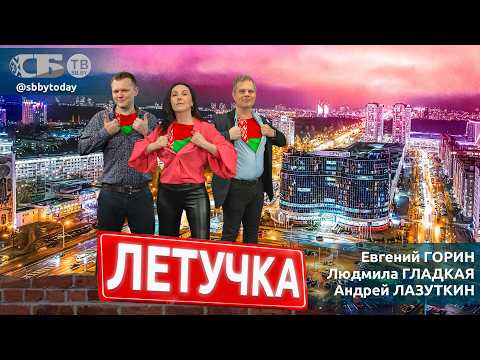
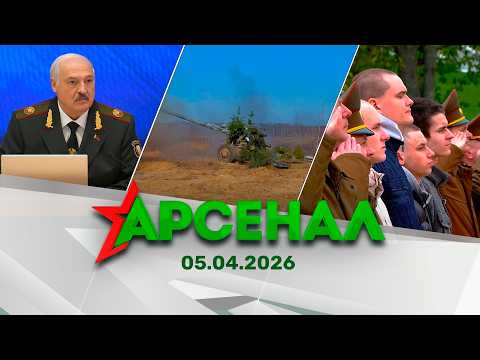
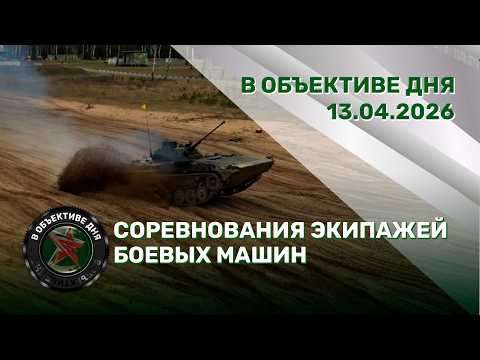
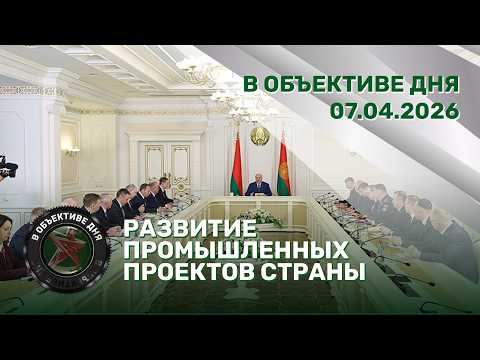
Transcript analysis (codebook v3.0) combined with thumbnail visual analysis (Vision LLM, codebook v2.0) reveals how the same propaganda system uses different visual packaging for different target countries.
Cluster comparison
| Cluster | Videos | Clickbait | Propaganda | FIMI % |
|---|---|---|---|---|
| 🔵 Baltic States | 8 | 2.12 | 7.5 | 100.0% |
| 🔶 Weimar Triangle | 10 | 2.2 | 7.2 | 80.0% |
| 🟢 Visegrád Group | 8 | 2.37 | 7.25 | 75.0% |
By country
| Country | Videos | Clickbait | Propaganda | FIMI % | Top visual technique |
|---|---|---|---|---|---|
| 🔶 🇵🇱 Poland | 5 | 2.4 | 7.2 | 80.0% | stability_framing |
| 🔵 🇱🇹 Lithuania | 4 | 2.25 | 7.5 | 100.0% | stability_framing |
| 🔵 🇱🇻 Latvia | 2 | 2.0 | 7.5 | 100.0% | personality_cult |
| 🔵 🇪🇪 Estonia | 2 | 2.0 | 7.5 | 100.0% | personality_cult |
| 🔶 🇩🇪 Germany | 3 | 2.33 | 7.33 | 66.7% | appeal_to_fear |
| 🔶 🇫🇷 France | 2 | 1.5 | 7.0 | 100.0% | stability_framing |
| 🟢 🇭🇺 Hungary | 3 | 2.33 | 7.33 | 66.7% | stability_framing |
High-propaganda thumbnails: what the audience sees first
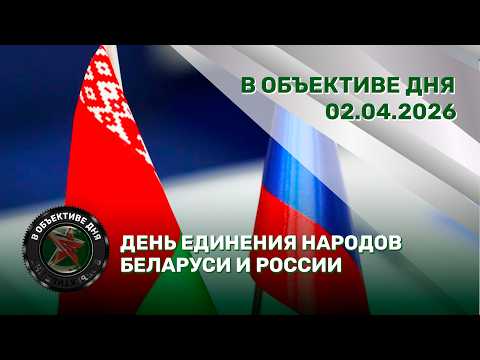
Real YouTube thumbnails from videos scored 8-9/10 on propaganda scale. These images are the first contact point with the audience — designed to trigger emotional response before the content is even consumed.
Claims for Fact-Checking
AI analysis extracted verifiable claims from high-risk materials. Those flagged as 'likely false' contain statements that contradict publicly available data. Claims are shown in the original Russian language as published by state media. Click ↗ source to view the original material.
Verifiable claims requiring fact-check
Coordination Signs
Deep analysis identified 57 coordination events across 30 days. The primary amplification pipeline runs through Russian state news agencies:
| Source | Citations |
|---|---|
| цитирование риа новости | 53 |
| цитирование тасс | 48 |
| ссылка на риа новости | 16 |
| цитирование тасс как источника | 15 |
| ссылка на тасс | 14 |
| цитирование белта | 13 |
| ссылка на тасс как источник | 10 |
| ссылка на белта | 6 |
Conclusions
1. Two cluster strategies persist. In April 2026, the Baltic cluster (LT, LV, EE) accumulated 1,469 mentions, while the Weimar Triangle (PL, DE, FR) reached 3,069 mentions. Multimodal YouTube analysis shows Baltic FIMI at 100.0% and Weimar at 80.0% — both clusters operate as fully-formed propaganda targets, with Baltic slightly more intense.
2. France: top target by volume. With 1,223 materials, 🇫🇷 France dominates the monitoring period. The dominant narrative is 28% EU internal division.
3. YouTube as propaganda amplifier. Multimodal analysis covered 21 videos across the 6 target countries. The highest FIMI concentration is on 🇱🇹 Lithuania content (100.0%) — almost every video mentioning this country contains foreign information manipulation indicators.
4. TASS as the coordination backbone. Russian state news agency TASS was cited in 87 of analyzed materials, followed by RIA Novosti (69). This confirms that Belarusian state media functions as an amplification layer for Kremlin messaging, not as an independent editorial operation.
5. Factual manipulation dominates. Of all detected manipulation types, factual manipulation (cherry-picking real data to distort conclusions) accounts for 1959 cases — more than emotional (1151) and logical (957) combined. This makes the propaganda harder to detect than outright fabrication and underscores the need for systematic AI-powered monitoring.
Methodology
This report covers 2026-04-01 — 2026-04-30. Materials were collected from three Belarusian state-controlled media sources: BelTA, SB.BY, and state-linked YouTube channels. Collection used keyword-based monitoring across six target countries: Poland, Lithuania, Latvia, Estonia, Germany, and France.
Analysis pipeline: (1) automated keyword detection and country assignment, (2) relevance scoring with country-specific thresholds (Germany and France use stricter filters due to frequent background mentions), (3) threat scoring, (4) AI-powered deep analysis of 1,433 materials using GPT-5-mini with structured output, (5) multimodal YouTube analysis combining transcript codebook v3.0 with thumbnail Vision LLM codebook v2.0.
Average AI confidence: 80.6%. Materials with target_countries containing the country name were extracted from transcript_analysis (codebook v3.1) and combined with thumbnail visual analysis (visual_objects, codebook v2.0) for the multimodal section.