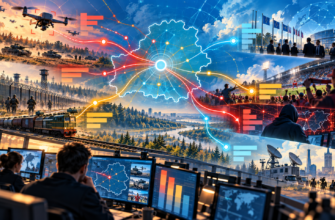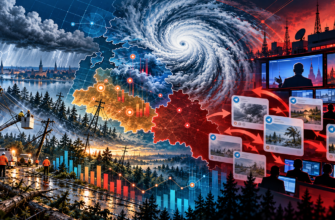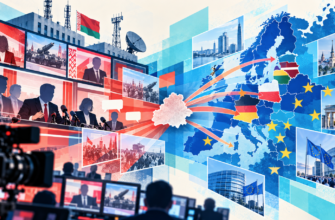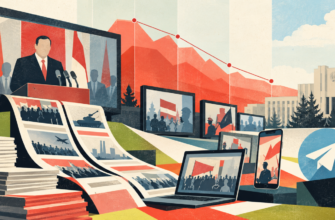


The term you’ll encounter throughout this calendar is FIMI – Foreign Information Manipulation and Interference. It’s not just another word for “fake news” or “disinformation.” It describes something more systematic and more dangerous.
Beyond disinformation
In March 2025, the European External Action Service published its third annual report on FIMI threats. The findings paint a sobering picture: over eighty countries were targeted by foreign information operations last year, with more than two hundred organizations attacked across some 38,000 digital channels. The EEAS documented 505 distinct incidents, spread across 25 different platforms.
What makes FIMI different from ordinary misinformation? The EU’s definition emphasizes four key characteristics. First, it is foreign in origin orchestrated by external state actors or their proxies. Second, it is manipulative – not merely spreading lies, but distorting context, amplifying divisions, and exploiting genuine grievances. Third, it is intentional and coordinated these are systematic campaigns with clear objectives, not random posts by confused individuals. Fourth, it constitutes interference the goal is to influence political processes, elections, and public trust in institutions.
The iceberg structure
The EEAS report introduces what it calls the “FIMI Exposure Matrix” a framework for understanding how these operations actually work. Think of it as an iceberg.
Above the waterline sits the overt layer: official state media like RT, Sputnik, and CGTN, along with diplomatic social media accounts that openly represent foreign governments. These channels are visible, attributable, and in theory, accountable. They form perhaps ten percent of the total infrastructure.
Below the surface lies the covert layer, where the real action happens. Here we find state-linked channels that never disclose their affiliation. Networks like Doppelganger create fake versions of legitimate news websites to launder propaganda through seemingly credible sources. The African Initiative spreads pro-Russian narratives across the Sahel through local proxies. Portal Kombat coordinates bot networks to amplify divisive content. False Façade operations impersonate journalists and think tanks. These networks are designed to be difficult to trace, to maintain plausible deniability, and to make foreign propaganda appear as organic local opinion.
The main actors
Russia remains the primary source of FIMI operations targeting Europe and its neighbourhood. The Kremlin employs a multi-layered approach combining state media, covert proxy networks, diplomatic amplification, and increasingly private military operations like the Africa Corps (formerly Wagner) that blend information warfare with physical presence. According to the EEAS, Russia plans to spend at least 137 billion rubles (approximately €1.18 billion) on state media in 2025, underscoring how central information control is to its strategic objectives.
China represents a growing FIMI threat, particularly in the Indo-Pacific region. Beijing’s approach differs from Moscow’s it tends to be more focused on promoting positive narratives about China and suppressing criticism than on sowing chaos. But Chinese operations are becoming more sophisticated, using diplomatic social media accounts to amplify state media content and exploiting platforms like TikTok to reach younger audiences. The 80th anniversary of World War II’s end in 2025 provided a focal point for Chinese campaigns targeting Japan, with references to wartime history surging from 16,800 mentions in 2024 to over 780,000 this year.
What was targeted in 2024-2025
Ukraine absorbed roughly half of all documented FIMI attack unsurprising given Russia’s ongoing war. But the geographic spread extended far beyond the front lines. Moldova faced intense interference during its presidential election and EU membership referendum, with vote-buying schemes, coordinated Telegram campaigns, and AI-generated propaganda. Romania’s presidential election was actually annulled by the Constitutional Court after evidence emerged of systematic foreign interference a first in EU history. France and Germany confronted Doppelganger operations during the European Parliament elections. And across Sub-Saharan Africa, particularly in Mali, Niger, Burkina Faso, and the Central African Republic, Russian-linked networks worked to undermine Western partnerships and legitimize authoritarian governance.
What comes next
Over the following thirty days, we will examine these cases in detail. The first week focuses on Europe: Romania’s annulled election, Moldova’s struggle against information warfare, Germany’s experience with Doppelganger, and the lessons from Poland and the Czech Republic’s 2025 votes. The second week takes us to Africa, where we’ll explore how the Africa Corps filled the vacuum left by departing French forces and built an information ecosystem to support it. The third week examines the Indo-Pacific, from Taiwan’s sophisticated counter-disinformation efforts to China’s campaigns against Japan and the Philippines. The final week addresses the rise of AI-generated content: deepfakes, voice cloning, and the emerging market for synthetic political media.
Each day will include primary sources, methodological insights, and practical lessons for building resilience. It’s about understanding the information environment we all inhabit and learning to navigate it with clearer eyes.
Sources:
European External Action Service. 3rd Report on Foreign Information Manipulation and Interference Threats. March 2025.
European External Action Service. Inside the Infrastructure of FIMI Operations. March 2025.