
Region: 🇿🇦 South Africa
On May 29, 2024, South Africans voted in what many called the country’s most important election since the end of apartheid in 1994. When the votes were counted, the African National Congress – the party of Nelson Mandela that had governed uninterrupted for 30 years – lost its parliamentary majority for the first time.1
The ANC received just 40.18% of the vote, down from 57.5% in 2019 – the steepest fall in the party’s history. The Democratic Alliance came second with 21.81%. But the real story was third place: the uMkhonto we Sizwe (MK) Party, founded just six months earlier by disgraced former president Jacob Zuma, captured 14.58% of the vote.2
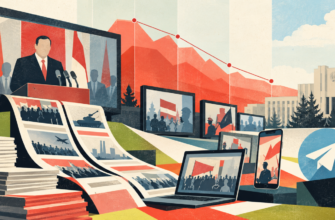
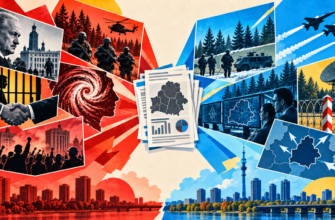
Behind this political earthquake lay years of information warfare – a case study in how foreign influence operations, domestic disinformation, and social media manipulation can reshape a nation’s politics.
The Bell Pottinger Precedent
South Africa’s vulnerability to information operations was exposed years before the 2024 vote.
In 2016, the London-based PR firm Bell Pottinger was hired by Oakbay Capital, the holding company of the controversial Gupta family, who had close ties to then-President Jacob Zuma. Their mission: deflect mounting corruption allegations against the Zuma-Gupta network.3
The strategy was devastatingly effective. Bell Pottinger created 106 fake Twitter accounts and deployed bots to push a narrative that critics of the Guptas and Zuma were agents of “white monopoly capital” – a phrase designed to exploit South Africa’s deep racial wounds from apartheid.4
The campaign targeted journalists, opposition politicians, and even Finance Minister Pravin Gordhan. Editor Ferial Haffajee was branded a “#pressitute.” The goal was not merely to defend the Guptas but to reframe legitimate anti-corruption efforts as racist attacks on black empowerment.5
The Public Relations and Communications Association investigation found Bell Pottinger’s work would “likely inflame racial discord” – the harshest sanction in the organization’s history. Bell Pottinger collapsed within months.6
But the damage was done. The phrase “white monopoly capital” had embedded itself in South African political discourse. As one researcher noted, the campaign “showed those that would perpetuate this information and use it for political means what works and what doesn’t… division, creating mistrust between different groups and communities, and sowing hatred.”7
The Super Influencer
When Russia invaded Ukraine in February 2022, the #IStandWithPutin and #IStandWithRussia campaigns launched on Twitter. South African influencers played a prominent role.8
At the center was Duduzile Zuma-Sambudla, Jacob Zuma’s daughter.
A 54-page report by the Centre for Information Resilience documented how Zuma-Sambudla acted as a “super influencer” for the pro-Russia campaign – the most retweeted and mentioned user. Her content was used as “copypasta,” replicated by other accounts across South Africa and beyond.9
“The evidence is compelling,” said CIR vice-president Nina Jankowicz. “She was a clear driver of the campaign and the origin point for many of the tweets that were replicated around the South African information environment, and eventually even further afield.”10
Zuma-Sambudla was an early adopter of the campaign hashtag before its official launch by Russian government accounts. She visited Russia toward the end of the campaign, posting photos of herself at the Peterhof Palace in St. Petersburg. She tweeted: “I Am A Proud South African But I Identify As A Russian.”11
The CIR concluded that “regardless of intent, the Sambudla-Zuma account has been the main amplifier of the #IStandwithPutin trend in South African communities on Twitter.”12
When confronted, Zuma-Sambudla told RT (Russian state media): “I am an individual, I am my own person, and I carry my own views… I am not being paid by Moscow.”13
The Zuma-Russia Connection
The pro-Russia positioning was not random. Jacob Zuma had spent his nine-year presidency (2009-2018) drawing South Africa closer to Moscow.
He secured South Africa’s entry into the BRICS bloc. He attempted to push through a nuclear power contract with Russia that could have cost as much as $100 billion.14
When Russia invaded Ukraine, Zuma released a statement declaring full support for Putin, claiming he had been “consistent in his stance against the eastern expansion of NATO into Ukraine.”15
In August 2023, South Africa hosted the BRICS summit in Johannesburg. Putin did not attend – because South Africa, as a member of the International Criminal Court, would have been legally obligated to arrest him on war crimes charges. The summit expanded BRICS to include Iran, Saudi Arabia, UAE, Egypt, and Ethiopia.16
Election 2024: The Information Battlefield
As South Africa approached its May 2024 elections, the information environment was already compromised.
The Africa Center for Strategic Studies documented 11 disinformation campaigns targeting South Africa – some designed by Russia “to boost the ANC.”17 Code for Africa uncovered a network of pro-Russian accounts amplifying the newly formed MK Party and claiming US interference in the elections.18
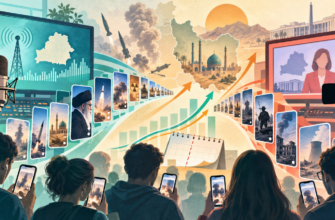
The country was vulnerable. With 45.34 million internet users and 26 million active on social media (44% of the population), South Africa ranks among the most internet-connected nations in Africa. Users spend an average of over 9 hours daily online. WhatsApp, used by 93% of internet users, serves as the primary communication platform – and a highway for unmoderated disinformation.19
A deepfake video emerged showing former US President Donald Trump apparently endorsing the MK Party. It was shared by Zuma-Sambudla – not from an anonymous account, but from one of South Africa’s most documented disinformation amplifiers.20
The Electoral Commission partnered with social media platforms and created Real411, a complaints platform for online harms. But WhatsApp’s encrypted nature made tracking disinformation nearly impossible.21
The MK Party Phenomenon
Jacob Zuma announced his departure from the ANC in December 2023, accusing his successor President Cyril Ramaphosa of serving as a “proxy for white monopoly capital” – the same Bell Pottinger-seeded phrase from years earlier.22
His new party, named after the ANC’s historic armed wing, appeared on the ballot despite Zuma himself being barred from standing due to a criminal conviction. The Constitutional Court ruled him ineligible on May 20, just nine days before the election.23
The MK Party’s rise was meteoric. With minimal traditional campaign presence but a formidable online operation, it captured 14.58% nationally and dominated Zuma’s home province of KwaZulu-Natal with nearly 46% of the vote – compared to just 18% for the ANC.24
Pro-Russian accounts documented by Code for Africa amplified MK Party narratives while spreading claims that the Electoral Commission was compromised and that vote counting should be manual (it already was).25
After the results, MK Party demanded a manual recount and challenged the election’s legitimacy – without providing evidence. The election was declared free and fair by independent observers.26
The Aftermath
The ANC, forced into coalition for the first time, ultimately partnered with the Democratic Alliance – creating a government that would have been unthinkable just years earlier.27
Voter turnout hit a historic low of 58.64%. The gap between the euphoria of 1994 and the disillusionment of 2024 reflected not just ANC governance failures – unemployment, power cuts, corruption – but a fractured information environment where citizens struggled to distinguish truth from manipulation.28
The ISS Africa recommended that policymakers “ramp up digital literacy training for citizens,” while international donors should support “credible independent news outlets” and fund research into foreign interference.29
But the challenge extends beyond elections. The July 2021 riots that followed Zuma’s imprisonment for contempt of court killed more than 350 people. A Human Rights Commission investigation found that social media platforms “were utilised by individuals and specific groups to organise and aid in the spread of the unrest… strategically spreading misinformation and disinformation, and mobilising and celebrating looting and violence.”30
South Africa’s experience offers a warning: information operations don’t just influence elections. They can shape a nation’s trajectory for decades, exploiting historical wounds, amplifying division, and making democratic governance itself harder to sustain.
Sources
Additional Reading
- TechCentral, “‘Hacking the electorate’: the tech threat to the 2024 election”, November 2023
- Africa Center for Strategic Studies, “Mapping a Surge of Disinformation in Africa”, October 2024
- Duke University, “Understanding the fake news about South Africa’s elections”, May 2024
- Friedrich Naumann Foundation, “South African Elections 2024: ANC loses majority after 30 years”
-
Al Jazeera, “South Africa’s ANC loses 30-year parliamentary majority after election”, June 1, 2024. ↩
-
Al Jazeera, “South Africa elections final results: What happens next?”, June 2, 2024. ↩
-
TIME, “Bell Pottinger Disgraced in South Africa Race Scandal”, September 5, 2017. ↩
-
The Bureau of Investigative Journalism, “Bell Pottinger ‘incited racial hatred’ in South Africa”, September 5, 2017. ↩
-
Mail & Guardian, “For whom the Bell tolls”, May 29, 2020. ↩
-
Wikipedia, “Bell Pottinger”. ↩
-
Daily Maverick, “Bell Pottinger Exposed: Influence unpacks the evils of disinformation”, August 21, 2020. ↩
-
Centre for Information Resilience, “The #IStandWithPutin & #IStandWithRussia campaign in South Africa”, May 2023. ↩
-
Daily Maverick, “Duduzile Zuma-Sambudla at centre of Russian Twitter drive to sway public opinion in South Africa”, May 10, 2023. ↩
-
News24, “Zuma’s daughter is a Russian Twitter campaign ‘super influencer’, study claims”, May 10, 2023. ↩
-
Daily Maverick, “Duduzile Zuma-Sambudla at centre of Russian Twitter drive”, May 10, 2023. ↩
-
Centre for Information Resilience, “The #IStandWithPutin & #IStandWithRussia campaign in South Africa”, May 2023. ↩
-
IOL, “I stand with Putin and I’m not paid for it, says Duduzile Zuma-Sambudla”, May 14, 2023. ↩
-
Moneyweb, “Russian Twitter drive has Zuma daughter at center, study claims”, May 10, 2023. ↩
-
Times Live, “Duduzile sings Putin’s praises amid report she was a ‘super influencer’ for Russian campaign”, May 11, 2023. ↩
-
Foreign Policy Research Institute, “The Dragon and the Bear in Africa”, November 2023. ↩
-
Daily Maverick, “Africa the target of a disinformation tsunami, mainly generated by Russia”, March 19, 2024. ↩
-
African Digital Democracy Observatory, “Unravel South Africa’s election chaos and Zuma’s influence”, June 2024. ↩
-
ISS African Futures, “Disinformation, governance and the South African election”, 2024. ↩
-
ISS African Futures, “Disinformation, governance and the South African election”, 2024. ↩
-
Daily Maverick, “SA’s 2024 elections must be strongly prepared for flurry of online influence and disinformation”, March 18, 2024. ↩
-
Wikipedia, “2024 South African general election”. ↩
-
CBS News, “Why did Nelson Mandela’s ANC lose its majority in South Africa’s elections”, June 3, 2024. ↩
-
NPR, “South Africa election results: ANC loses majority for first time”, June 1, 2024. ↩
-
African Digital Democracy Observatory, “Unravel South Africa’s election chaos”, June 2024. ↩
-
The Conversation, “South Africa election: ANC’s lost majority ushers in a new era of coalition politics”, June 2024. ↩
-
Wikipedia, “2024 South African general election”. ↩
-
Al Jazeera, “South Africa elections final results”, June 2, 2024. ↩
-
ISS Africa, “Foreign interest in Africa comes with damaging disinformation tactics”, 2025. ↩
-
ISS African Futures, “Disinformation, governance and the South African election”, 2024.


Comments are closed.