

Region: Sahel (Mali, Burkina Faso, Niger)
On August 23, 2023, a plane carrying Yevgeny Prigozhin crashed north of Moscow. The founder of the Wagner Group – Russia’s most notorious private military company – was dead, along with his top lieutenants. For many observers, this appeared to signal the end of Russia’s mercenary experiment in Africa.
They were wrong.
Within weeks, a new entity emerged: the Africa Corps. Controlled directly by Russia’s Ministry of Defense, this successor organization absorbed Wagner’s African operations, its personnel, and – crucially – its information warfare infrastructure. Today, the Africa Corps operates across the Sahel, providing military support to three military juntas while running one of the most sophisticated disinformation ecosystems on the continent.
This is not simply a story about mercenaries. It is a case study in how FIMI enables authoritarian consolidation.
The Blueprint
The Wagner Group first deployed to Mali in 2021, invited by a military junta desperate for security assistance after French forces began withdrawing. The model was already proven in the Central African Republic: provide unconditional military support to embattled regimes, extract payment in mining concessions, and construct an information environment that legitimizes both the junta and Russian presence.1
What set this operation apart was its integration. Wagner did not merely provide soldiers; it embedded itself within the political, economic, and media structures of host countries. In the CAR, a Russian national became the president’s chief security advisor. In Mali, Wagner-linked entities gained access to gold mining operations. And everywhere, information operations preceded and accompanied military deployment.2
The toolkit followed a consistent pattern. First, identify and inflame local grievances – in the Sahel, this meant decades of frustration with French colonialism and the perceived failure of Western counterterrorism. Second, cultivate local influencers who spread pro-Russian messaging while appearing indigenous. Third, arrive with military force presented as liberation from Western exploitation. Fourth, extract resources to fund continued operations.3
The Information Ecosystem
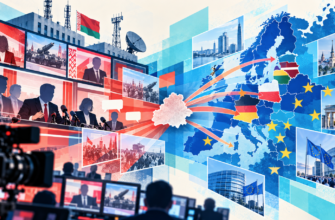
After Prigozhin’s death, Russia’s information operations in Africa did not collapse – they professionalized. The main vehicle is now African Initiative, a Moscow-based news agency created in September 2023 to serve as “the information bridge between Russia and Africa.”4 In June 2025, France’s VIGINUM agency identified African Initiative as the primary instrument of Russian FIMI activities on the continent.
The infrastructure is extensive. “Russian Houses” – cultural centers coordinated by the Russian federal agency Rossotrudnichestvo – appeared in Mali in June 2022, Burkina Faso in January 2024, and Niger in October 2024.5 These centers offer Russian language courses, organize cultural events, and cultivate relationships with local journalists. In Bamako, young journalists visit every Wednesday to learn Russian. The pipeline from cultural engagement to political alignment is direct.
The scale is documented. According to the Africa Center for Strategic Studies, Russia is connected to 80 of 189 identified disinformation campaigns on the African continent – approximately 40 percent of all documented operations. This represents a nearly fourfold increase since 2022.6 Two prominent pro-Kremlin influencers alone have a combined social media following of more than 28 million users, with content amplified daily by hundreds of Russia-linked accounts.
The narratives are consistent: Western countries support terrorists in the Sahel; Ukraine backs insurgent groups attacking African governments; France and the United States exploit African resources while providing nothing in return; Russia offers partnership without conditions. An ISD investigation of pro-Kremlin influencers targeting the Alliance of Sahel States found four main narrative categories: Russia as a more reliable ally than the West; pro-Kremlin talking points about Ukraine; accusations that Ukraine supports Sahelian terrorism; and claims that Western countries back terrorist groups.7
The Alliance of Sahel States
In September 2023, the military juntas of Mali, Burkina Faso, and Niger formalized their alignment by creating the Alliance of Sahel States (AES). All three governments had come to power through coups; all three faced jihadist insurgencies; all three had expelled French forces and turned to Russia for security support.
The timing was deliberate. ECOWAS, the West African regional bloc, had threatened military intervention in Niger following its July 2023 coup. The AES was structured as a mutual defense pact: an attack on one would be treated as an attack on all. In January 2024, all three countries announced their withdrawal from ECOWAS. By early 2025, the withdrawal was complete.8
Russia moved quickly to formalize its role. In April 2025, Russian Defense Minister Andrei Belousov hosted the first formal Russia-AES consultations in Moscow, pledging continued military support. The agreement includes provisions for satellite technology, border monitoring systems, and training for a planned 5,000-strong joint AES military force.9
The information dimension is explicit. Russian support includes not only military equipment but “political propaganda,” as the International Crisis Group noted. The AES juntas have expelled critical media – Radio France International and France 24 are banned – while Russian-aligned outlets fill the void. Being a journalist in the Sahel today, one Burkinabè reporter told Forbidden Stories, means “either collaborating or remaining silent. We’re living in the darkest hours of journalism in Burkina Faso.”10
The Reality Gap
Russia’s Sahel narrative presents a success story: sovereign African nations liberated from Western exploitation, defended by a reliable partner. The reality is considerably darker.
Security conditions continue to deteriorate across all three AES countries. In Burkina Faso, jihadists now pressure urban centers that were previously unaffected. Major attacks struck Bamako in September 2024 and Djibo in May 2025. The jihadist insurgency has expanded southward into Benin and Togo. Wagner’s replacement by Africa Corps has not reversed these trends.11
Russian forces have suffered significant losses. In July 2024, a joint Wagner-Malian army assault on the Tuareg community of Tinzaouaten turned into a rout when insurgents from Jama’at Nusrat al-Islam wal-Muslimin (JNIM) ambushed the retreating forces. At least 46 mercenaries and 24 Malian soldiers died – the worst known Wagner defeat in Mali. In response, Mali and Niger severed diplomatic ties with Ukraine, accusing Kyiv of supporting the rebels.12
Economic extraction continues. Russia has extracted an estimated $2.5 billion in gold mining revenues from Africa since 2022. The model – security assistance funded through resource concessions – remains unchanged from the Wagner era.13
And crucially, Russia wins either way. As the European Council on Foreign Relations observed: if Africa Corps operations succeed, Russia secures client states and mining deals. If they fail and security deteriorates, chaos spreads beneath Europe’s southern flank. The information infrastructure ensures that blame falls on Western interference, not Russian incapacity.14
The Uncomfortable Questions
The Sahel case presents challenges that extend beyond counterterrorism. Russian FIMI did not create anti-French sentiment in the region – decades of colonial history and perceived neocolonial exploitation did that. What Russia accomplished was channeling authentic grievances into support for authoritarian governance and Russian alignment.
The toolkit is replicable. Russian operations have targeted Ghana during its 2024 elections, Nigeria during President Tinubu’s visit to France, and Côte d’Ivoire ahead of its October 2025 presidential election. Chad, which ended its defense cooperation with France in late 2024, has expressed interest in joining the AES. The model is expanding.15
Most troubling is the sustainability question. The Africa Corps, unlike Wagner, cannot easily withdraw when costs outweigh benefits. As a state-controlled entity, its failures reflect directly on the Kremlin. Russia is now committed to “forever wars” in the Sahel, unable to abandon its partners without damaging its reputation as a reliable alternative to the West.
The human cost falls on Sahelian civilians – caught between jihadist violence, state repression, and Russian mercenaries who have been credibly accused of massacres, torture, and systematic human rights violations throughout their deployment.
Sources
Additional Reading
- Al Jazeera, “Wagner vs Africa Corps: The future of Russian paramilitaries in Mali”, June 2025
- EUvsDisinfo, “Rossotrudnichestvo in Africa: Propaganda and Soft Power”, 2024
- Africa Defense Forum, “African Initiative promotes disinformation”, October 2024
-
Georgetown Journal of International Affairs, “Russia in Africa: Private Military Proxies in the Sahel”, March 2025. ↩
-
Global Initiative Against Transnational Organized Crime, “Mercenaries and illicit markets: Russia’s Africa Corps and the business of conflict”, 2025. ↩
-
Africa Defense Forum, “Russia’s Influence Machine”, October 2024. ↩
-
ISD Global, “Pro-Kremlin influencers targeting audiences in the Alliance of Sahel States”, June 2025. ↩
-
Forbidden Stories, “Propaganda Machine: Russia’s information offensive in the Sahel”, November 2024. ↩
-
Africa Defense Forum, “Russia Flooding Africa With Disinformation”, April 2024. ↩
-
ISD Global, “Pro-Kremlin influencers targeting audiences in the Alliance of Sahel States”, June 2025. ↩
-
International Crisis Group, “Defining a New Approach to the Sahel’s Military-led States”, 2025. ↩
-
Military Africa, “Russia pledges continued military support for AES juntas”, August 2025. ↩
-
Forbidden Stories, “Propaganda Machine: Russia’s information offensive in the Sahel”, November 2024. ↩
-
Security Council Report, “West Africa and the Sahel, November 2025 Monthly Forecast”, November 2025. ↩
-
Critical Threats, “Wagner Out, Africa Corps In: Africa File”, June 12, 2025. ↩
-
Harvard International Review, “Soft Power in the Sahel: Russian Influence and the Kremlin’s Internet Stronghold”, 2024. ↩
-
European Council on Foreign Relations, “The bear and the bot farm: Countering Russian hybrid warfare in Africa”, 2025. ↩
-
ORF Online, “Sahel’s strategic drift towards Russia”, 2025