
Region: 🇲🇱🇧🇫🇳🇪 Mali, Burkina Faso, Niger
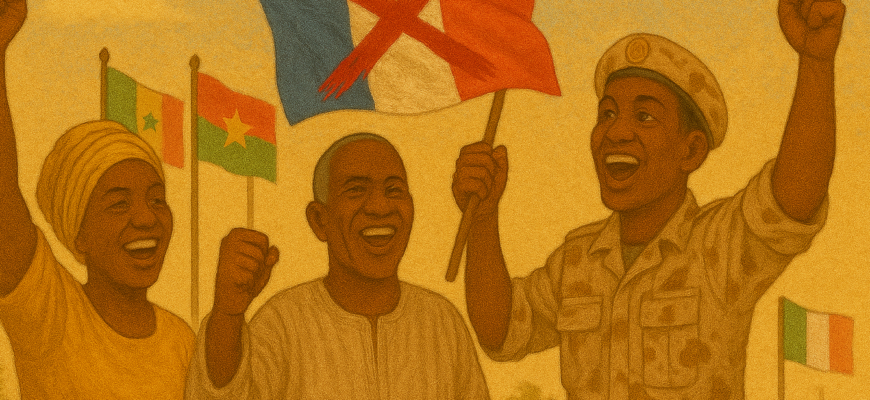
In the weeks before Burkina Faso’s September 2022 coup, something unusual happened on Facebook. Engagement on posts mentioning the Wagner Group increased by 6,363 percent. Russian flags began appearing at protests. Crowds chanted “Down with France, long live Putin.”1
The coup succeeded. Within months, 400 French special forces were expelled. The pattern had already played out in Mali. It would repeat in Niger. By early 2025, France’s military presence in the Sahel – maintained for nearly seventy years – had collapsed entirely.
This was not spontaneous. It was orchestrated.
The Playbook
The Africa Center for Strategic Studies has documented 189 disinformation campaigns targeting the African continent – nearly quadruple the number identified in 2022. Russia sponsors 80 of them, accounting for almost 40 percent of all disinformation operations in Africa, targeting more than 22 countries.2
The Sahel has been ground zero.
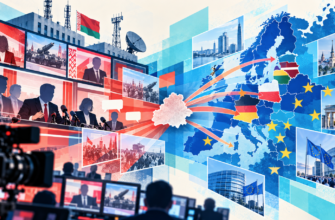
The playbook follows a consistent pattern. First, Russian-linked social media accounts amplify legitimate grievances – colonial history, failed Western interventions, jihadist violence that French forces couldn’t stop. Then coordinated networks of fake accounts, paid influencers, and “franchised” local content creators flood platforms with pro-Russian, anti-French messaging. Finally, when coups occur, the same networks celebrate them as anti-colonial liberation.3
In Mali, the Digital Forensic Research Lab identified a network of Facebook pages that coordinated support for Wagner and the military junta in the months before France’s withdrawal. The pages, ostensibly charity and community organizations, posted content in coordinated waves undermining French interests and mobilizing public support for authoritarian rule. One page focused on the broader Sahel began calling for “revolution” across the region.4
When Niger’s coup came in July 2023, the infrastructure was already in place. Thousands marched through Niamey waving Russian flags, chanting Putin’s name, and setting the French embassy door ablaze. Signs read “Down with France, long live Putin.” Russian content creators falsely claimed that ECOWAS was planning an invasion – a narrative debunked by ECOWAS leaders but widely believed.5
The Domino Chain
The sequence was remarkably consistent across all three countries.
Mali (2020-2022): Two coups in nine months. The junta expelled the French ambassador in January 2022. Wagner forces arrived, eventually numbering over 1,000. France withdrew Operation Barkhane in November 2022 after a decade of counterterrorism operations.6
Burkina Faso (2022): Two coups in eight months. Captain Ibrahim Traore seized power in September 2022 amid protests that attacked the French embassy. By January 2023, the government had terminated defense agreements and demanded French withdrawal within a month.7
Niger (2023): The presidential guard detained elected President Mohamed Bazoum in July. Anti-French protests erupted immediately, featuring Russian flags. France withdrew 1,500 troops by the end of the year. American forces followed, leaving Niger by August 2024.8
The false flag nature of some demonstrations was documented in real time. The Daily Beast identified at least six participants in a pro-Russian protest in Mali who were relatives of military officers – siblings, cousins, wives of soldiers. Participants admitted meeting at a military base in Kati to plan the event. “Yes, it’s true that we met in Kati to plan the demonstration,” one admitted, “but we did it because we believe the army means well for Mali.”9
The Alliance of Sahel States
On September 16, 2023, the three junta-led countries formalized their alignment by creating the Alliance of Sahel States (AES) – a mutual defense pact explicitly rejecting Western influence.
The alliance deepened rapidly. In January 2024, all three announced withdrawal from ECOWAS, the regional economic bloc. In July 2024, they transformed the alliance into a full confederation with shared defense, economic integration, and plans for a common currency. On January 29, 2025, the withdrawal from ECOWAS became effective, ending fifty years of regional integration.10
The symbolism was deliberate. The AES unveiled a new flag featuring a map of the three countries without internal borders – explicitly rejecting what members called the “colonial borders” drawn at the 1884 Berlin Conference. They launched common biometric passports. They created a 5,000-strong joint military force.11
As one researcher noted, the juntas styled themselves as “heralds of a new era in the Sahel,” harboring the idea that military governments could handle insecurity more effectively than democracies.12
Russia was quick to fill the vacuum. The Africa Corps – Wagner’s successor under Russian Ministry of Defense control – deployed to all three countries. Russian Houses (cultural centers doubling as propaganda hubs) opened in Mali (June 2022), Burkina Faso (January 2024), and Niger (October 2024). RT announced plans for an English-language media center in South Africa to serve the continent.13
The Information Space
What happened to independent media in the Sahel illustrates how disinformation operations pave the way for authoritarian consolidation.
Radio France International and France 24 were banned. Foreign journalists were expelled – including two French reporters removed from Burkina Faso in April 2023 following a coordinated smear campaign. Local journalists faced worse. “To be a journalist in Niger is to sing the praises of the junta, to keep quiet, and to go into exile so as not to be jailed,” one reporter told Forbidden Stories under condition of anonymity.14
Le Monde documented that Russian agents were embedded in Burkina Faso’s intelligence service by late 2023, helping the junta monitor opponents, run influence operations, and train local propagandists. Captain Traore’s brothers, Inoussa and Kassoum, became so skilled at social media operations that they began running campaigns targeting neighboring governments like Ivory Coast.15
The model replicated what worked in Central African Republic. A whistleblower who fled CAR described being recruited to arrange pro-Russian experts on radio and write articles “in part directly dictated by Russian intermediaries.” Similar troll factories emerged across the Sahel, staffed by young people paid to monitor opponents and amplify regime narratives.16
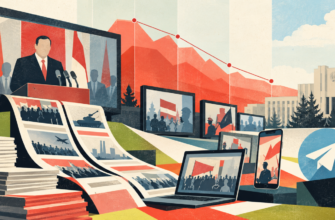
Two Russia-connected disinformation influencers alone have a combined social media following exceeding 28 million users. Their content is amplified by hundreds of Russian-linked accounts and pages in what researchers call “a sprawling ecosystem” of coordinated inauthentic behavior.17
The Results
The juntas promised security. They delivered catastrophe.
Since France began withdrawing in 2022, conflict-related fatalities in the Sahel have risen by 65 percent according to the Armed Conflict Location and Event Data Project (ACLED). By 2024, annual deaths had reached 25,000 – nearly five times the 5,400 recorded in 2017.18
About half of Burkina Faso lies beyond government control. In July 2024, dozens of soldiers from Mali’s military and Russia’s Wagner Group were killed in a devastating ambush by Tuareg rebels in northern Mali. Analysts warn Ouagadougou itself could fall to jihadist groups, with some fearing a “Somali-like scenario” where the national government controls only its embattled capital.19
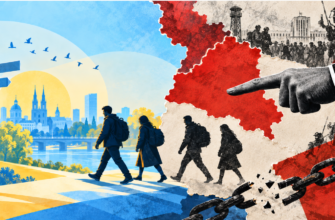
Nearly 2.9 million people were displaced by violence in the central Sahel in 2022 alone. Some 29 million require humanitarian assistance – 5 million of them children. The population fleeing Burkina Faso now seeks asylum as far as North Africa and Europe.20
The terrorism that supposedly justified the coups has only intensified. According to the Global Terrorism Index 2025, annual conflict-related deaths in the Sahel quintupled between 2017 and 2024. Neither ECOWAS nor France could stop this trajectory – but neither can Wagner or the Africa Corps.21
The Cognitive War
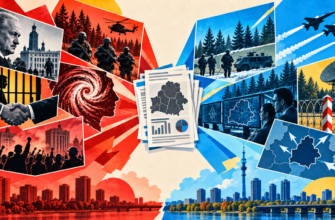
Russian disinformation in the Sahel exemplifies what military strategists call “ambiguous warfare” – amplifying grievances, exploiting divisions, and fostering fragmentation while maintaining plausible deniability.
The objective, researchers note, is “less to convince as to confuse” – creating false equivalences between democratic and authoritarian actors, generating disillusionment and apathy. When citizens can’t distinguish truth from manipulation, they become vulnerable to whoever controls the loudest megaphone.22
The grievances Russia exploits are real. French colonial history left deep wounds. Western military interventions failed to stop jihadist violence. Elected governments often proved corrupt and unresponsive. A 2021-2022 Afrobarometer survey found that while two-thirds of Africans prefer democracy, only 38 percent were satisfied with how it works in their countries.23
Russia didn’t create these frustrations. But by systematically amplifying them while offering military juntas as the alternative, Moscow helped ensure that legitimate demands for change produced outcomes serving Russian interests rather than African populations.
As one Malian journalist told researchers: he feared Russia’s online mercenaries, “paid by the authorities to go on social media and paint you as someone who needs to be struck down.”24
The expelled French forces never solved the Sahel’s security crisis. But their Russian replacements haven’t either – they’ve only silenced those who might say so.
Sources
Additional Reading
- Foreign Policy Research Institute, “The West’s Loss of the Sahel: Not (only) Russia’s Doing”, July 2024
- Al Jazeera, “French mistakes helped create Africa’s coup belt”, August 2023
- Axios, “Inside the French effort to counter Russian mercenaries in Africa”, October 2022
- Africa Defense Forum, “Russia’s Influence Machine”, October 2024
-
Africa Defense Forum, “Russia Flooding Burkina Faso With Disinformation”, February 2024. ↩
-
Africa Center for Strategic Studies, “Mapping a Surge of Disinformation in Africa”, March 2024. ↩
-
PRIO, “Soft Power and Disinformation: The Strategic Role of Media in Wagner’s Expansion in Africa”, March 2023. ↩
-
DFRLab, “Pro-Russian Facebook assets in Mali coordinated support for Wagner Group”, 2022. ↩
-
NPR, “Supporters of Niger’s coup march waving Russian flags and denouncing France”, July 2023. ↩
-
France 24, “‘France out!’ when former colonies give Paris the boot”, September 2023. ↩
-
Al Jazeera, “Burkina Faso kicks out three French diplomats”, April 2024. ↩
-
VOA News, “Kremlin disinformation campaigns aim to discredit French military in Sahel”, 2025. ↩
-
The Daily Beast, “How These Mali Coup Plotters Staged a False Flag Pro-Russia March”, 2021. ↩
-
Wikipedia, “Alliance of Sahel States”; Amani Africa, “The Withdrawal of AES from ECOWAS”, January 2025. ↩
-
Modern Diplomacy, “Alliance of Sahel States Stepping Forward”, February 2025. ↩
-
Middle East Institute, “Shifting sentiments in the Sahel: Anti-France or pro-Russia?”, 2023. ↩
-
Forbidden Stories, “Propaganda Machine: Russia’s information offensive in the Sahel”, 2024. ↩
-
Forbidden Stories, “Propaganda Machine”, 2024. ↩
-
ECFR, “The bear and the bot farm: Countering Russian hybrid warfare in Africa”, 2024. ↩
-
News24, “Russian propaganda: How Moscow uses disinformation in Africa”, February 2025. ↩
-
Africa Center for Strategic Studies, “Mapping a Surge of Disinformation in Africa”, March 2024. ↩
-
VOA News, “Kremlin disinformation campaigns”, 2025. ↩
-
ECFR, “The bear and the bot farm”, 2024; Africa is a Country, “After the coups”, July 2025. ↩
-
Middle East Institute, “Shifting sentiments in the Sahel”, 2023. ↩
-
World and New World Journal, “The withdrawal of Burkina Faso, Mali, and Niger from ECOWAS”, 2025. ↩
-
Africa Center for Strategic Studies, “Mapping Disinformation in Africa”, 2022. ↩
-
Wilson Center, “The Consequences of Russian Disinformation: Examples in Burkina Faso”, 2024. ↩
-
Forbidden Stories, “Propaganda Machine”, 2024.

Comments are closed.