

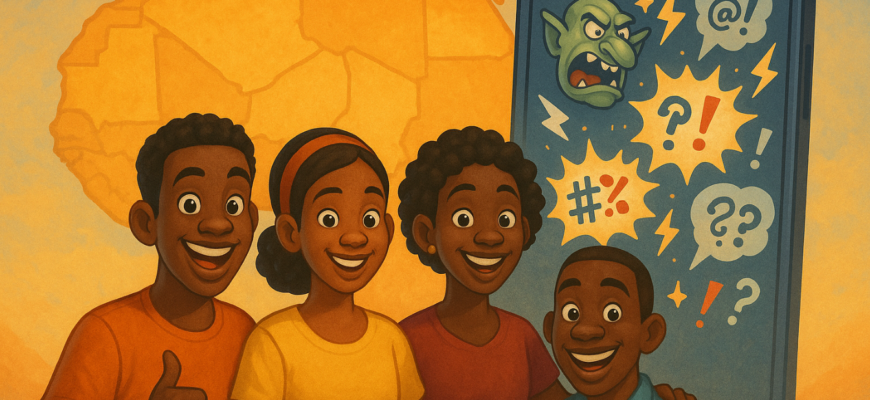
Region: 🌍 Africa Overview
For seven days, we’ve tracked information warfare across Africa – from the Sahel’s burning villages to South Africa’s ballot boxes. The pattern is clear: foreign powers are reshaping the continent’s information environment with lasting consequences.
>The Week in Numbers
189 — Documented disinformation campaigns targeting Africa
80 — Campaigns sponsored by Russia (40% of total)
16 — Russian transnational disinformation operations across the continent
11 — Active disinformation campaigns targeting South Africa alone
28 million — Combined social media followers of two prominent Russia-linked disinformation influencers
$295 billion — China-Africa trade in 2024 (vs Russia’s $24.5 billion)
$170 billion — Chinese loans to African countries (2001-2022)
10 million — African households receiving Chinese digital TV via StarTimes
350+ — Deaths in South Africa’s July 2021 riots, fueled by social media disinformation
Day-by-Day Recap
Day 8: The Sahel — Russia’s African Laboratory
The Sahel belt – Mali, Burkina Faso, Niger – has become Russia’s testing ground for information warfare. After military coups expelled French forces, Russian “political technologists” filled the void. The playbook: amplify anti-Western sentiment, deploy mercenaries as “military instructors,” and build media infrastructure that survives regime changes.
Key insight: Russia’s operations in the Sahel aren’t about winning wars – they’re about creating dependency and displacing Western influence.
Day 9: Central African Republic — Prigozhin’s Laboratory
CAR became the Wagner Group’s first major African experiment. Since 2018, Russian operatives have built a comprehensive influence apparatus: Radio Lengo Songo, Lobaye Invest mining operations, the “Touadéra Youth” movement, and an army of Russian-instructed local bloggers. President Touadéra now faces no meaningful opposition.
Key insight: CAR demonstrates the full “regime survival package” – mercenaries, election support, media control, and resource extraction, all integrated.
Day 10: Sudan — Information War Amid Civil War
Sudan’s catastrophic civil conflict has an information dimension. Both the army (SAF) and Rapid Support Forces (RSF) deploy sophisticated disinformation. The RSF’s Hemedti built his media operation during peacetime, learning from Russian advisors who helped craft his image as a “statesman.” Now those tools fuel ethnic hatred and complicate humanitarian response.
Key insight: Disinformation doesn’t just accompany conflict – it shapes who lives, who dies, and whether peace becomes possible.
Day 11: Mali — When Lies Kill
When Mali expelled MINUSMA peacekeepers in 2023-2024, disinformation campaigns had prepared the ground. Coordinated networks spread narratives that UN forces were colonial occupiers, spies, or responsible for atrocities actually committed by others. The result: a country more isolated, more violent, and more dependent on Russian “security partners.”
Key insight: Information operations against international institutions create vacuums that authoritarian actors fill.
Day 12: China — A Different Model
China’s African influence operates differently from Russia’s chaos-based approach. Beijing builds infrastructure: 46 ports, railways, telecommunications networks. It constructs media ecosystems: Xinhua’s 37 bureaus, CGTN broadcasts, StarTimes satellite dishes in 190,000 rural homes. It trains 1,000 African journalists annually.
Key insight: China invests in stability; Russia profits from chaos. They’re not allies, but their interests rarely conflict – and both benefit from weakened Western presence.
Day 13: South Africa — When Democracy Meets Disinformation
South Africa’s 2024 elections showed how information warfare compounds over time. The Bell Pottinger scandal of 2016-2017 embedded “white monopoly capital” into political discourse. The #IStandWithPutin campaign of 2022 revealed Russian influence networks. By 2024, the ANC lost its 30-year majority amid an information environment where citizens struggled to distinguish truth from manipulation.
Key insight: Information operations don’t just affect single elections – they reshape political culture for decades.
Patterns Across the Continent
1. The “Regime Survival Package”
Russia offers struggling governments a comprehensive deal: mercenaries for security, political technologists for elections, media infrastructure for narrative control, and diplomatic cover at the UN. In exchange: mineral rights, military bases, and aligned foreign policy.
2. Infrastructure vs. Infostructure
China builds physical infrastructure and media “infostructure” simultaneously. Roads and railways create economic dependency; satellite dishes and journalist training programs shape information environments. The debt that finances both creates leverage.
3. Platform Vulnerability
TikTok, Telegram, and WhatsApp repeatedly appear as primary vectors. Their algorithmic amplification, encrypted spaces, and weak content moderation make them ideal for coordinated campaigns – whether from state actors or local proxies.
4. Local Amplifiers
Foreign operations increasingly use local voices. Duduzile Zuma-Sambudla in South Africa, paid influencers across the Sahel, Russian-trained journalists in CAR – authentic-seeming local content is harder to detect and more persuasive than obvious foreign propaganda.
5. Anti-UN, Anti-Western Framing
A consistent thread: portraying international institutions and Western nations as colonial, exploitative, or hypocritical. This narrative resonates with real historical grievances while serving current Russian and Chinese interests.
What’s Different About Africa
Africa isn’t just another theater for information warfare – it has unique characteristics:
Demographics: The continent’s median age is 19. Young, mobile-first populations are highly susceptible to social media influence but also capable of rapid counter-mobilization.
Media ecosystems: Many countries have weak legacy media, creating vacuums that foreign state media and social platforms fill.
Historical memory: Colonial history provides authentic grievances that foreign actors exploit. Anti-Western messaging resonates because Western policies have genuinely caused harm.
Resource competition: Africa’s minerals – from Sahel gold to Congolese cobalt – make information control a pathway to economic extraction.
Democratic fragility: Young democracies and fragile institutions are more vulnerable to information operations that undermine trust.
Looking Ahead
Week 3 will take us to Latin America and the Caribbean, where different actors deploy similar tactics in different contexts. The patterns established in Europe and Africa will find new expressions – and new resistance.
Coming tomorrow: Day 15 begins our Latin America series.
Test Your Knowledge
Take the Week 2 Quiz below to see how much you’ve learned about FIMI operations in Africa!

Comments are closed.