
The Evolution of Russian Election Interference (2016–2024)
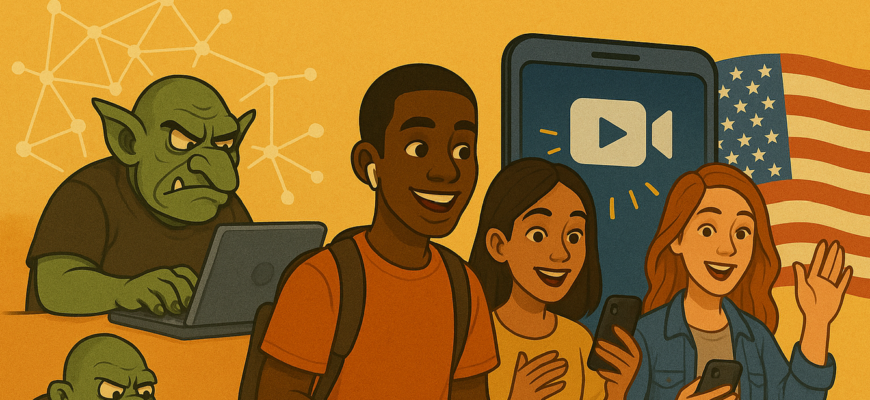
In 2016, Russia’s election interference operation relied on an army of anonymous trolls working from a nondescript building in St. Petersburg. By 2024, the Kremlin had adapted: instead of creating fake Americans, it began paying real ones.
The Internet Research Agency: The 2016 Model
The Internet Research Agency (IRA), based in St. Petersburg, became the centerpiece of Russia’s 2016 election interference campaign. According to the February 2018 indictment by Special Counsel Robert Mueller, the organization employed hundreds of people who created thousands of fake American personas across Facebook, Twitter, Instagram, and YouTube.
The operation was substantial. According to the U.S. Department of Justice, between January 2016 and June 2018, the total budget for Project Lakhta — the umbrella operation that included the IRA — was approximately $35 million. By October 2016, just weeks before the election, the department focused on the United States had more than 80 employees and a monthly budget of $1.25 million, according to EUvsDisinfo.
The reach was enormous. Facebook reported to Congress that IRA content reached 126 million users through organic posts, while paid advertisements reached 11.4 million users. The Senate Intelligence Committee later found over 263 million “engagements” with IRA content.
The IRA didn’t just post online. According to the Mueller indictment, it organized 129 real-world events that attracted the attention of nearly 340,000 Facebook users. In one case, IRA operatives organized both a pro-Trump rally and an anti-Trump protest in New York on the same day.
In February 2023, Yevgeny Prigozhin publicly admitted that he had founded the Internet Research Agency, stating: “I’ve never just been the financier of the Internet Research Agency. I created it, I managed it for a long time.”
The Tenet Media Pivot: The 2024 Model
By 2024, Russia’s approach had fundamentally changed. Rather than creating fake Americans, the Kremlin began paying real American influencers through intermediaries.
On September 4, 2024, the U.S. Department of Justice unsealed an indictment charging two RT employees — Kostiantyn Kalashnikov, 31, and Elena Afanasyeva, 27 — with conspiracy to commit money laundering and conspiracy to violate the Foreign Agents Registration Act. According to the DOJ, they had funneled nearly $10 million to Tenet Media, a Tennessee-based company that featured six right-wing influencers with a combined following of more than 7 million subscribers on YouTube and 7 million followers on X.
The payments were substantial. According to the indictment, one influencer received a contract for $400,000 per month plus a $100,000 signing bonus to produce four weekly videos. Between October 2023 and August 2024, RT sent wire transfers totaling approximately $9.7 million — nearly 90% of Tenet Media’s total bank deposits.
The money was laundered through shell companies in Turkey, the United Arab Emirates, and Mauritius. Wire notes disguised the payments as purchases of electronics — one $318,800 transfer from Turkey was labeled “BUYING GOODS-INV.013-IPHONE 15 PRO MAX 512GB”.
The influencers — including Tim Pool, Dave Rubin, and Benny Johnson — stated they were unaware of the Russian funding and claimed to be victims of the scheme. Tenet’s founders, Lauren Chen and Liam Donovan, allegedly knew the true source. According to the indictment, a private message between them in May 2021 read: “So we’re billing the Russians from the corporation, right?”
The company’s nearly 2,000 YouTube videos had accumulated more than 16 million views before YouTube terminated the channel following the indictment. Tenet Media shut down on September 5, 2024.
Why the Shift?
The evolution reflects adaptation to a changed environment. After 2016, social media platforms implemented safeguards that made it harder to operate fake accounts traced to Russia. As CNA research notes, Russia has increasingly “begun to employ real people in targeted or other countries to knowingly or unknowingly spread Russia’s narratives on its behalf.”
RT editor-in-chief Margarita Simonyan openly acknowledged this shift after the indictment: “In these countries, including the United States, we started to work undercover. We organised a number of guerrilla projects.” She claimed, without providing evidence, that these projects received “nearly 14 billion views.”
The Pattern
The Tenet Media case demonstrates a fundamental shift in Russian influence tactics: from volume to precision, from fake personas to real voices, from direct control to covert funding. The goal remained the same — as the DOJ stated, the content was “often consistent with the Government of Russia’s interest in amplifying U.S. domestic divisions” — but the method had evolved.
Sources:
- U.S. Department of Justice. Two RT Employees Indicted For Covertly Funding And Directing U.S. Company. September 4, 2024.
- NPR. How Russia covertly hired U.S. influencers to create videos. September 5, 2024.
- Senate Select Committee on Intelligence. Bipartisan Report on Russia’s Use of Social Media.
- EUvsDisinfo. The St. Petersburg Troll Factory Targets Elections.
- CNA. The Evolution of Russian Election Disinformation. October 2020.
- Al Jazeera. ‘Guerrilla projects’: Russia revels in US allegations of media warfare. September 12, 2024.
- CNN. DOJ alleges Russia funded US company linked to Tim Pool and Benny Johnson. September 4, 2024.
- PBS NewsHour. Well-known right-wing influencers duped to work for covert Russian operation. September 5, 2024.