

How a Democracy Responded to Multi-State Meddling (2019–2025)
In January 2025, Canada’s Public Inquiry into Foreign Interference released its final report — a seven-volume, 15-month investigation into how foreign actors attempted to interfere in the 2019 and 2021 federal elections. The inquiry found that while Canada’s democratic institutions “held up well,” disinformation now poses “the single biggest risk” to Canadian democracy.
The Scandal That Launched the Inquiry
In late 2022, Global News reported on leaked intelligence suggesting China had funded candidates in the 2019 election. In early 2023, The Globe and Mail published additional reports that the Chinese Ministry of State Security and United Front Work Department had employed disinformation campaigns and undisclosed donations to influence the 2021 election.
The Canadian Security Intelligence Service (CSIS) had been tracking these activities. According to the inquiry’s findings, CSIS concluded in February 2023 that the Chinese government had interfered in both elections.
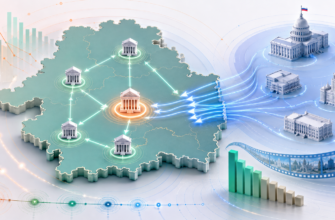
In September 2023, the government established the Public Inquiry into Foreign Interference, led by Justice Marie-Josée Hogue of the Quebec Court of Appeal. The inquiry examined interference by China, Russia, India, Pakistan, and Iran.
The Kenny Chiu Case: WeChat Disinformation in Action
One of the most documented cases involved Conservative MP Kenny Chiu, who represented Steveston-Richmond East in British Columbia — a riding with a large Chinese-Canadian population. In April 2021, Chiu introduced a private member’s bill to create a Foreign Influence Registry modeled on Australian legislation.
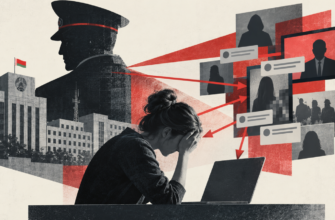
Shortly before the September 2021 election, anonymous articles appeared on WeChat — the Chinese messaging app used by an estimated one million Canadians — claiming Chiu’s bill would “suppress the Chinese community” and put “all individuals or groups connected with China” under surveillance.
According to DisinfoWatch research, the narratives appeared shortly after China’s state-run Global Times published an article attacking the Conservative Party. McGill University cybersecurity professor Benjamin Fung analyzed the activity and found it was “concentrated around a 9am to 5pm time slot — only not in Canada time, but in China time.”
Chiu told CBC he noticed constituents “angrily” shutting doors in his face during the campaign. He lost his seat to Liberal Parm Bains by 3,477 votes. The inquiry’s May 2024 initial report found this was “one riding where disinformation may have led to the election of one candidate over another.”
In April 2024, a Global Affairs Canada report confirmed that Chiu was targeted by social media accounts controlled by the China News Service.
The Commission’s Findings
On January 28, 2025, Commissioner Hogue released her final report. After hearing from more than 150 witnesses over 39 days of public hearings and reviewing thousands of classified documents, she reached several conclusions:
On election integrity: The 2019 and 2021 elections were “free and fair” at the national level, and foreign interference did not affect which party formed government. However, results in a small number of individual ridings may have been affected.
On parliamentarians: Despite a June 2024 report from the National Security and Intelligence Committee of Parliamentarians (NSICOP) suggesting some MPs were “semi-wittingly” or “wittingly” helping foreign states, Hogue found no evidence of “traitors” in Parliament conspiring with hostile states. While foreign states attempted to curry favor with parliamentarians, “the phenomenon remains marginal and largely ineffective.”
On disinformation: Hogue wrote that disinformation poses “the single biggest risk” to Canadian democracy. “If we do not find ways of addressing it, misinformation and disinformation have the ability to distort our discourse, change our views and shape our society.”
On government response: The government “sometimes took too long to act” and was “a poor communicator” about threats. Information sharing between agencies was flawed, with officials sometimes believing they had “fulfilled their duties as soon as they had delivered the information, without otherwise making sure that it had been received and understood.”
The report contained 51 recommendations.
The Threat Actors
The inquiry and Canadian intelligence identified multiple foreign actors:
China: Described as “the most active perpetrator of state-based foreign interference targeting Canada’s democratic institutions.” CSIS’s 2024 public report stated China “poses the greatest counter-intelligence threat to Canada.”
Russia: According to CSIS, Russian Intelligence Services have targeted Canada with “espionage, sabotage and foreign-influence operations.” CSIS warned that “Canada is considered a legitimate target in the Kremlin’s eyes” and has been “the subject of operational planning in relation to potential sabotage operations.”
India: In September 2023, Prime Minister Justin Trudeau announced allegations linking agents of the Indian government to the killing of Canadian citizen Hardeep Singh Nijjar. In 2024, Canada expelled six Indian diplomats. CSIS’s 2024 report warned Canada “must remain vigilant about continued foreign interference conducted by the Government of India.”
Pakistan and Iran: CSIS implemented specific measures to counter Pakistani attempts to influence Canadian federal politics. Iran was identified as targeting individuals it views as enemies, with CSIS disrupting multiple “potentially lethal threats” against Canadians.
Canada’s Legislative Response: Bill C-70
On May 6, 2024, the government introduced Bill C-70, the Countering Foreign Interference Act. It received Royal Assent on June 20, 2024 — the most significant update to the Canadian Security Intelligence Service Act since 1984.
Key elements include:
- Foreign Influence Transparency Registry: Requires individuals or entities that arrange with foreign principals to influence government or political processes to publicly register their activities. Overseen by a Foreign Influence Transparency Commissioner.
- New criminal offences: Creates offences for engaging in “surreptitious or deceptive conduct” at the direction of a foreign entity to influence political processes.
- Modernized CSIS powers: Updates the spy agency’s authorities to address digital-era threats.
Budget 2024 allocated $655.7 million over eight years to CSIS to enhance intelligence capabilities, plus additional funding for election protection and media literacy programs.
The Ongoing Threat
In November 2025, CSIS Director Dan Rogers warned that threats to Canada have increased: “Never in our combined histories have we faced threats of such magnitude simultaneously.”
CSIS’s 2024 report noted that China’s foreign interference “is not new, but… it is increasing and the means and methods are changing.” As Commissioner Hogue concluded: “Foreign interference will never be completely eradicated, and it will always be necessary to be vigilant and fight against it.”
The Lesson
Canada’s experience demonstrates both the vulnerability of democracies to multi-state interference campaigns — particularly through diaspora-targeted disinformation on platforms like WeChat — and the potential of transparent public inquiries to expose these threats. The Kenny Chiu case shows how disinformation in encrypted messaging apps can potentially flip individual electoral races, even if broader national results remain unaffected.
Sources:
- Foreign Interference Commission. Final Report. January 28, 2025.
- CBC News. 5 things we learned from the final report on foreign interference. January 28, 2025.
- CBC News. No evidence of ‘traitors’ in Parliament. January 28, 2025.
- Government of Canada. Bill C-70 receives Royal Assent. June 21, 2024.
- DisinfoWatch. Influence Operation Targeting Canadian 2021 Federal Election. December 2021.
- DFRLab. An existential threat: Disinformation ‘single biggest risk’ to Canadian democracy. March 2025.