

This week we crossed the Atlantic to explore how Foreign Information Manipulation and Interference operates across the American continent — from the world’s most powerful democracy to emerging regional powers.
Day 15: United States — The Primary Target
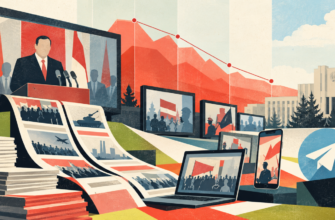
The U.S. remains ground zero for Russian information operations. We examined the Tenet Media scandal, where RT funneled $10 million to American influencers including Tim Pool and Benny Johnson. The Doppelganger operation created fake news sites mimicking Washington Post and Fox News. Most striking: some influencers claimed they were “duped” — but continued producing Russia-aligned content after exposure.
Key insight: The shift from bot farms to authentic American voices makes detection nearly impossible.
Day 16: Brazil — Democracy Under Digital Siege
Brazil’s 2022 election became a laboratory for testing electoral disinformation at scale. We traced how the “stolen election” narrative — imported from the U.S. — fueled the January 8, 2023 insurrection. The Superior Electoral Court’s aggressive response, including X/Twitter suspension, represents Latin America’s most robust counter-disinformation effort.
Key insight: Disinformation narratives are now globally portable — what works in one democracy gets exported to others.
Day 17: Canada — The Quiet Battleground
Canada faces a unique threat matrix: Chinese interference targeting diaspora communities, Russian operations exploiting social divisions, and Indian transnational repression. The NSICOP report confirmed China as the “most significant foreign interference threat.” The “Spamouflage” network and WeChat manipulation target Chinese-Canadians, while Russian trolls amplify Indigenous rights issues to divide society.
Key insight: Diaspora communities are increasingly targeted as vectors for foreign influence.
Day 18: Venezuela — The State as Disinformation Machine
Venezuela represents the extreme case: a state that has made disinformation its governing principle. From the “Economic War” narrative blaming sanctions for self-inflicted crisis to Telesur serving as a regional RT amplifier, the Maduro regime demonstrates how authoritarian governments weaponize information domestically while exporting propaganda regionally.
Key insight: State-controlled media ecosystems can make entire populations resistant to factual information.
Day 19: Mexico — The Guacamaya Revelations
The 2022 Guacamaya leaks exposed 6 terabytes of Mexican military secrets, revealing the Cyberspace Operations Center (COC), continued Pegasus spyware deployment against journalists, and systematic surveillance of civil society. Meanwhile, cross-border bot networks — 92% automated content in some campaigns — attack politicians from both left and right.
Key insight: Governments are often perpetrators, not just victims, of information manipulation.
Day 20: Latin America Regional Overview
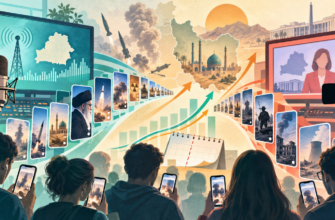
We stepped back to see the bigger picture: RT and Sputnik reaching 32 million regular listeners across 18 countries; China’s Paperwall network of 123 fake news sites; content laundering through local journalists; and recurring electoral disinformation patterns (fraud narratives, fake celebrity endorsements, AI deepfakes, fabricated polls).
Key insight: Russia thrives on chaos; China invests in stability. Different approaches, but both undermine democratic sovereignty.
The Week’s Overarching Lesson:
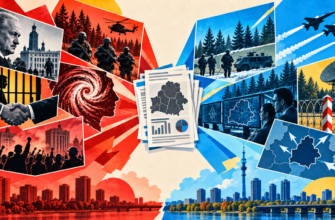
The Americas reveal how information warfare adapts to local contexts while maintaining global patterns. The same “stolen election” narrative appears in Washington and Brasília. The same content laundering techniques work in Mexico City and Buenos Aires. The same diaspora targeting operates in Toronto and Los Angeles.
But the Americas also show resistance: Brazil’s aggressive judicial response, Uruguay’s cross-party ethics pact, and investigative journalism exposing digital mercenaries from CLIP to Guacamaya.

Comments are closed.