
Research period:October 2025 – January 2026
Author:FactCheck.LT
Methodology:Analysis of over 200,000 publications from state and independent Belarusian media
Introduction / TL;DR
The Belarusian information space remains deeply polarized. State-run and independent media exist in parallel realities, conveying fundamentally different narratives to their audiences. In this study, we analyzed which topics dominate each information camp, who sets the agenda, and how quickly each side responds to the other’s narratives.
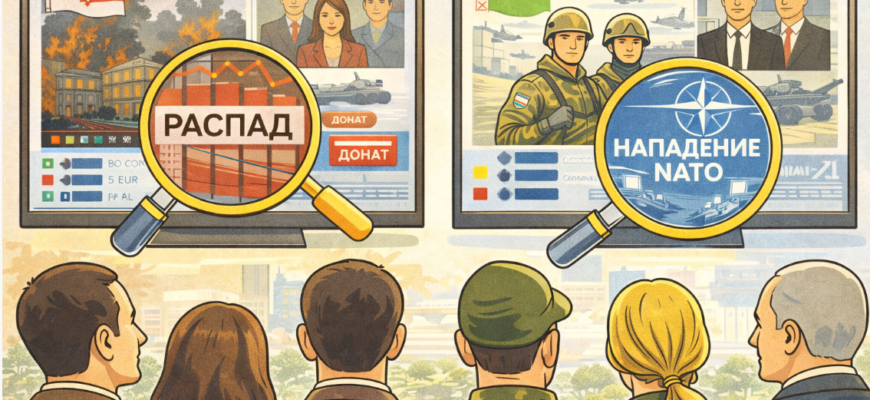
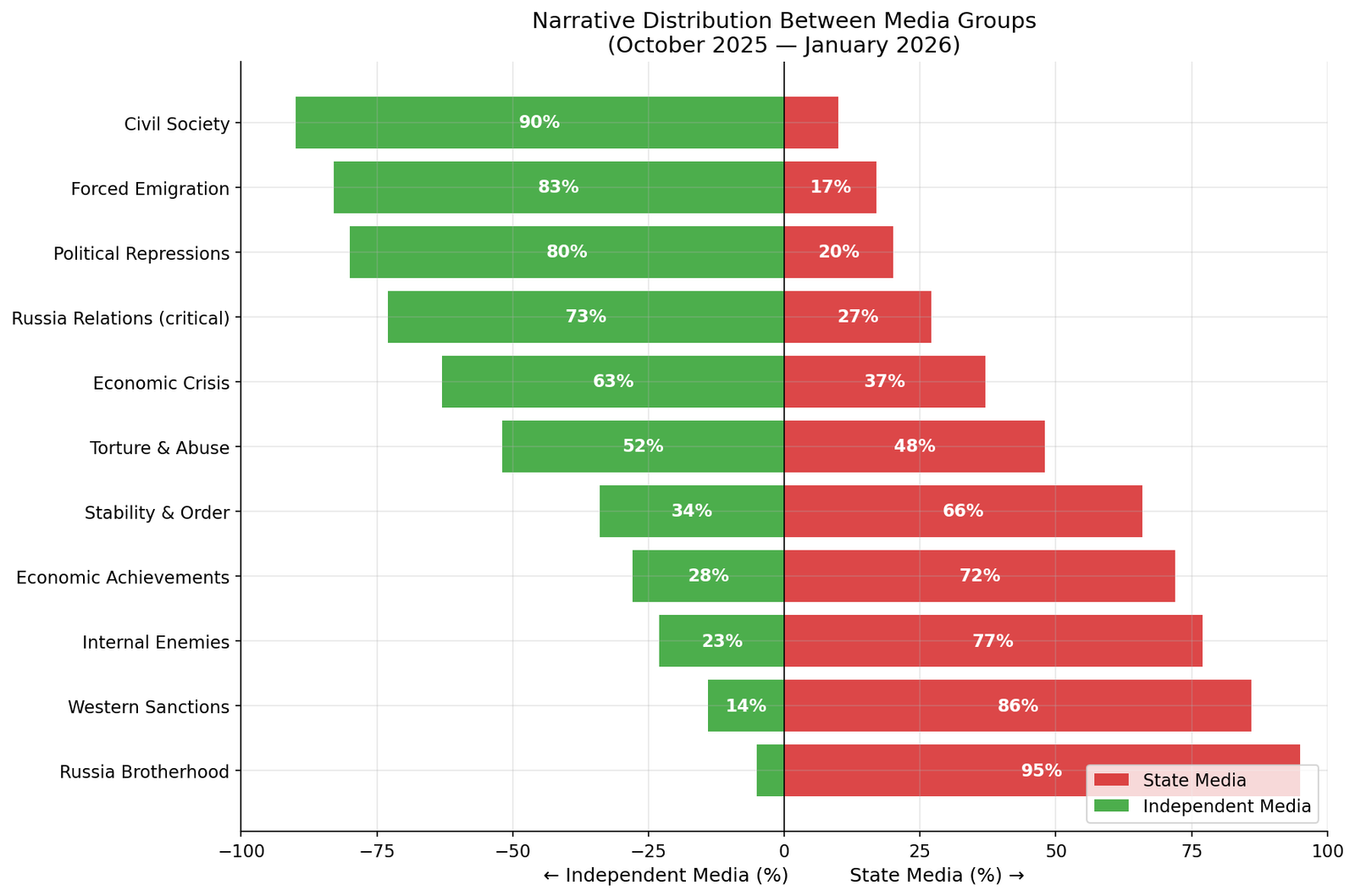
Two information worldsAn analysis of the distribution of key narratives revealed a clear polarization. State media focuses on topics that are virtually absent from independent media, and vice versa.
State media narratives
The theme of “brotherhood with Russia”—a union state, a fraternal people, integration—is present in 95% of state-run media, while independent media mention it in only 5% of publications. The picture is similar with the theme of “internal enemies”: the terms “extremist,” “terrorist,” “zmagar,” and “fugitive” are used by state-run media in 77% of cases. The topic of Western sanctions also remains predominantly a state-run one—86% of mentions come from pro-government sources, which invariably characterize them as “illegal” and “Western pressure.”
Independent Media Narratives
A similar situation is observed with topics that state media prefer to keep silent about. Civil society—human rights activists, NGOs, and public initiatives—is covered by independent media 90% of the time. State media mention this topic in only 10% of publications, and usually in a negative context. The forced emigration of Belarusians is practically taboo for state media: 83% of publications on this topic come from independent sources. Political repression—arrests, sentences, and the conditions of political prisoners—also remains a topic for independent media (80%).
Who sets the agenda?
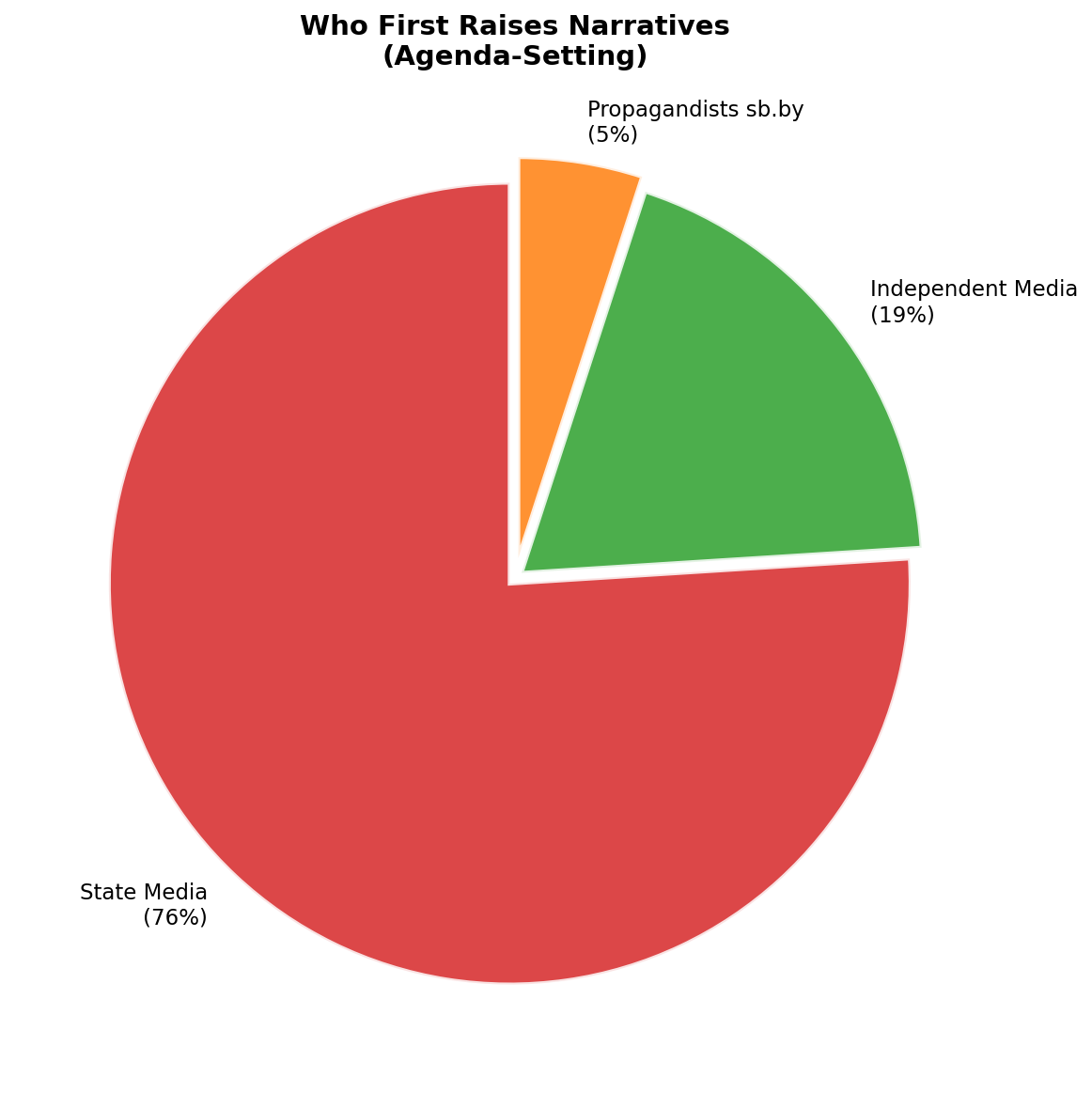
One of the key questions of the study was to determine who was the first to raise a particular topic. An analysis of the time lags between the first publications in different media groups yielded unexpected results.
Independent media
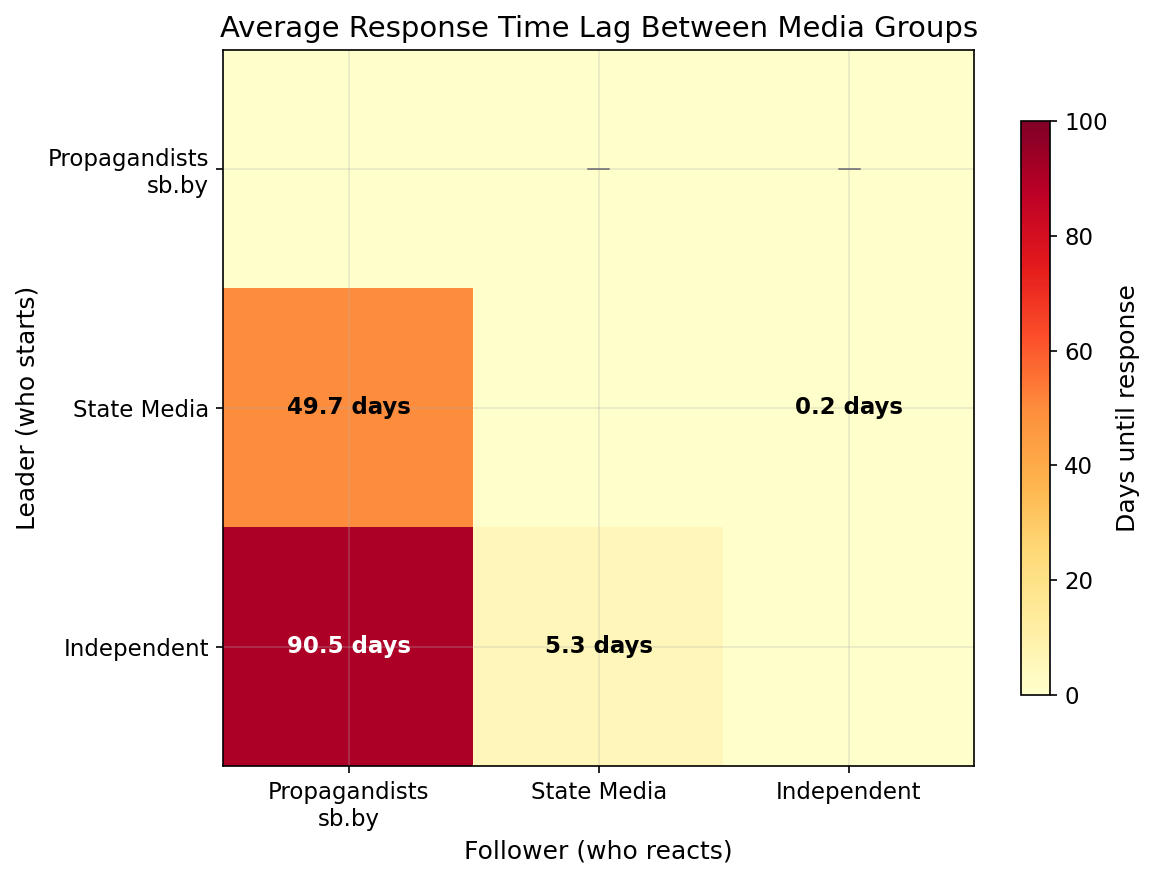
They monitor state propaganda in real time. The average lag between publication in state media and the response from independent media is only 0.2 days—in fact, several hours. This demonstrates professional propaganda monitoring and prompt fact-checking.
State media
React with a delay. When independent media are the first to raise a topic, state-owned media take an average of 5.3 days to respond. A typical example is the economic crisis: independent media began covering it on October 2, while state-owned media only responded on October 8. The topic of forced emigration appeared in independent media on October 1, while state-owned media followed suit eight days later. This delay may be explained by the need to “align” positions or prepare a counternarrative.
sb.by propagandists
They are not operational media. The content of sb.by authors deserves special mention. The average lag in their response to state media coverage is 50 days, while for independent media coverage it’s over 90 days. This indicates that sb.by is not focused on providing immediate information, but rather on producing “deep” propaganda and shaping long-term narratives.
December 2025: Two parallel events
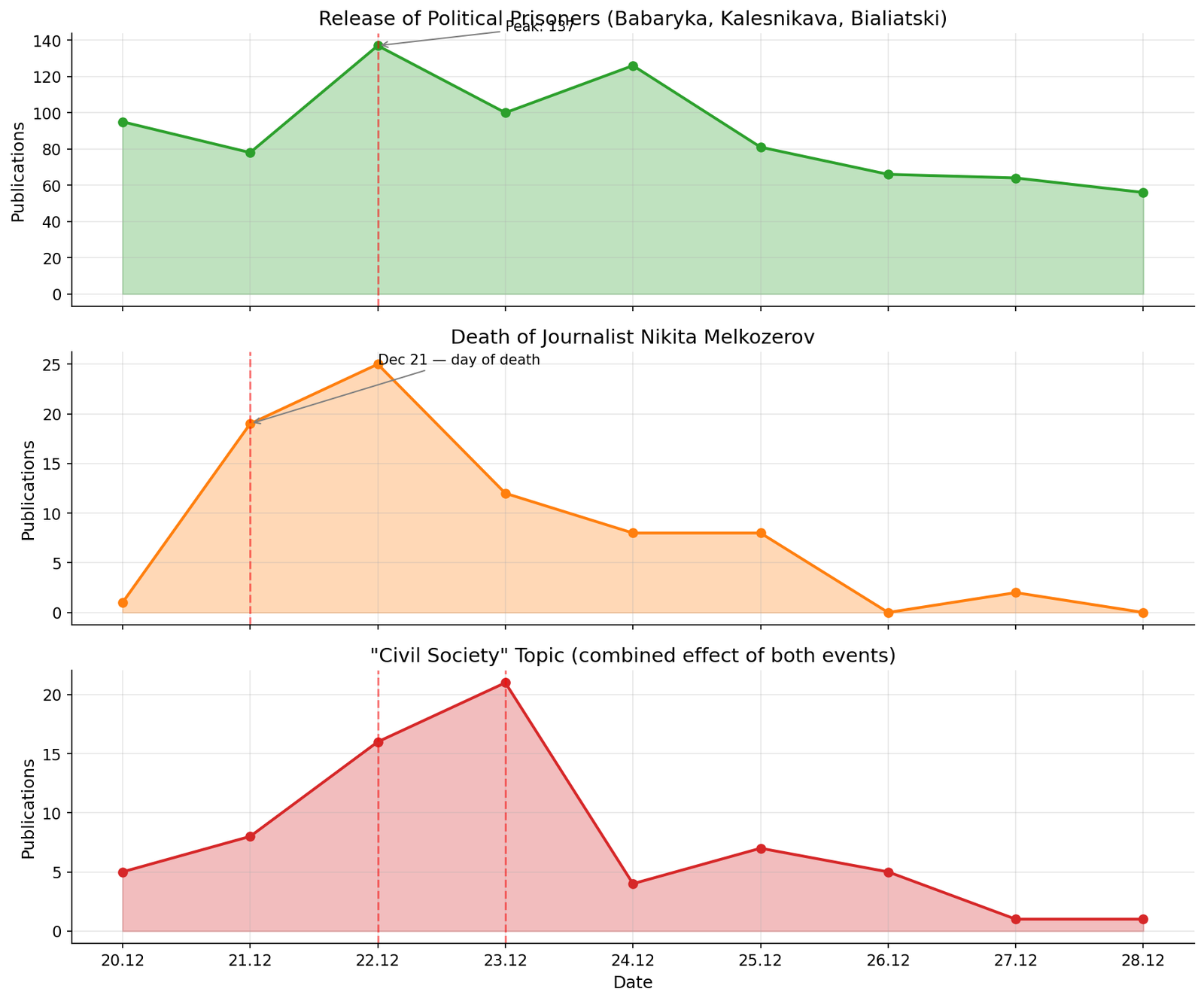
An analysis of publication trends revealed a sharp spike in the topic of “civil society” in the last week of December 2025. A detailed study revealed that the peak was caused by two concurrent events.
The death of journalist Nikita Melkozerov
On December 21, news broke of the death of Nikita Melkozerov, a journalist and author of the “Life-Raspberry” project. Independent media responded with 82 publications, peaking on December 21-22. State media effectively ignored the news, with only five mentions. The death of the Belarusian journalist in exile proved an awkward topic for pro-government media.
Release of political prisoners
During those same weeks, prominent political prisoners were released and expelled from the country: Nobel laureate Ales Bialiatski, Viktor Babariko, Maria Kolesnikova, Maksim Znak, and others. State media could not ignore this event, with 282 publications in pro-government sources recorded. However, a significant difference in framing was observed: while independent media wrote about the “release of political prisoners,” state-run media used the terms “pardon” and “expulsion.”
The peak of publications occurred on December 22. These two events, united by the theme of civil society and human rights, created a media resonance that was reflected in all analyzed indicators.
Mirror narratives
Of particular interest are topics that are covered by both sides, but with opposite framing.
Economy
State-run media focus on “economic achievements”—GDP growth, import substitution, and business successes (72% of publications). Independent media, by contrast, focus on the economic crisis—inflation, devaluation, and falling incomes. The same economic reality receives diametrically opposed interpretations.
Relations with Russia
State-run media use the language of “brotherhood” and “integration” (95%). Independent media more often write about “dependence on the Kremlin” and analyze the consequences of integration processes (73% of critical publications).
Torture and violence
Unexpectedly, this topic was represented in both camps roughly equally: 48% in state-run media and 52% in independent media. However, the context is fundamentally different: state-run media write about “torture in the West” or refute “false accusations,” while independent media document cases of abuse in Belarusian detention centers.
Conclusions
This analysis confirms the existence of two parallel information spaces in Belarus. State and independent media not only interpret events differently. They form fundamentally different pictures of reality, in which some topics are exaggerated and others are completely absent.
Independent media demonstrate a high level of professionalism in monitoring state propaganda, responding to it almost immediately. State media, by contrast, respond to critical topics with a noticeable delay, which may indicate a centralized approach to information policy decision-making.
The events of December 2025—the death of journalist Nikita Melkozerov and the release of political prisoners—clearly demonstrated the difference in approaches: silencing inconvenient topics in one case and forced coverage with alternative framing in the other.
Methodology
This study is based on an analysis of publications from a database containing over 200,000 documents for the period from October 2025 to January 2026. The sources were divided into three groups: state media, independent media, and state propagandists.
Keyword searches were used to identify narratives. Time lags were calculated as the difference between the dates of the first mention of a topic in different media groups. Visualizations were created using Python and the matplotlib library.