

The election that almost became Europe’s second Romania
On June 1, 2025, Karol Nawrocki of the Law and Justice party won Poland’s presidential runoff with 50.89% of the vote — a margin of less than 400,000 ballots out of nearly 20 million cast. His opponent, Warsaw mayor Rafał Trzaskowski, had entered the second round as the favorite. What happened in the two weeks between rounds would later be described by Poland’s Digital Minister Krzysztof Gawkowski as “an unprecedented attempt by Russia to interfere in Polish elections.”1
Unlike Romania, where the Constitutional Court annulled the presidential election in December 2024 after discovering a massive TikTok operation supporting candidate Călin Georgescu, Poland’s vote stood. But the question of whether the result reflected the authentic will of Polish voters — or was shaped by one of the most sophisticated information operations ever documented in a European election — remains deeply contested.
The TikTok front
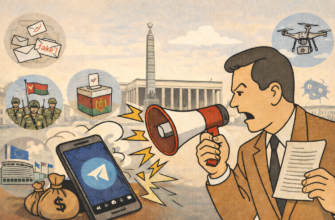
The scale of coordinated activity on TikTok during the Polish campaign defies easy comprehension. Analysis by FactCheck.LT identified 4,332 suspicious accounts operating across hashtags related to all three major candidates: Nawrocki, Trzaskowski, and the nationalist Sławomir Mentzen.2 These accounts were not random trolls. They represented 73.1% of all election-related activity in the dataset, generating an estimated 2.35 billion views through coordinated amplification.
The coordination was mathematically undeniable. Cross-hashtag synchronization reached 80.3%, meaning four out of five suspicious accounts were active across multiple candidate hashtags simultaneously — a pattern inconsistent with genuine grassroots support but consistent with centralized campaign management. The statistical probability of this occurring organically approaches zero, with significance levels below P<10⁻⁸⁰.
What makes the Polish case particularly instructive is the asymmetry of artificial amplification. Nawrocki’s official TikTok account generated 28.4 million organic views from 55 videos — respectable but unremarkable numbers. Yet FIMI detection analysis identified an additional 161.5 million views flowing to Nawrocki-supporting content through the network of suspicious accounts. This represents artificial amplification exceeding his organic reach by a factor of nearly six.
By contrast, Trzaskowski’s 51 videos generated 37.1 million organic views with standard engagement metrics (6.67%) and no detectable artificial amplification. Mentzen, the nationalist candidate who finished third in the first round with 13.06%, showed high organic activity (78.3 million views from 109 videos) with minimal coordinated support.
The operational timeline reveals strategic precision. Account activation spiked dramatically on May 16-17, 2025 — the final days before the first round. On May 18, election day, 205 accounts activated simultaneously, executing synchronized messaging across all demographic targeting parameters. This is not the behavior of enthusiastic supporters; it is the signature of professional information operations.
The Belarusian vector
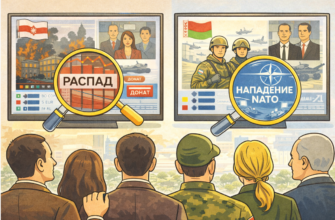
While TikTok served as the primary amplification platform, Belarusian state media provided a parallel channel for narrative injection. Between May 12-20, 2025, five Belarusian government YouTube channels — CTVBY, ONT TV Channel, NEWS.BY, СБТВ, and БелТА — published 30 videos specifically targeting the Polish election.3 Content analysis identified 76 distinct disinformation elements across these materials.
The techniques followed established FIMI patterns: manipulation through selective quotation (25%), emotional exploitation (22%), conspiracy narratives (18%), false dichotomy construction (15%), and direct discreditation (12%). The dominant narrative frame portrayed the Polish election as a choice between “American puppets” and “defenders of sovereignty” — a framing that precisely mirrored messaging amplified through the suspicious TikTok network.
Key factual distortions included claims of “mass electoral violations” (in reality, 120 procedural incidents across 31,000 polling stations — a rate below 0.4%), allegations of illegal U.S. Democratic Party financing of Polish candidates (no evidence presented), and assertions that Poland had “lost sovereignty” to Brussels and Washington.
The temporal coordination between Belarusian state media narratives and TikTok amplification patterns suggests integrated campaign management rather than independent operations.
Why Poland didn’t become Romania
Despite facing an information operation of comparable or greater sophistication than the one that prompted Romania’s election annulment, Poland’s electoral system held. Several factors explain the different outcome.
First, Poland’s media ecosystem is more diverse than Romania’s. While TikTok penetration is high among young Poles, television and traditional media retain significant influence among older voters. The concentrated TikTok operation could shape but not dominate the overall information environment.
Second, Polish society entered the election with high baseline awareness of Russian interference threats. GLOBSEC Trends 2025 polling found that 86% of Poles consider Russia a direct security threat — the highest figure in Central Europe.4 This cognitive inoculation created resistance to narratives that might have been more effective in populations less attuned to Russian information warfare.
Third, Polish authorities had prepared. The NASK cybersecurity agency deployed what officials called a “cyber umbrella,” monitoring approximately 2,100 threats and 622 suspicious domains daily during the campaign period.5 A cyberattack targeting the Civic Platform’s systems in early April was detected and contained.6 Two days before the first round, Russian hackers launched another attack against the ruling coalition’s websites — this time a DDoS attack that was also repelled.7
Fourth, timing mattered. Poland voted six months after Romania’s annulled election, allowing officials, media, and civil society to study that case. The Romanian precedent created political space for discussing foreign interference without appearing partisan.
The uncomfortable questions
Yet the Polish case raises questions that Europe has not answered. The election was not annulled, but 161.5 million artificial views did flow to content supporting the winning candidate. The margin of victory was 1.78 percentage points. Can we be confident the outcome would have been identical without the operation?
Polish authorities chose not to pursue annulment, citing the diversity of the information ecosystem and the impossibility of isolating FIMI effects from legitimate campaign dynamics. This reasoning has merit — but it also establishes a troubling precedent. If an operation of this scale and sophistication is insufficient to trigger electoral consequences, what threshold would be?
The uncomfortable truth may be that democratic societies face a choice between two unsatisfying options. Annulling elections based on foreign interference risks delegitimizing democratic processes and handing adversaries a veto over outcomes they dislike. But allowing results to stand despite documented manipulation risks normalizing interference as an accepted feature of electoral competition.
Poland chose the second path. Whether this represents democratic resilience or democratic vulnerability depends on questions we cannot definitively answer — and that, perhaps, is precisely the point. Information warfare succeeds not only when it changes outcomes, but when it makes those outcomes permanently contestable.
Sources
Additional Reading
- GLOBSEC, “The Kremlin’s Double Game: Russian Attempts to Influence Poland’s 2025 Election,” June 2025. https://www.globsec.org/what-we-do/commentaries/kremlins-double-game-russian-attempts-influence-polands-2025-election
- The Record, “Poland accuses Russia of ‘unprecedented’ interference ahead of presidential election,” May 2025. https://therecord.media/poland-elections-russia-hybrid-threats-disinformation
- Polskie Radio, “Poland faces ‘unprecedented’ Russian election interference: deputy PM,” May 6, 2025. https://www.polskieradio.pl/395/7784/Artykul/3519570,poland-faces-unprecedented-russian-election-interference-deputy-pm-says
-
Notes from Poland, “Russian election interference in Poland ‘unprecedented’, says Polish minister,” May 7, 2025. https://notesfrompoland.com/2025/05/07/russian-election-interference-in-poland-unprecedented-says-polish-minister/ ↩
-
FactCheck.LT, “Как повлиял TikTok на результаты президентских выборов в Польше,” June 2025. https://factcheck.lt/news/tiktok_influence_in_polish_elections/ ↩
-
FactCheck.LT, “FIMI и DIMI в действии: Беларуские госмедиа и выборы в Польше,” May 2025. https://factcheck.lt/news/fimi_dimi_polish_elections/ ↩
-
GLOBSEC, “GLOBSEC Trends 2025: Ready for a New Era?,” May 2025. https://www.globsec.org/what-we-do/publications/globsec-trends-2025-ready-new-era ↩
-
New Eastern Europe, “Resisting foreign interference: Poland’s presidential election and the Russian challenge,” June 10, 2025. https://neweasterneurope.eu/2025/06/10/resisting-foreign-interference-polands-presidential-election-and-the-russian-challenge/ ↩
-
Notes from Poland, “‘Foreign election interference’ behind cyberattack on Polish ruling party, says Tusk,” April 3, 2025. https://notesfrompoland.com/2025/04/03/foreign-election-interference-behind-cyberattack-on-polish-ruling-party-says-tusk/ ↩
-
France 24, “Polish PM says Russian hackers behind cyberattack on party website,” May 16, 2025. https://www.france24.com/en/live-news/20250516-polish-pm-says-russian-hackers-behind-cyberattack-on-party-website ↩