

Six countries, six lessons
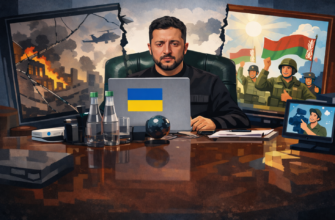
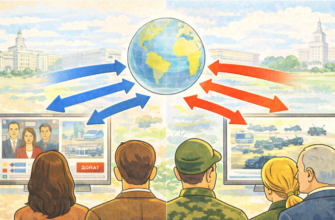
Over the past six days, we have traveled across Europe, examining how foreign information manipulation shaped — or attempted to shape — democratic processes in 2025. From Bucharest to Prague, from Chișinău to Berlin, a pattern emerges: the tactics are converging, but the outcomes diverge dramatically based on how societies respond.
Here is what we learned.
The FIMI framework
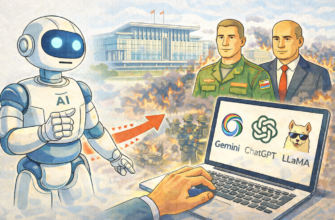
Day 1 introduced us to FIMI — Foreign Information Manipulation and Interference — as a concept that goes beyond “fake news.” FIMI describes coordinated, often state-backed campaigns that combine disinformation with cyberattacks, economic pressure, and the exploitation of authentic domestic grievances. The 2025 EEAS report documented over 500 incidents targeting more than 80 countries. This is not episodic. It is industrial.
Romania: The precedent
Day 2 showed us what happens when manipulation succeeds unchecked. Călin Georgescu, a fringe candidate with 1% in polls, surged to first place after a coordinated TikTok campaign involving 25,000 accounts and 100 influencers — funded, Romanian intelligence concluded, by a foreign state. The Constitutional Court annulled the election, a first in EU history. Romania demonstrated that platforms can be weaponized to manufacture political phenomena from nothing.
Moldova: Resilience under fire
Day 3 took us to Moldova, where the stakes were existential. Russia deployed $100 million in vote-buying schemes, targeting 300,000 citizens — nearly 15% of the electorate. Telegram channels coordinated attacks on President Maia Sandu. Yet Moldova held. Pro-European forces won both the referendum and parliamentary elections. The difference: years of preparation, a mobilized diaspora, and a population that had learned to distrust easy money.
Germany: The Doppelganger threat
Day 4 examined Doppelganger, Russia’s sophisticated campaign of cloning legitimate news websites to spread fabricated stories. Fake versions of Der Spiegel, Bild, and government portals appeared across social media, designed to erode trust in institutions and amplify support for parties skeptical of Ukraine aid. The operation was technically impressive but struggled against Germany’s strong public broadcasting ecosystem and platform cooperation with authorities.
Poland: When resilience is tested
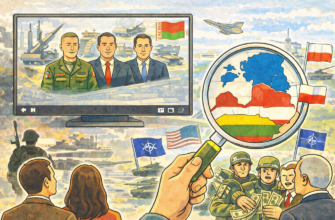
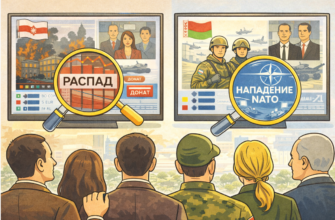
Day 5 brought us to Poland’s presidential election, where TikTok coordination reached industrial scale: 4,332 suspicious accounts generating 2.35 billion views, with 80.3% cross-hashtag synchronization. Belarusian state media produced 76 distinct disinformation elements in just eight days. Yet Poland did not become Romania. Why? A diverse media ecosystem, the highest Russia-threat perception in Central Europe (86%), prepared authorities, and six months of lessons learned from Bucharest.
Czech Republic: When trolls fall short
Day 6 completed the European tour with a paradox. Nearly 1,000 coordinated TikTok accounts promoted pro-Russian fringe parties in Czechia — but those parties underperformed. The far-right SPD got 7.8% instead of projected 13%. The far-left Stačilo! failed to enter parliament. The operation was technically successful but strategically futile. High turnout (69%) and institutional coordination contained the damage — though ANO’s victory still shifted Czech policy away from unconditional Ukraine support.
The patterns
Across these six cases, several patterns emerge:
Platform vulnerability. TikTok appeared in four of six cases as a primary vector. Its algorithm, which rewards early engagement, makes it uniquely susceptible to coordinated manipulation. The platform’s young user base — first-time voters — compounds the risk.
The attribution problem. In Romania, intelligence services presented evidence of foreign funding. In Czechia, researchers admitted: “We don’t know. We don’t have the tools.” Without attribution, democracies struggle to respond — and autocracies exploit the ambiguity.
Domestic amplifiers matter. FIMI rarely creates narratives from nothing. It amplifies existing grievances, exploits authentic discontent, and launders foreign messaging through domestic voices. The most effective operations are those that feel organic.
Preparation works. Moldova and Poland both faced massive operations — and both held. The common factor: advance preparation, inter-agency coordination, and public awareness campaigns. Societies that expect manipulation are harder to manipulate.
Victory is not binary. Czechia’s trolls “failed” if measured by SPD’s vote share. But ANO won anyway, and Czech policy toward Ukraine will shift. Sometimes the goal is not to elect a specific candidate but to move the entire political conversation.
What comes next
Week 2 takes us to Africa, where a different playbook is unfolding. Russia’s Africa Corps has filled the vacuum left by departing French forces, building information ecosystems to support authoritarian governance across the Sahel. The tactics are familiar. The context — and the stakes — are different.
But first, test what you’ve learned.
Test your knowledge
Below is an interactive quiz covering the key facts and concepts from Week 1. How much did you retain?