
The first vote in EU history cancelled due to foreign interference
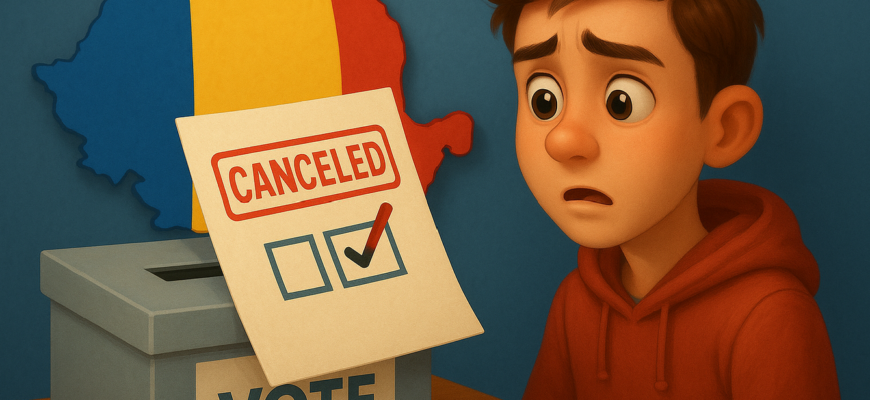
On December 6, 2024, Romania’s Constitutional Court made an unprecedented decision: it annulled the entire presidential election, two days before the scheduled runoff. For the first time in the history of the European Union, a member state cancelled an election due to evidence of foreign information manipulation. The decision came after declassified intelligence revealed what authorities described as a “massive” social media campaign orchestrated to benefit one candidate — Călin Georgescu.
The unexpected winner
Călin Georgescu was a political unknown. An agricultural engineer with a PhD in soil science, the 62-year-old had held minor government positions and UN consultancies, but had never won an election. Polls in early November showed him at single digits — an asterisk candidate, barely registering.
Then came November 24. When votes were counted, Georgescu had surged to first place with 23% — ahead of all mainstream candidates. Pro-European centrist Elena Lasconi came second with 19.2%. The Social Democratic prime minister Marcel Ciolacu finished third. The result shocked the political establishment.
Who was this man? Georgescu had praised Vladimir Putin as someone who “loves his country,” described Ukraine as an “invented state,” and campaigned on ending Romania’s military support for Kyiv. He was openly NATO-skeptic and EU-critical. His platform resonated with voters frustrated by corruption, economic stagnation, and a political class they viewed as disconnected. But his meteoric rise had another explanation.
The TikTok machine
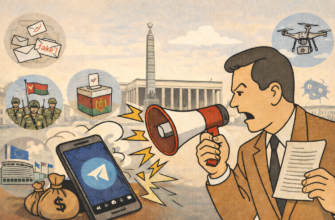
Romanian intelligence services documented what they called an “aggressive promotion campaign” on TikTok that exploited the platform’s algorithms to artificially inflate Georgescu’s visibility. The numbers were staggering: approximately 25,000 TikTok accounts with a combined following of 8 million were suddenly dedicated to promoting this obscure candidate. His personal account accumulated over 646,000 followers and 7.2 million likes. Hashtags associated with Georgescu dominated Romanian TikTok in the days before the vote.
The intelligence assessment identified a key figure: Bogdan Peschir, a 36-year-old programmer known on TikTok as “bogpr.” According to prosecutors, Peschir distributed $879,000 to 265 content creators through TikTok “gifts” and direct Revolut transfers — payments made to persuade them to support Georgescu. Investigators found WhatsApp conversations where Peschir explicitly discussed paying influencers to promote the candidate, including discussions about buying votes in the Romanian diaspora in Germany.
The money trail led further. A marketing agency called FA Agency, officially registered in South Africa but actually operating from Warsaw, offered Romanian influencers €1,000 per video to promote Georgescu. The recruitment happened through FameUp, a platform connecting brands with micro-influencers. Some influencers reported that campaigns initially supporting other candidates were mysteriously redirected to Georgescu mid-stream — someone had changed the hashtags on the platform.
TikTok itself came under scrutiny. Romanian authorities alleged the platform gave Georgescu “preferential treatment” by failing to mark him as a political candidate, allowing his content to circulate without the usual restrictions. TikTok denied the allegations and said it had disrupted several small-scale covert networks during the campaign. The European Commission launched formal proceedings against TikTok under the Digital Services Act, investigating whether the platform had failed to properly assess and mitigate risks to election integrity.
The Russian connection
Romanian intelligence services said the campaign bore the hallmarks of Russian information operations. They noted “striking similarities” to Russia’s “Brother by Brother” (Brat za Brata) campaign in Ukraine, which employed similar tactics. Authorities also documented more than 85,000 cyberattack attempts against Romanian election websites and IT systems, with the sophistication suggesting “a state-sponsored attacker.”
Russia denied any involvement. Georgescu denied any knowledge of the campaign or coordination with its organizers. But the pattern fit what analysts had observed elsewhere: a combination of authentic domestic grievances and amplified, coordinated messaging designed to boost candidates whose positions aligned with Kremlin interests.
The annulment
On December 4, President Klaus Iohannis declassified intelligence reports detailing the alleged interference. Two days later, the Constitutional Court unanimously annulled the first round and cancelled the scheduled December 8 runoff. The ruling cited illegal use of digital technologies, undeclared campaign funding, and manipulation of voters through coordinated inauthentic behavior.
The reaction was immediate and divided. Georgescu called it “an officialized coup” and “a barbaric act.” His opponent Elena Lasconi — who would have faced him in the runoff — also criticized the decision: “Today is the moment when the Romanian state has trampled on democracy. We should have gone ahead with the vote.”
Protests erupted on both sides. Pro-Georgescu supporters gathered at closed polling stations on December 8, chanting “Down with dictatorship” and “We want to vote.” Students and young people rallied against him in University Square, carrying signs reading “No fascism, no war, no Georgescu.” Police arrested armed men allegedly traveling to Bucharest to incite unrest; their leader had been photographed with the Russian ambassador to Romania.
What came next
A new election was scheduled for May 2025. But in February, prosecutors charged Georgescu with “incitement to actions against the constitutional order,” support of fascist organizations, and submitting false declarations about campaign financing. He was placed under judicial oversight. In March, authorities barred him from running.
The May 4 election proceeded without Georgescu on the ballot. His supporters largely shifted to George Simion of the far-right Alliance for the Unity of Romanians (AUR). But in the runoff on May 18, pro-European candidate Nicușor Dan — the mayor of Bucharest — won the presidency. Kremlin spokesman Dmitry Peskov called the result “strange, to say the least,” noting Dan had won “in the absence of the favorite.”
Bogdan Peschir was arrested in March 2025 and charged with 265 counts of voter bribery. Authorities seized $7 million from his accounts. The investigation continues.
Lessons from Romania
The Romanian case offers several critical lessons for understanding FIMI:
Platform vulnerabilities matter. TikTok’s algorithm-driven content distribution proved susceptible to coordinated manipulation. The platform’s design — optimized for virality — amplified a campaign that exploited those mechanics. The EU’s Digital Services Act investigation may establish new precedents for platform accountability during elections.
Money can be laundered through micro-payments. The Peschir scheme demonstrated that large-scale voter influence can be purchased through small payments to many individuals — harder to track than traditional campaign finance and operating in regulatory gray zones.
Authentic grievances can be exploited. Georgescu’s message resonated because many Romanian voters genuinely felt abandoned by mainstream politics. FIMI operations don’t create discontent — they amplify and channel it toward preferred outcomes.
Institutions can respond, but at a cost. The Constitutional Court’s decision preserved election integrity but created its own legitimacy crisis. When authorities annul elections, they risk confirming the narratives of those who claim the system is rigged — even when the evidence of manipulation is clear.
The threat persists. Even after Georgescu was barred, far-right parties captured nearly a third of the electorate. The conditions that made Romania vulnerable — economic frustration, distrust of institutions, algorithmic amplification of polarizing content — have not disappeared.
Romania became the first EU country to annul an election due to foreign interference. It will not be the last to face this challenge.
Our research
FactCheck.LT conducted independent analyses of the Romanian election interference. Using the Exolyt TikTok Social Intelligence Platform, we examined political hashtag activity during the May 2025 re-run election, analyzing 6,800 videos across seven key political hashtags. Our research identified multiple anomalies suggesting coordinated inauthentic behavior: accounts with engagement ratios exceeding 400% (likes-to-views), statistically improbable equal distribution of content across candidates, and sharp activity spikes on specific dates. These patterns align with FIMI indicators documented in the EEAS framework.
Full analysis: Political hashtags in Romanian TikTok trends.
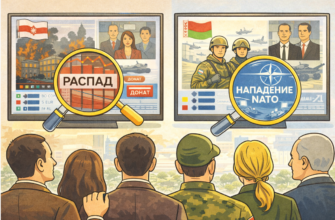
We also monitored how Belarusian state media covered the Romanian elections, analyzing 24 videos from NEWS.BY, CTVBY, ONT TV, and SBT between May 1-25, 2025. We identified 76 disinformation narratives with an average manipulation intensity of 7.8/10, including 37% manipulation techniques, 28% conspiracy theories, and 23% polarization content. The coverage systematically discredited Romanian democratic processes using terms like “electoral circus,” promoted unfounded claims about “dead souls” in voter registries, and framed the election as controlled by “Brussels puppets.” This analysis demonstrates how authoritarian state media weaponize democratic elections in neighboring countries to delegitimize democracy itself.
Full report: Discrediting Democracy: Belarusian state media coverage of Romanian elections.
Sources:
- Romanian Intelligence Service. Declassified documents on election interference. December 4, 2024.
- Romania Constitutional Court. Decision to annul presidential election. December 6, 2024.
- Radio Free Europe/Radio Liberty. “Romania’s ‘King of TikTok’ Tied to Alleged Scheme Boosting Far-Right Presidential Candidate.” December 6, 2024.
- Global Witness. “What happened on TikTok around the Romanian elections?” December 2024.
- Atlantic Council. “Romania annulled its presidential election results amid alleged Russian interference. What happens next?” December 12, 2024.
- VSquare. “Step by Step Through Călin Georgescu’s TikTok Campaign Playbook.” 2025.