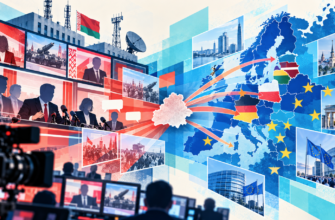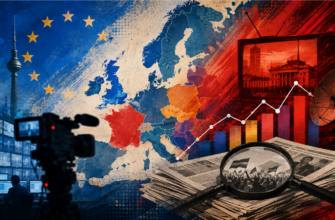

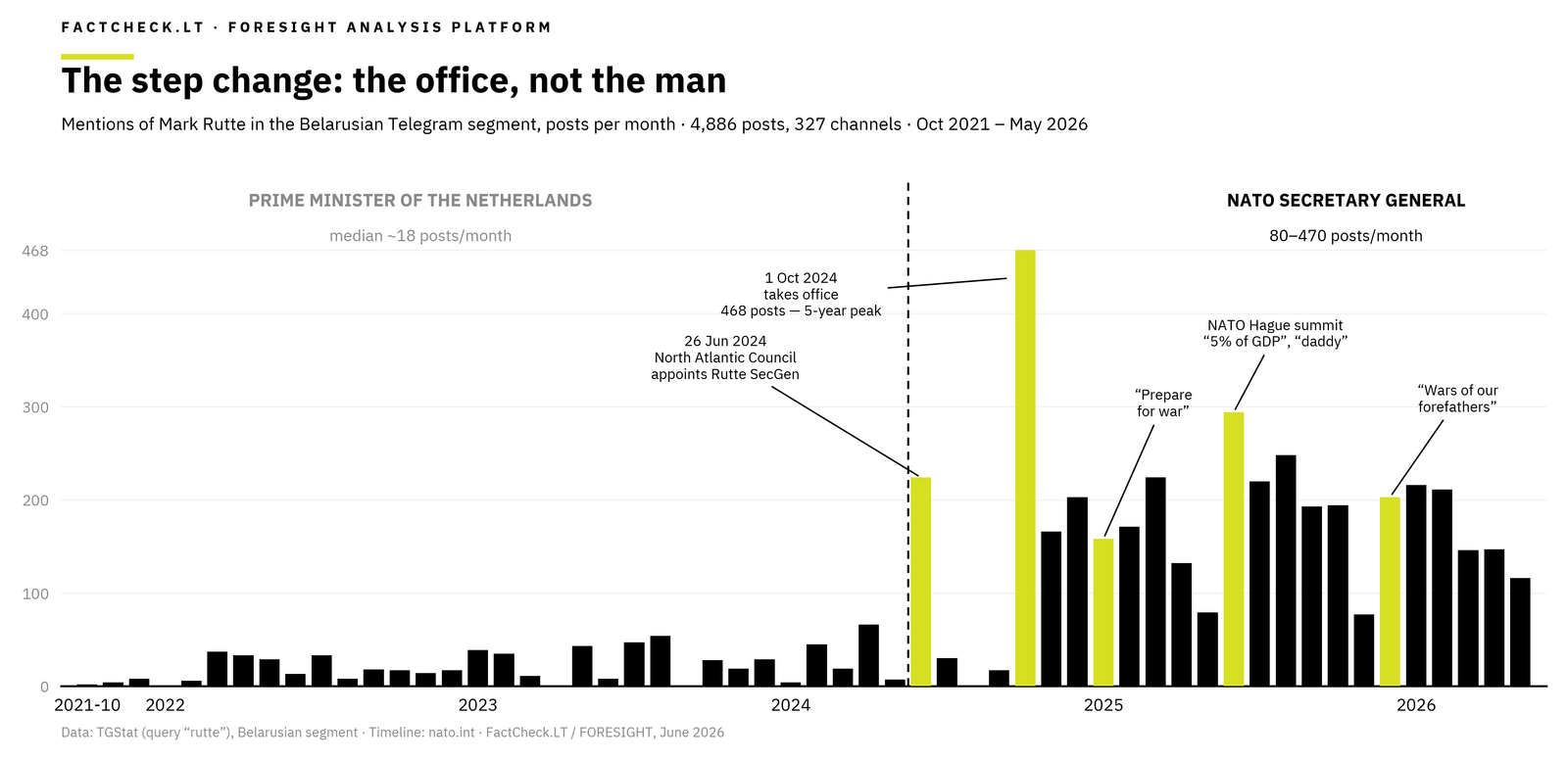
- Appointment multiplied attention tenfold — permanently. Over 32 months as Dutch prime minister (Oct 2021 – May 2024), Rutte was mentioned in the Belarusian Telegram segment about ~20 times a month on average. After the North Atlantic Council appointed him on 26 June 2024 and he took office as NATO Secretary General on 1 October 2024 — a steady 80–470 times a month.
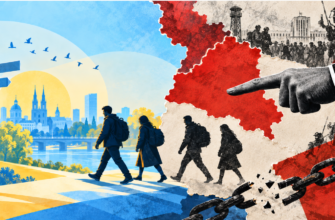
- The NATO Secretary General exists in propaganda without his country. In 86% of state-media items about Rutte (1,005 of 1,170), the Netherlands is not mentioned at all.
- The Netherlands as a state actor barely exists. Of 5,019 web items, only 13% treat the country or its representative as the subject; 54% of mentions are incidental.
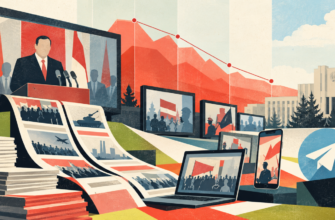
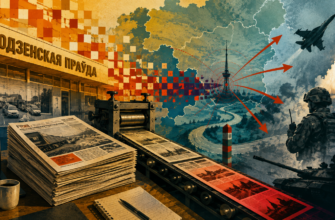
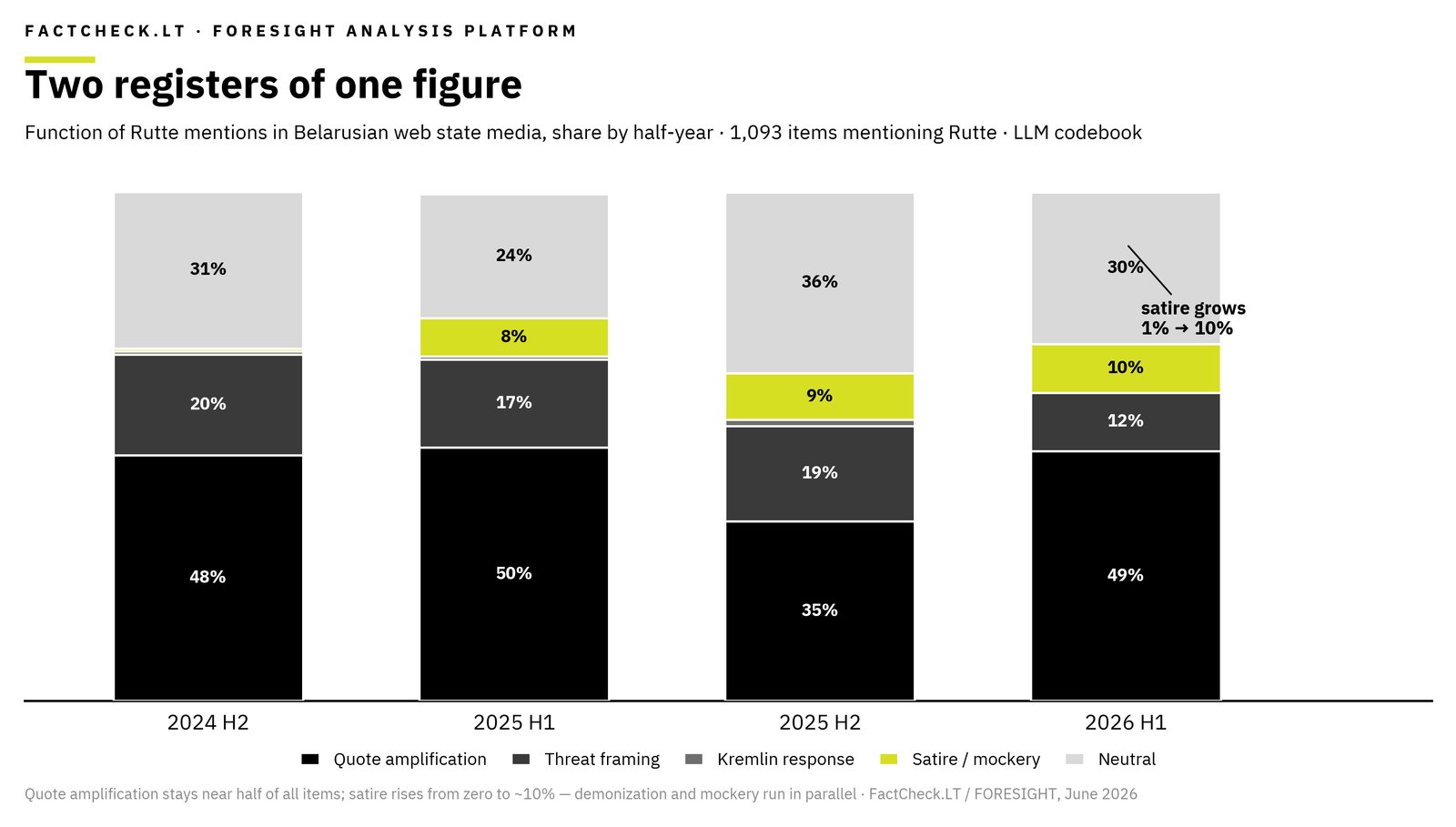
- One figure, two parallel registers. Text outlets use Rutte as an “evidence generator” (the “Rutte: [quote]” format — about half of all items), video uses him as an object of satire. Demonization and mockery operate simultaneously.
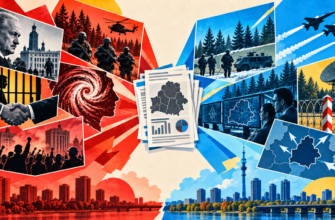
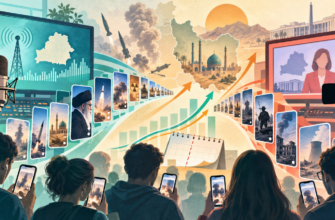
- The pro-regime bloc produces the discourse; the opposition consumes it. Pro-regime channels generate 69% of posts about Rutte but only 41% of views; opposition channels account for 23% of posts and 57% of views.
Methodology
The analysis draws on four data layers of the FORESIGHT platform (corpus of 1.9M+ documents) and an external TGStat export.
| Layer | Source | Volume | Window |
|---|---|---|---|
| Web state media | belta, sb, ctv, ont, zviazda, mlyn + pro-regime Telegram | 5,019 documents | Oct 2024 – May 2026 |
| Video codebook | transcript_analysis (Vision/ASR) | 102 of 8,178 videos | Oct 2024 – May 2026 |
| Telegram ecosystem | TGStat, query “rutte”, Belarusian segment | 4,886 posts, 327 channels | Oct 2021 – Jun 2026 |
| LLM codebook | Claude Haiku 4.5, Batch API, full corpus | 9,885 documents | — |
The codebook recorded: relevance, domain, presence and function of Rutte (quote amplification / threat framing / satire / relaying a Kremlin response / neutral), the Netherlands’ agency, narrative category, tone (-2…+2), and the presence of propaganda techniques. “The Hague” was counted separately from the Netherlands as a metonym for tribunals. Telegram channels were classified by alignment (an LLM draft cross-checked against a manual FactCheck.LT/OpenMinds reference). Monthly series are normalized to corpus volume.
Timeline: six phases
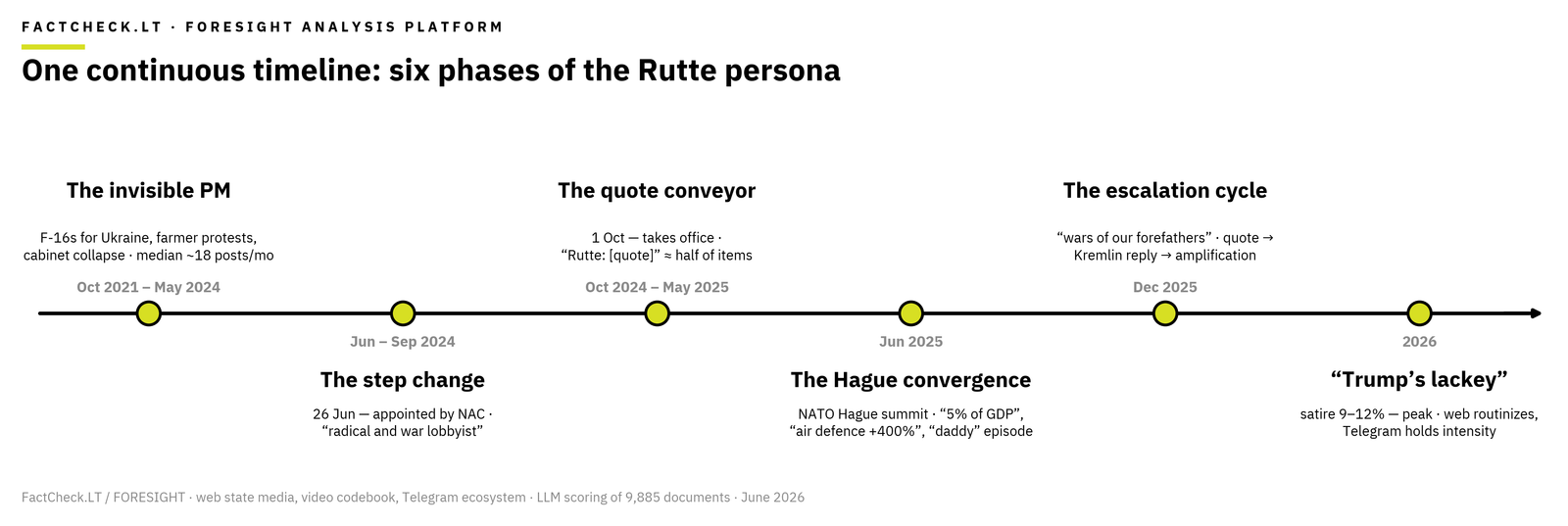
Oct 2021 – May 2024 · The invisible PM
For fourteen years Rutte led the government of a NATO and EU founding state — and was almost invisible to the Belarusian information space: a median of ~18 mentions per month. He appeared in three guises: arms supplier to Ukraine (F-16s), target of his own citizens’ anger (“pelted with eggs”), and from summer 2023 — a departing politician. Tone fluctuated then and occasionally went positive: opposition channels covered Dutch military aid to Ukraine favourably. PM Rutte did not yet belong to propaganda outright.
Jun – Sep 2024 · The step change
On 26 June 2024 the North Atlantic Council named Rutte as Stoltenberg’s successor — the first spike: 224 posts in June, a tenfold jump. On 1 October 2024 he took office — the absolute maximum of the whole five-year window: 468 posts, 4.7M views. The frame was set in the first week: “radical and war lobbyist”, “Stoltenberg handed the new SecGen a war axe”. The “hawk” image was assembled instantly, before any action in office.
Oct 2024 – May 2025 · The quote conveyor
A working regime sets in: 35–60 items a month, about half in the “Rutte: [quote]” format, where the SecGen’s statement is served as a self-sufficient piece of evidence. In January 2025 — the first escalation cycle: a wave of “prepare for war” produces the maximum hostility of the Telegram layer across the whole window (tone -1.11, share of propaganda techniques 87%).
Jun 2025 · The Hague convergence
The single moment when country and persona coincide: the NATO summit in The Hague. A triple synchronous peak — 110 items about Rutte, 212 “Hague” documents, 196 about the summit; 49 about spending (5% of GDP), “air defence +400%”, “Ukraine’s path is irreversible”, and the “daddy” episode aimed at Trump, which propaganda keeps as a reusable satirical asset. The share of propaganda techniques jumps to 59%.
Dec 2025 · Forefathers and World War III
The second escalation cycle shows the “his words, our fuel” mechanic in pure form: Rutte’s call to “prepare for war like the one our forefathers endured” produces 29 items with escalation markers, after which comes the second beat — relaying the replies of Putin (“Can you read?”) and Peskov. The SecGen’s quote and the Kremlin’s reply form a closed amplification loop, in which Belarusian state media act as a relay for both sides.
2026 · “Trump’s lackey”
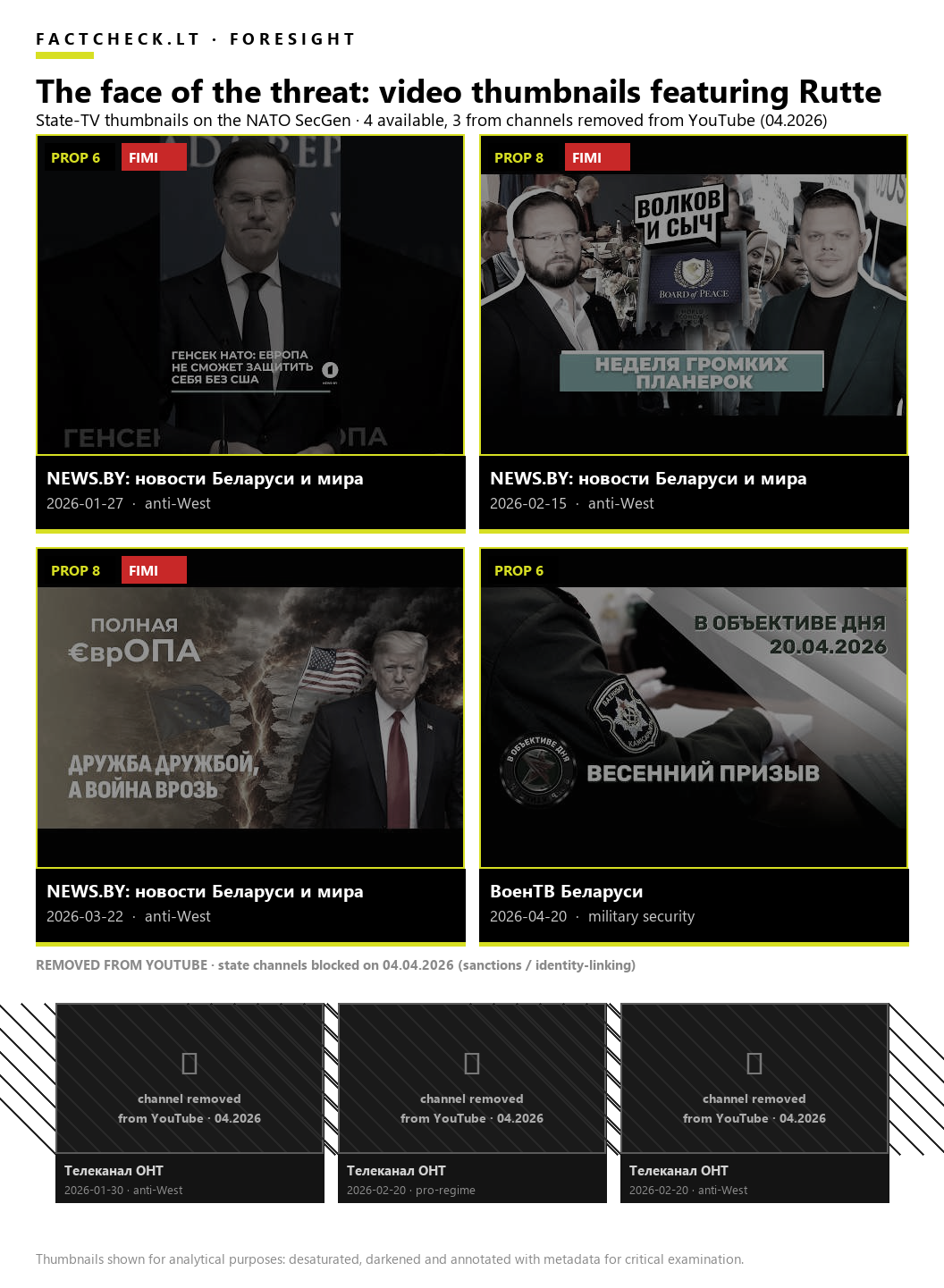
The layers diverge. Web state media routinize Rutte: the share of propaganda techniques falls from 0.45 to 0.30, the share of incidental mentions rises. Telegram does not reduce intensity (0.68–0.76). The register shifts: the share of satire reaches its maximum, and it acquires a single storyline — subordination to Trump: “Trump’s lackey”, “took the slap and wiped his face”, “went to see Trump, the flunkeys”. Threat and ridicule are finally formed as two parallel roles of one figure.
Counterpoint: the country that isn’t there
Against the hyper-visible Rutte, the Netherlands as a state is dissolved into noise. Full-corpus scoring of 5,019 web items: 54% of mentions are incidental, with domains spread across politics/security, sport, economy, culture and incidents. A telling example: the May 2026 spike in mentions of the country — the largest in two years — turned out to be not a propaganda campaign but a hantavirus outbreak linked to the Dutch vessel MV Hondius. The Netherlands acts as a subject in only a third of items, and almost always in the role of “one of the NATO/EU countries”. Propaganda does not need Rutte’s country; it needs only the institution he personifies.
The ecosystem: who produces and who reads
Classifying 327 channels exposed an asymmetry between content production and audience attention. The pro-regime bloc — Belarusian pro-government channels (66% of posts) together with pro-Russian ones (3%) — produces 69% of all publications about Rutte but collects only 41% of views. Opposition and independent channels, with 23% of posts, accumulate 57% of views. Tone of the blocs: -0.91 for pro-government and -0.89 for pro-Russian, versus -0.33 for the opposition, for which Rutte is a figure of neutral-critical coverage rather than demonization.
The boundary between Belarusian pro-government and pro-Russian channels within the bloc is partly conventional: a number of channels carrying Russian state content are structurally embedded in the Belarusian network (the “pseudo-Belarusian” channel phenomenon described by OpenMinds). The key finding is therefore framed on the stable “pro-regime bloc vs. opposition” axis, which does not depend on this boundary.
Conclusion: it measures the institution, not the man
The Rutte case offers something rare: a natural experiment in which the same man first leads a NATO country for fourteen years and then heads the alliance itself — with personality and rhetoric unchanged. The Belarusian propaganda ecosystem’s reaction to that switch is unambiguous. The prime minister of a major Western country was worth almost nothing; the NATO Secretary General became tenfold more visible overnight and has not lost that status for a single month. The object of attention is the office, not its holder.
From this follows a practical takeaway for monitoring: personalized narratives about Western leaders are readable indicators of institutional framing. When state media amplify a “war lobbyist” or “Trump’s lackey”, they are not talking about Mark Rutte — they are constructing an image of NATO as aggressive and dependent. The figure serves as a container: into it are poured, in turn, the mobilization narrative (threat, spending, “prepare for war”) and the decline narrative (satire, subordination, “flunkeys”). Both registers run in parallel and target different effects — fear and contempt.
The method is reproducible for any personified figure — be it an EU leader, a commander, or the head of an international body — and provides early warning of shifts in institutional narratives before they surface in direct statements about the institutions themselves. This is what narrative intelligence is about: not counting mentions, but reading what function a figure performs in someone else’s discourse.
Office timeline:
- «Allies select Mark Rutte as next Secretary General» (26.06.2024);
- «Mark Rutte takes office as NATO Secretary General» (01.10.2024)
In partnership with