

1. The Invisible Audience
Millions of Russian-speaking residents across the European Union consume information in Russian every day. When they type a Cyrillic query into Google, the language of their search reveals which information ecosystem they inhabit. Do they search for “war” or “special operation”? Do they read Meduza or RIA Novosti? Do they google “Russophobia” or “sanctions”?
These are not hypothetical questions. Google Trends data for Cyrillic queries, filtered by EU country, provides a direct behavioral measurement of how Russian-language information consumers across Europe frame the world, and which Kremlin narratives have penetrated their worldview.
This study presents a new methodology for measuring Foreign Information Manipulation and Interference (FIMI) through search behavior. We combine two approaches: monitoring Cyrillic search activity across EU countries and framing pair analysis. Data covers March–May 2026 across eight EU countries: the three Baltic states (Lithuania, Latvia, Estonia), the Weimar Triangle (Poland, Germany, France), the Netherlands and Czech Republic.
2. Methodology: Framing Pairs
For each narrative dimension, we paired a Kremlin-aligned term with a neutral alternative and compared their search volumes within each country. The Kremlin ratio (share of the Kremlin term in combined interest) provides a direct measure of narrative penetration.
| Dimension | Kremlin | Neutral |
|---|---|---|
| Naming the war | спецоперация | война украина |
| Victimization | русофобия | санкции россия |
| Enemy framing | бандеровцы | украинская армия |
| Information sources | РИА Новости | Медуза |
| Leaders | Путин | Зеленский |
| Diplomacy | Лавров | Кулеба |
3. Findings
3.1 Cyrillic Footprint Across the EU
The intensity of Cyrillic search activity varies dramatically. Germany and Poland show the deepest Russian-language information footprint: “Belarus” is searched 90 out of 91 days. The Baltic states show lower persistence despite their Russian-speaking minorities.
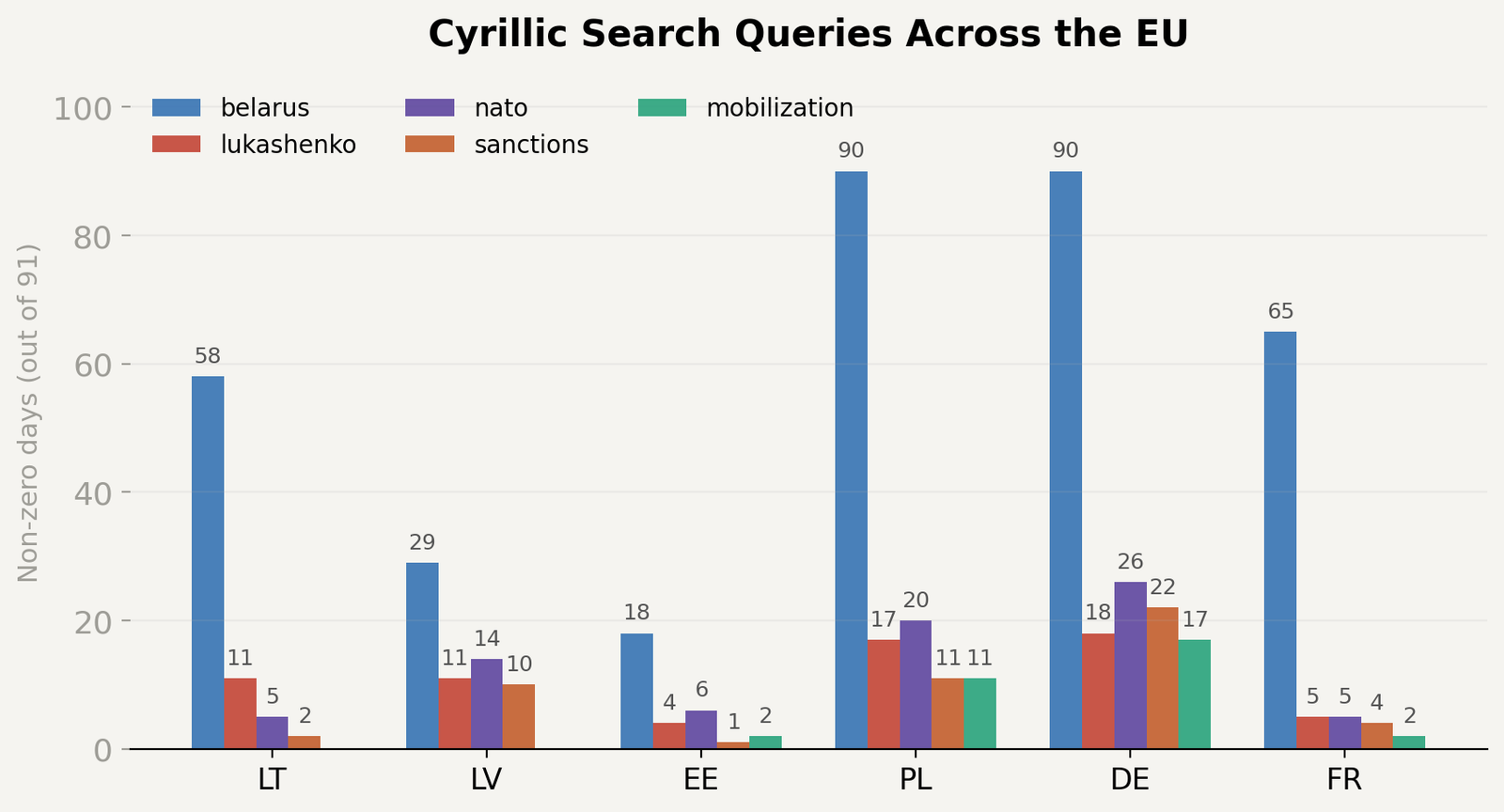
Figure 1. Germany and Poland lead in every category. “Mobilization” is absent from the Baltics but active in Poland (11) and Germany (17).
3.2 “Special Operation” Has Failed
The key framing battle — whether to call the conflict a “war” or a “special military operation” — has been decisively won by the neutral term across all eight EU countries.
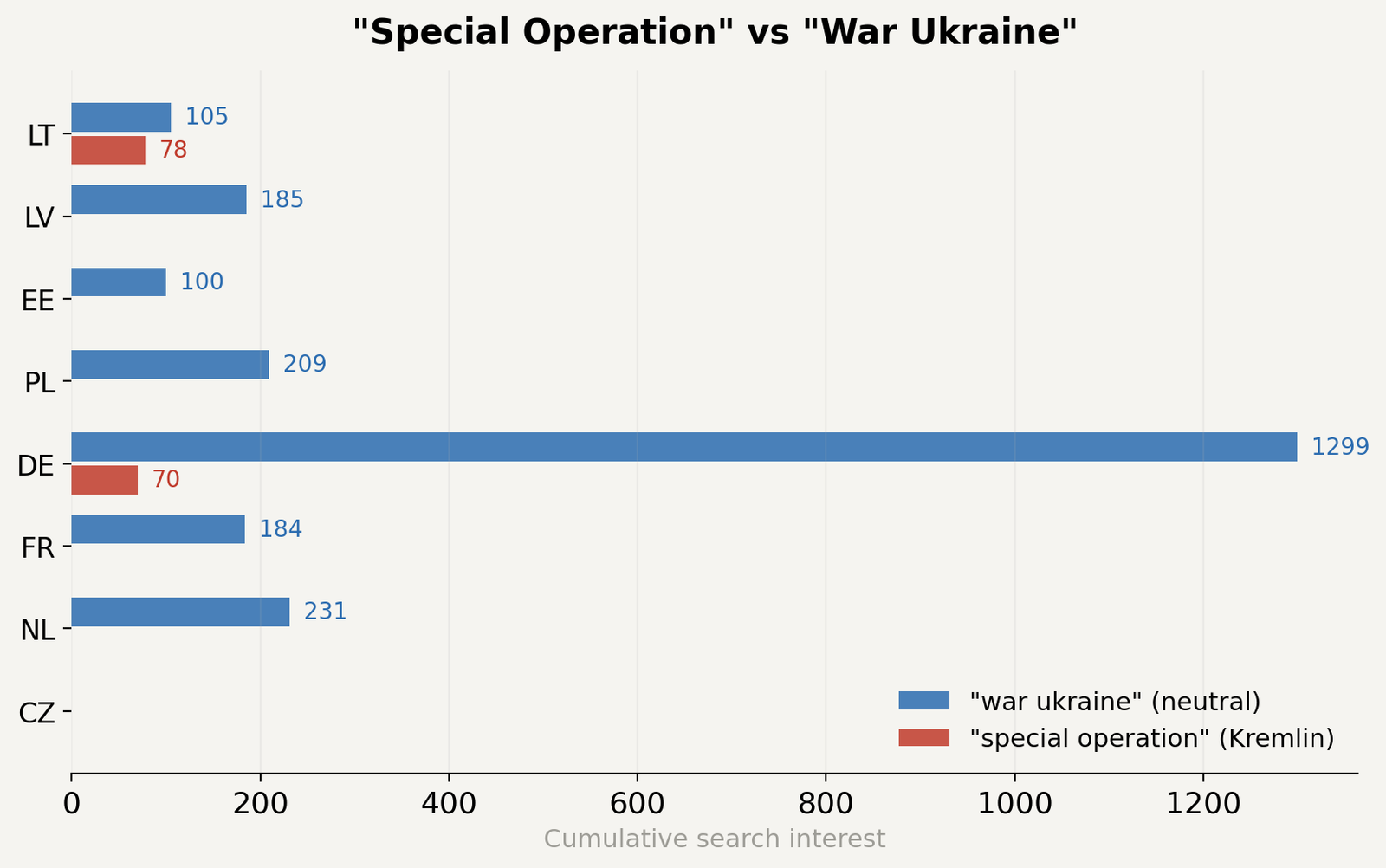
Figure 2. In Germany, “war” outscores “special operation” by 18:1 (1,299 vs 70). The Kremlin euphemism has not taken hold.
3.3 The Germany Anomaly: RIA Novosti as a Daily Habit
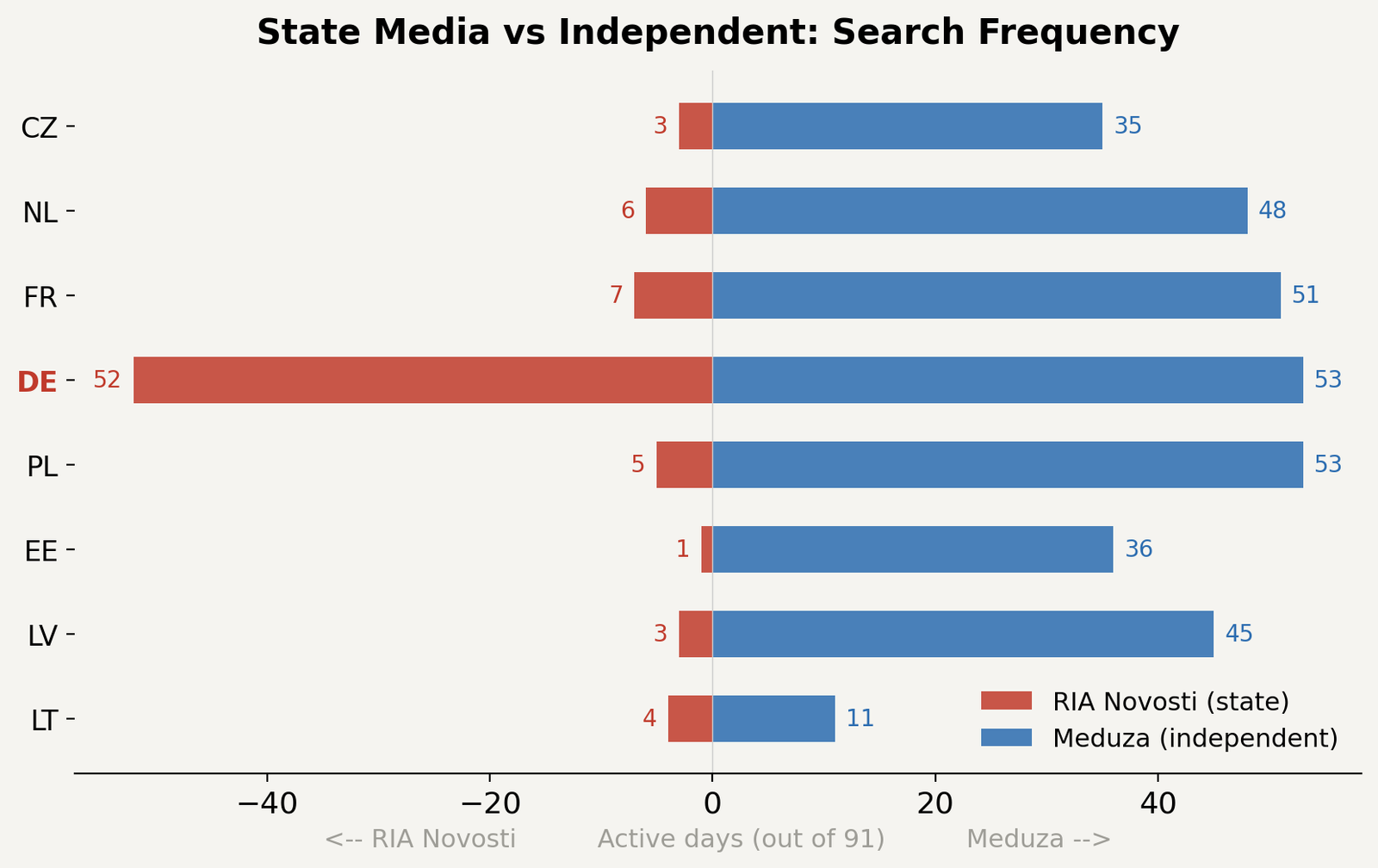
Figure 3. In Germany, RIA Novosti is searched 52 out of 91 days — near parity with Meduza (53). No other country comes close.
| Country | Meduza | RIA | RIA share | Assessment |
|---|---|---|---|---|
| 🇪🇪 Estonia | 36 | 1 | 0% | Independent dominant |
| 🇱🇻 Latvia | 45 | 3 | 1% | Independent dominant |
| 🇵🇱 Poland | 53 | 5 | 2% | Independent dominant |
| 🇨🇿 Czech Rep. | 35 | 3 | 3% | Low state presence |
| 🇫🇷 France | 51 | 7 | 4% | Low state presence |
| 🇳🇱 Netherlands | 48 | 6 | 6% | Low state presence |
| 🇱🇹 Lithuania | 11 | 4 | 11% | Moderate state presence |
| 🇩🇪 Germany | 53 | 52 | 18% | Contested space |
Germany’s approximately 4 million Russian-speaking residents are the EU’s largest Russian-language information market. Near-daily RIA search frequency is not an event-driven spike but a structural pattern of habitual consumption.
3.4 Putin vs Zelensky: Attention Balance
Who do Russian-speaking Europeans google more? This indicates whose figure occupies more mental space.
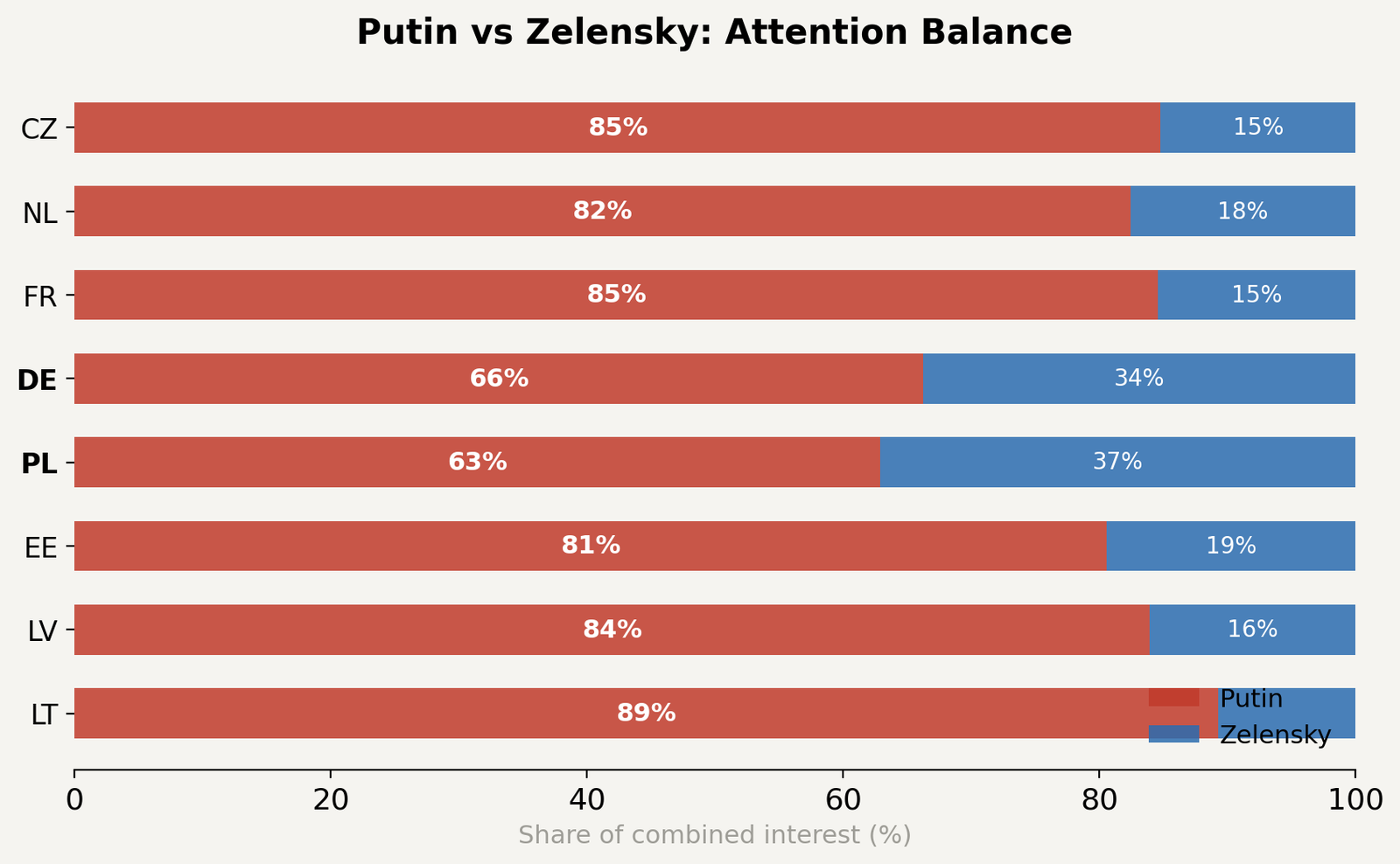
Figure 4. Putin dominates everywhere, but Poland (63%) and Germany (66%) show the most balanced result.
3.5 Lavrov vs Kuleba: The Invisibility of Ukrainian Diplomacy
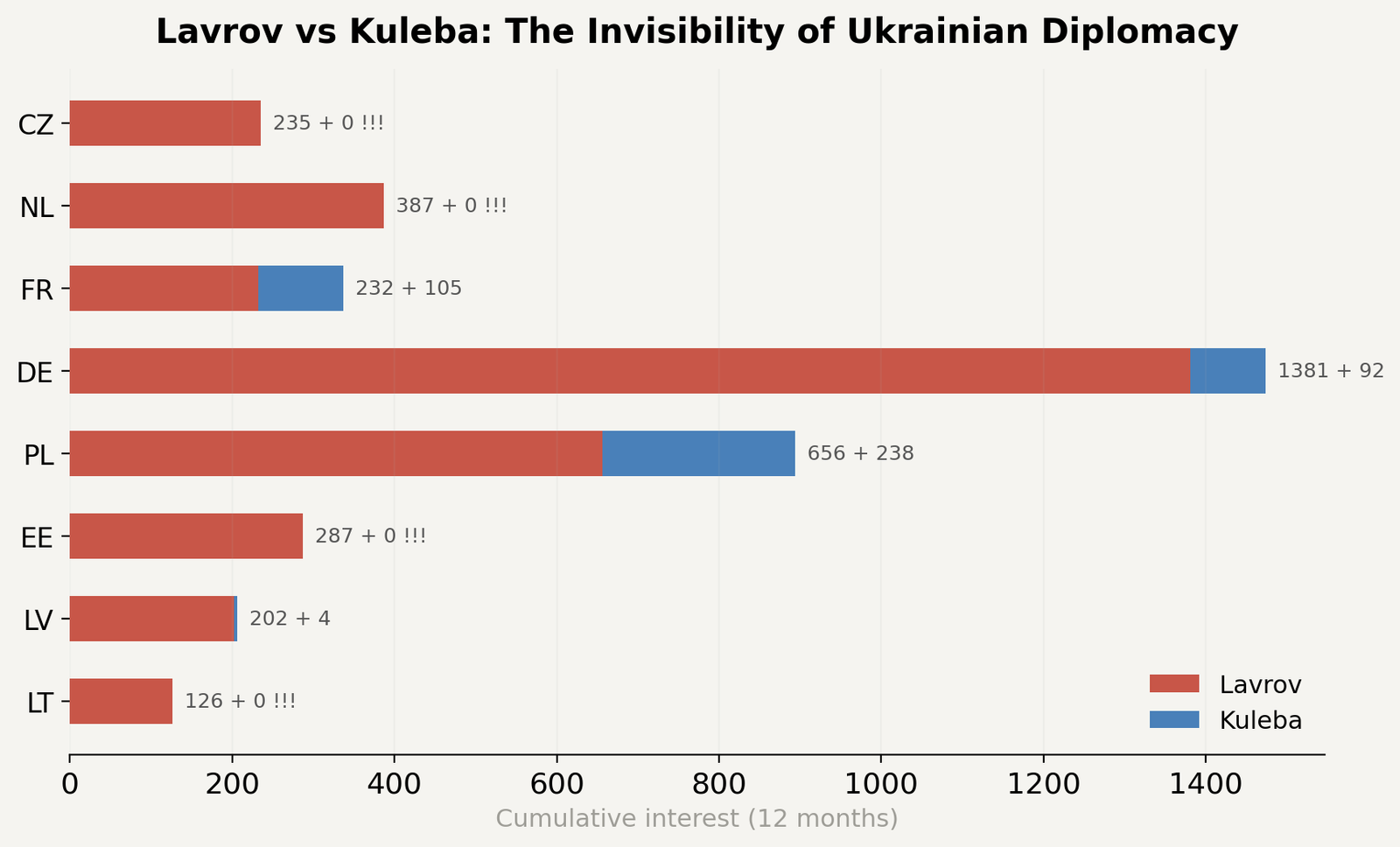
Figure 5. In five of eight countries, Kuleba is absolute zero. Ukrainian diplomacy is invisible to the Russian-speaking EU audience.
Ukrainian diplomacy does not exist in the Russian-speaking EU information space. When Russian-speaking Europeans are interested in conflict diplomacy, they find only the Russian side. This is not the result of propaganda but of absence.
3.6 Two Types of Vulnerability
4. Recommendations
For Germany: RIA–Meduza parity identifies Germany as the EU’s most contested Russian-language space. Needed: support for independent Russian-language media, media literacy programs for the Russian-speaking community, monitoring RIA share dynamics during crises.
For the Baltic states: Vulnerability to identity-based narratives requires addressing the underlying grievance narrative through inclusive public communication.
For Ukrainian communication strategy: Kuleba = 0 in five of eight countries is a critical deficit. A Russian-language communication strategy targeting the EU diaspora is needed.
For EU policy: The methodology is scalable (12 countries monthly for ~200 API requests), manipulation-resistant, and complements social media analysis.
5. Methodology Note
Data collected via Google Trends API with country-level geo-filtering. Period: March–May 2026 (91 days). All queries in Russian (Cyrillic). Assumption: a person searching in Cyrillic from an EU country is very likely a Russian-speaking resident.
Limitations: Google Trends returns a relative index (0–100), not absolute volumes. Small markets yield sparser data. The methodology does not distinguish between information consumption and production.
In partnership with