
In spring 2026, nine blocs of the Belarusian democratic forces in exile competed for the fourth-convocation Coordination Council (KS) on programs that, on the surface, say almost the same thing: free the political prisoners, end the regime, secure a democratic and independent Belarus, resist dependence on Moscow.
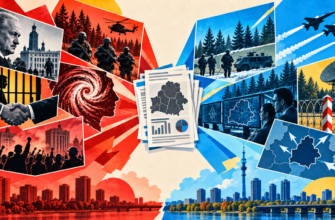
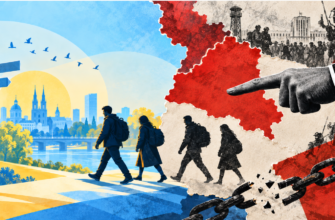
Marianne Sakalova’s study asks whether this shared vocabulary conceals a single position or masks genuinely different politics. Combining frame analysis, narrative policy analysis and the theory of the representative claim, she reconstructs nine distinct “stories” — each binding a crisis, a hero, an antagonist, a path of action and an imagined future in its own way — and shows that the field is not unstructured but thinly ideological: the programs share a democratic periphery while giving core concepts different meanings. Four axes of tension (representation, the limits of permissible action, political time, and participation in defining the future) divide the field to the point where positions exclude rather than complement one another, which is why the nine narratives cannot be merged into a few grand stories or read as a ready-made coalition.