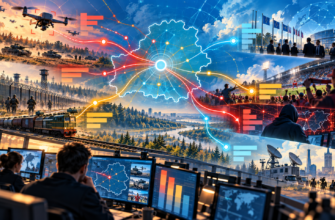

An analysis of 2,511 videos from Belarusian state YouTube channels reveals a systematic architecture of fear — and why the most dangerous propaganda looks like ordinary news.
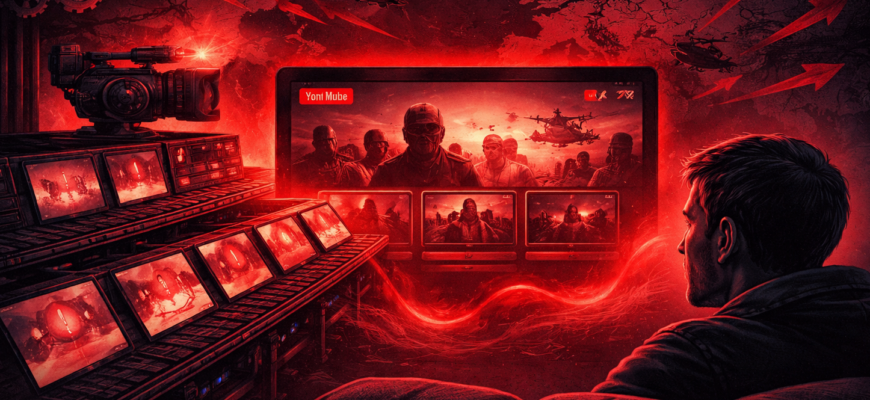
A video published by Belarusian state channel CTVBY attracted 6.7 million views. It contained no fabricated facts. Its presenter spoke calmly. Yet every frame was designed to produce a single emotional response: fear. This is not an accident. It is editorial policy — and our data shows it operates at scale, across channels, continuously, as background noise.
Section 01
The Paradox of Reach: Why “Soft” Toxicity Travels Farthest
The most intuitive assumption about propaganda is that the loudest, most extreme content spreads most widely. Our data contradicts this. Across 192 videos classified as fear-inducing or aggressive in January–February 2026, we found a consistent inverse relationship: content with lower propaganda scores and a “negative” tone outperforms openly aggressive content in terms of views.
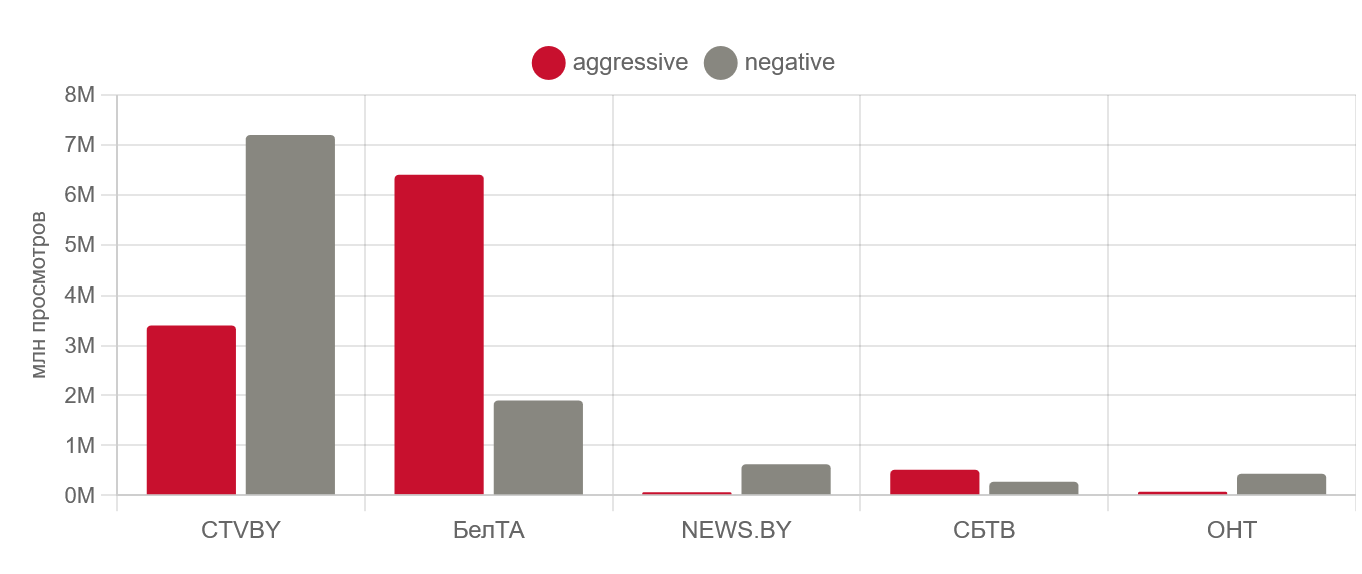
CTVBY’s “negative” tone videos — calm, factual-sounding, presenting Western chaos and Ukrainian failures as news — accumulated 7.2 million views. Their openly aggressive content added another 3.4 million. BelTA’s aggressive #Shorts (average score 6.6) reached 6.4 million. Meanwhile СБТВ, which produces the most ideologically intense content (average score 7.0), reached only 513,000 — a hundred times fewer views than CTVBY with comparable output.
“The most dangerous propaganda looks like ordinary news. CTVBY reaches 7 million viewers through ‘negative’ tone content that YouTube’s algorithm does not flag, does not restrict, and actively promotes.”
FORESIGHT Analysis · FactCheck.LT
This is not a failure of detection — it is a design feature of state media. Calm presentation, factual framing, and negative emotional tone bypass platform moderation while delivering the same narrative payload as openly aggressive content.
Topic Determines Tone: The Editorial Map of Fear
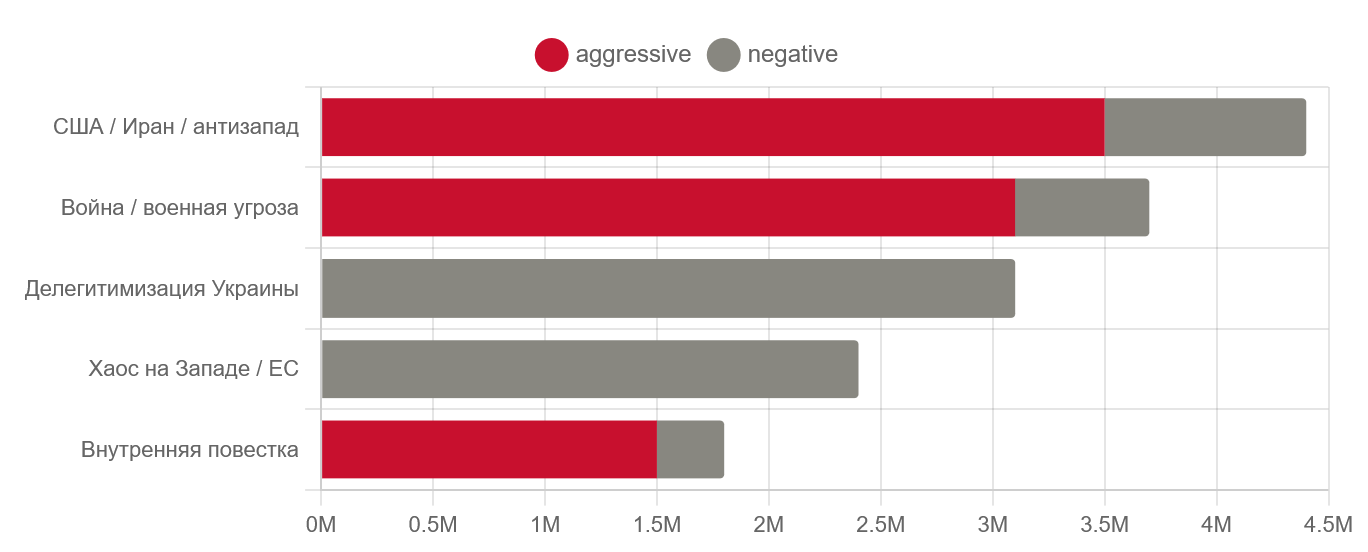
Analysing 40 distinct topics across 16.5 million views, we identified five thematic clusters — and found that the topic almost perfectly predicts the emotional tone used. This is not coincidence. It is a division of labour between fear mechanisms.
|
USA / Iran / Anti-West
73% aggressive. External threat activation. The audience is shown an adversary committing violence — fear is visceral and immediate.
4.4M views · 11 videos
|
War / Military Threat
71% aggressive. Military readiness checks, retaliatory strikes. Frames war as a permanent, unavoidable reality.
3.7M views · 7 videos
|
|
Delegitimising Zelensky / Ukraine
100% negative — zero aggressive. Cold, methodical discrediting through “facts” and internal contradictions. Calm presentation, maximum damage.
3.1M views · 6 videos
|
Chaos in the West / EU
100% negative — zero aggressive. Olympic medal failures, strikes, bankruptcies. “The alternative is worse” without saying so.
2.4M views · 8 videos
|
The internal agenda cluster deserves special attention: a video criticising road repair quality in Belarus attracted 1.1 million views with an aggressive tone and propaganda score of 5. This functions as a pressure valve — channelling public discontent into regime-safe targets while reinforcing authoritarian management as the natural solution.
The Long View: How Fear Rhetoric Evolved Over Two Years
The keyword-level analysis across the full BelTA corpus (220,000+ articles) and YouTube channel transcripts from January 2024 to February 2026 reveals a significant structural shift — and one persistent anomaly.
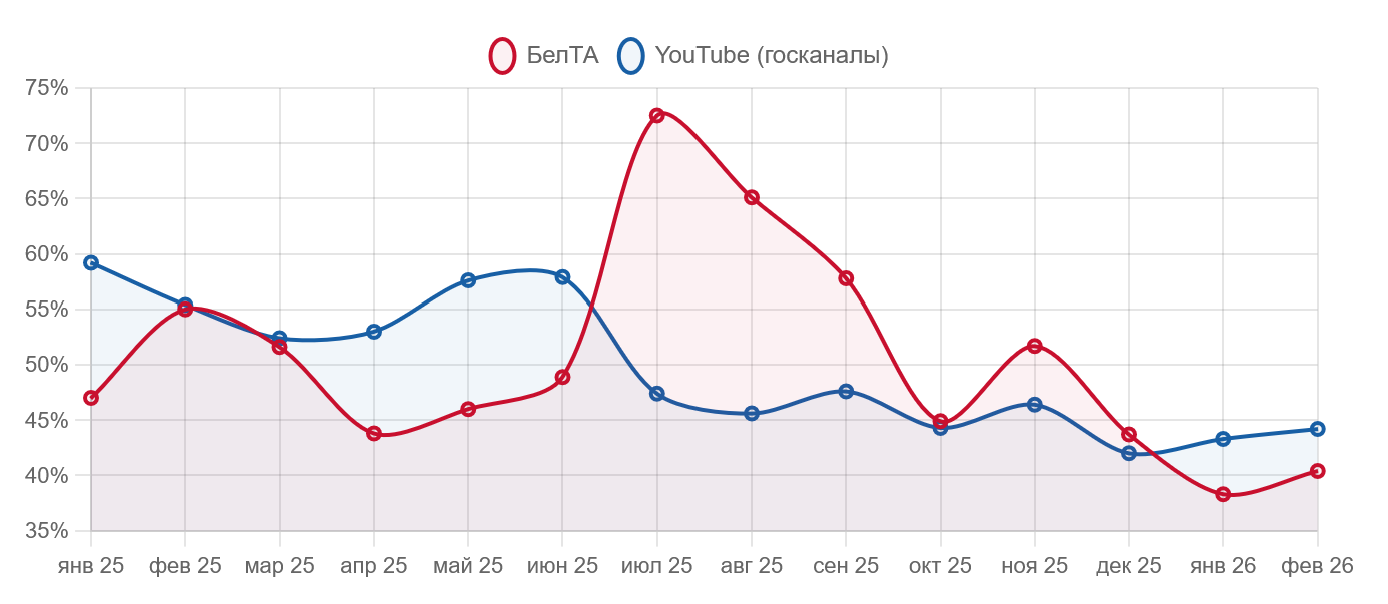
- →BelTA fear rhetoric declined from ~100% to ~40% over two years — a deliberate editorial normalisation
- →YouTube maintained a stable 42–60% fear-marker rate with no seasonal variation — systemic background threat
- →The two platforms now serve different functions: BelTA signals stability, YouTube maintains fear
- →The August 2025 BelTA anomaly (8,148 articles, +100% above average) requires separate investigation
Identity Frames: Who Is the Enemy, Who Is “Us”
Fear requires a target. Across 30 videos explicitly using identity-based framing (enemy/traitor markers, dehumanising labels), we identified five recurring frames — and found that a single frame accounts for more than half of total reach.
views — one Zhirinovsky archive video: “Ukrainian Nazism is worse than German”
of all identity-frame views from just 3 “enemy/Nazi” videos
“patriotic” tone videos — legitimising authoritarianism through pride, not fear
The “enemy/Nazi” frame (Ukraine = worse than Hitler) is not merely offensive — it is the highest-reach identity mechanism in the dataset. It functions by pre-emptively delegitimising any negotiation or empathy with Ukraine, and by extension any Western actor supporting it.
Equally significant is the “patriotic” tone — 6 videos featuring Lukashenko discussing trade turnover, handshakes with Putin, and grain exports. This is identity propaganda without fear: it builds in-group cohesion through pride and normalcy. The fear-inducing content creates the threat; the patriotic content provides the safe harbour.
Most alarming in terms of score: a video about Jeffrey Epstein’s “wild parties of the Western elite” — propaganda score 9, featuring claims about cannibalism and Bill Clinton — represents a direct import of QAnon-style conspiracy narratives into Belarusian state media. It functions not as fear but as disorientation: replacing real threats with phantoms that are impossible to verify or refute.
FIMI Architecture: How Narratives Travel from Moscow to Minsk to Your Feed
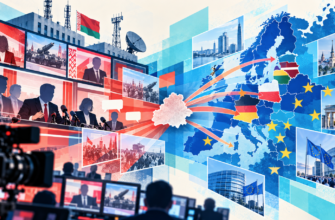
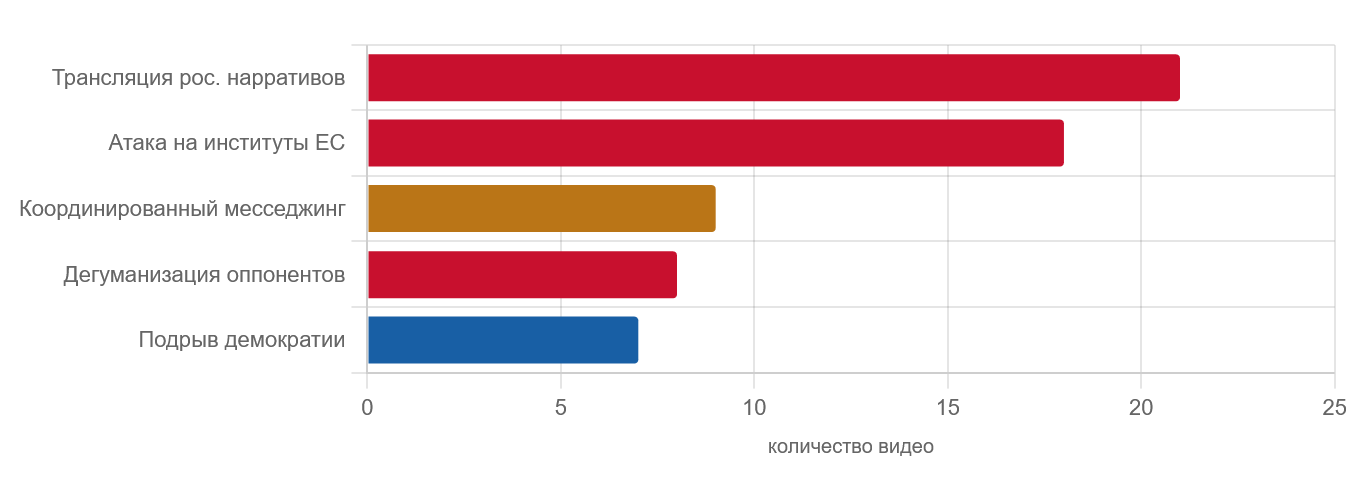
Thirty videos tagged as confirmed FIMI events with fear-inducing tone accumulated 21.6 million views. The dominant indicator — present in 21 of 30 videos with average model confidence of 0.75 — is “Laundering of Russian state narratives.” This is not occasional citation. It is a systematic relay mechanism.
|
Direct RIA Novosti citation
Belarusian channels cite Russian state media as a neutral source — without local analysis. A Russian narrative becomes a Belarusian fact within hours.
|
Synchronised threat framing
Identical terms (“strikes,” “economic crisis,” “end of institutions”) appear simultaneously across multiple channels — a coordination signal even without explicit coordination evidence.
|
|
Kremlin tropes as neutral language
“Banderites,” “globalists,” “colour revolutions” — established disinformation vocabulary deployed as analytical terminology, stripping it of its ideological origin.
|
#Shorts as amplification layer
Short-format threat content is algorithmically promoted and harder to fact-check. BelTA and CTVBY use it systematically for maximum reach at minimum production cost.
|
A methodological note: the model’s confidence for the “Coordinated messaging” indicator is notably lower (0.43) than for narrative laundering (0.75). This reflects an honest limitation — we can document the narrative alignment, but direct evidence of coordination instructions remains rare. This distinction matters for responsible reporting.
- No specific facts, only threats and dangers. The threat is described vividly; the evidence for it is absent or circular.
- The enemy is always external — or a “traitor among us.” There is no legitimate disagreement, only betrayal or foreign manipulation.
- One solution: trust the authority. Fear is presented without agency — the only rational response is compliance.
- The expert speaks calmly about terrifying things. Calm, authoritative delivery masks extreme content — the “ideological authority” technique.
- The comments section is uniform. Identical emotional reactions at scale are a coordination signal, not organic response.
What This Means for Civil Society
The data points to three structural conclusions relevant for CSOs, media educators, and policymakers — particularly in contexts facing upcoming electoral cycles.
First: the most effective fear propaganda is indistinguishable from news. CTVBY’s highest-reach content uses “negative” tone, moderate propaganda scores, and news-format packaging. Platform algorithms do not flag it. Audiences do not experience it as propaganda. Its effect is cumulative and invisible.
Second: fear and pride work together, not separately. The “patriotic” tone videos in our dataset — Lukashenko’s trade statistics, handshakes with Putin — are the other half of the system. Fear creates the threat; pride creates the safe harbour. Communities under this dual pressure do not just become fearful — they become attached to the source of reassurance.
Third: the narrative infrastructure is shared, even where the coordination is not proven. The consistent use of Russian state media framing, identical terminology, and synchronised topic selection across Belarusian channels constitutes a functional FIMI ecosystem — regardless of whether explicit coordination instructions can be documented.
For civil society actors working in communities exposed to this content, the primary task is not debunking individual claims — it is building the vocabulary to name what is happening. The five recognition signals above are a starting point. The goal is not to make audiences cynical about all media, but to give them the specific tools to identify when emotion is being manufactured — and to ask: whose fear is this serving?