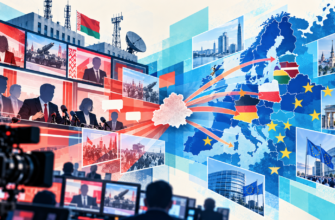


6,971 materials · 14 countries monitored · Baltic + Weimar + V4 + Iberia + Benelux
|
6,971
Total materials
|
3,543
AI deep-analyzed
|
3110
Propaganda identified
|
1409
High risk
|
14
Countries monitored
|
- Key Findings / TL;DR
- Mentions by Country
- Propaganda Narratives
- 🔶 Weimar Triangle and the Baltic states: the same leading narratives
- 🟢 Visegrád Group (V4): the Central European frame
- 🇱🇻 Latvia: an election without a surge
- 🇩🇪 Germany: state elections and ‘Merz’s failure’
- 🇭🇺 Hungary: a new government in the old role
- 🟠 Iberia (ES, PT)
- Ceuta: the wave has subsided, the frame remains
- 🟣 Benelux (NL, BE, LU)
- Benelux: NATO in the trees and Europe without America
- 🇳🇱 Netherlands: country profile of the month
- Country Narrative Profiles
- 📺🖼️ YouTube: Multimodal Analysis by Target Country
- Cluster comparison
- 🧭 DISARM: Tactics & Techniques (indicative)
- High-propaganda thumbnails: what the audience sees first
- Cross-modal divergence: thumbnail vs content
- Claims for Fact-Checking
- Verifiable claims requiring fact-check
- Coordination
- Conclusions
- Methodology
- Confidence in findings and source reliability
Key Findings / TL;DR
• Top target by volume: 🇵🇱 Poland: 2,507 materials. Followed by: 🇩🇪 Germany (1,951), 🇱🇹 Lithuania (1,044).
• Top narrative ‘Internal problems’: 825 materials in deep analysis (27% of identified propaganda).
• Multimodal FIMI on YouTube: Baltic cluster 35.5%, Weimar Triangle 34.9%. Highest among countries with 20+ videos: 🇫🇷 France (42.1% on 38 videos).
• AI: 3,543 materials processed, 1409 flagged as HIGH risk (39.8%). 3110 identified as propaganda (excluding neutral items and items not about the sampled countries).
• Coordination: TASS cited in 185 materials, the most cited external source. 135 coordination events (low confidence, see below) across 30 days.
Mentions by Country
🇵🇱 Poland leads by volume: 2,507 materials.
| 🔶 🇵🇱 Poland | 2,507 | |
| 🔵 🇱🇹 Lithuania | 1,044 | |
| 🔵 🇱🇻 Latvia | 781 | |
| 🔵 🇪🇪 Estonia | 292 | |
| 🔶 🇩🇪 Germany | 1,951 | |
| 🔶 🇫🇷 France | 845 | |
| 🟢 🇨🇿 Czech Republic | 170 | |
| 🟢 🇭🇺 Hungary | 214 | |
| 🟢 🇸🇰 Slovakia | 97 | |
| 🟠 🇪🇸 Spain | 356 | |
| 🟠 🇵🇹 Portugal | 123 | |
| 🟣 🇳🇱 Netherlands | 207 | |
| 🟣 🇧🇪 Belgium | 133 |
Propaganda Narratives
| Country | Propaganda materials | Dominant narrative | Distinctive feature |
|---|---|---|---|
| 🔶 🇵🇱 Poland | 1043 | Historical revisionism (22%) | ‘Historical revisionism’ 22% vs 9% country average |
| 🔵 🇱🇹 Lithuania | 518 | Military buildup (33%) | ‘Military buildup’ 33% vs 14% country average |
| 🔵 🇱🇻 Latvia | 467 | Internal problems (28%) | ‘Military buildup’ 25% vs 14% country average |
| 🔵 🇪🇪 Estonia | 172 | Internal problems (23%) | ‘Arms to Ukraine’ 21% vs 8% country average |
| 🔶 🇩🇪 Germany | 862 | Internal problems (29%) | ‘Internal problems’ 29% vs 23% country average |
| 🔶 🇫🇷 France | 351 | Internal problems (41%) | ‘Internal problems’ 41% vs 23% country average; FIMI on thumbnails 42.1% vs 36.7% average |
| 🟢 🇨🇿 Czech Republic | 58 | Internal problems (31%) | ‘Historical revisionism’ 28% vs 9% country average |
| 🟢 🇭🇺 Hungary | 71 | EU internal division (37%) | ‘EU internal division’ 37% vs 12% country average |
| 🟢 🇸🇰 Slovakia | 40 | EU internal division (28%) | ‘EU internal division’ 28% vs 12% country average |
| 🟠 🇪🇸 Spain | 142 | Migration (52%) | ‘Migration’ 52% vs 6% country average |
| 🟠 🇵🇹 Portugal | 15 | EU internal division (27%) | ‘EU internal division’ 27% vs 12% country average |
| 🟣 🇳🇱 Netherlands | 73 | Internal problems (30%) | ‘Economic decline’ 25% vs 10% country average |
| 🟣 🇧🇪 Belgium | 36 | Military buildup (19%) | ‘Economic decline’ 17% vs 10% country average |
Percentages: share of the country’s analysed materials carrying the narrative category, excluding neutral news and materials not about the monitored countries. The leading categories are shown, so the bars do not add up to 100%.
🔶 Weimar Triangle and the Baltic states: the same leading narratives
In September 2026 the Baltic states and the Weimar Triangle (Poland, Germany, France) are led by the same two categories, ‘Military buildup’ and ‘Internal problems’ (28% and 24% for the Baltic states, 17% and 25% for Weimar). The clusters differ in volume and in individual country profiles (see below).
|
🔵 Baltic States: military buildup and internal problems
|
🔶 Weimar Triangle: internal problems and military buildup
|
Percentages: share of the country’s analysed materials carrying the narrative category, excluding neutral news and materials not about the monitored countries. The leading categories are shown, so the bars do not add up to 100%.
🟢 Visegrád Group (V4): the Central European frame
The Visegrád Four (Poland, Czech Republic, Hungary, Slovakia) are framed through a third lens. This month the cluster’s leading category is “Historical revisionism” (22%). Poland appears in both Weimar and V4 clusters as an analytical lens, not double-counted in totals.
|
🟢 V4: “Historical revisionism” leads
|
🇵🇱 Poland: two contexts
In the Weimar context Poland is attacked as a Western military partner; in the V4 context it appears among Central European neighbours. One dataset, two strategic constructions. |
🇱🇻 Latvia: an election without a surge
Materials on Latvia in September: 781. On the August source base this is down 29%, and there is no surge ahead of the Saeima election on 3 October. The weekly series shows that the peak came in the first week of August, after the crossing point was closed: Telegram then carried 36 Latvia materials per 1,000 documents. By the end of August the share had more than halved, and it stayed at that level throughout September, at 15–23 per 1,000. Almost seven in ten Latvia materials came from Telegram.
The election itself appears in several lines, almost all of them in pro-government Telegram. The first is delegitimisation of the vote: on 25–27 September pro-government channels, joined by the Sputnik Telegram channel, spread the news that Latvia’s State Security Service had removed staff who had visited Russia and Belarus from polling stations, and two days later it had turned into the question ‘Is the result being rigged?’. The second is militarisation of the vote itself: ‘German fighter jets “will protect” Latvia during the election’. The third is a reading of the balance of forces: the column ‘A favourite without a majority’ appeared in three channels at once on 20–21 September. Minskaya Pravda ties the campaign directly to the border: ‘How Russophobia and migration panic became the main fuel of Latvia’s election campaign’.
In parallel ran an official register of dialogue. Polotsk State University twice, on 11 and 25 September, hosted a ‘Belarus – Latvia’ round table, and national state media presented it as a conversation about restoring good-neighbourly relations under the slogan ‘You don’t choose your neighbours’; ONT recorded the experts’ conclusion about a deficit of trust. Yet the model rated the BelTA and Vitebskiye Vesti reports on the round table as high risk: beneath the dialogue frame, in the model’s description, they accuse Latvia of oppressing Russian speakers. For Vitebskiye Vesti, the paper of the only Belarusian region bordering Latvia, the round table became the main Latvia story: three of its five September Latvia materials, including a report headlined ‘You don’t choose your neighbours, you have to be friends with them’.
The line legitimising Belarus, noted in August, continued but changed its face. Instead of a former Saeima deputy, it is now the Latvian politician Andrejs Mamikins, of whom NEWS.BY writes: ‘For 10 years he watched European democracy from the inside’. NEWS.BY announced his own segment on Pervy Informatsionny, and YouTube carried an episode ‘Fines in Latvia for Russian propaganda and for friendship with Belarus’. Alongside it ran a report ‘Moving from Latvia to Belarus: stories of people looking for a quiet life’ and a post about how a Latvian citizen who moved to Belarus ‘decided to show how people are “tortured” here’. The rest are the familiar security lines: the Saeima gave the army the right to seize private property in the event of a military threat, which pro-government Telegram presented as ‘Latvia follows Ukraine’s example’, and banned holders of Russian and Belarusian passports from owning firearms. The most viewed Latvia video of the month, ‘Total blockade 2027: Latvian authorities go to extremes!’ (SB TV, about 345,000 views), covers plans to end bus services to Belarus and Russia.
The high-risk share for Latvia is 49% (29% by both models), almost level with Poland (53%) and Lithuania (52%). In August we reported 41% for Latvia, but that share was understated by false matches; on the recounted data (without CTV, Zviazda and the Union State portal) it is 52% for August and 50% for September. The tone has not changed; the volume has fallen. For comparison, Sputnik Belarus, which is not counted in the series totals: its website writes about Latvia almost twice as often as the national state sites (24 Latvia materials per 1,000 against 14), its Telegram channel less often than pro-government Telegram (11 against 19), and both fell from August by about as much as the series. The group Chernye Rusy (‘Black Russes’), in whose name a claim of responsibility for an incident on the Latvian-Belarusian border was circulated in October, appeared in state media once in September: on 18 September Zheltye Slivy called reports about it ‘yet another fake’. The main wave, with identical text in eight channels on one day, came in October, and we will examine it in the next issue.
🇩🇪 Germany: state elections and ‘Merz’s failure’
Materials on Germany in September: 1,951. On the August source base this is up 30%, the largest increase among the major countries in this issue, and it does not come from a single source: both the national state media websites and pro-government Telegram grew. The weekly series shows the trigger. In the week after the Saxony-Anhalt state election on 6 September, the Alternative for Germany (AfD) is mentioned in 171 materials, against 6–17 a week in August. A second, smaller wave followed the elections in Berlin and Mecklenburg-Western Pomerania in the second half of the month. Chancellor Friedrich Merz is named in 367 materials this month against 151 in August; adjusted for the volume of the feed, that is more than a doubling.
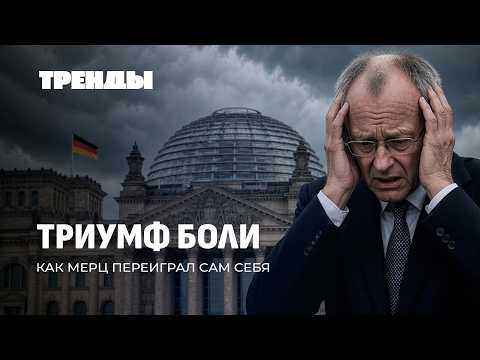
State media present the elections above all as Merz’s defeat. Citing media reports, BelTA writes that Merz is fighting for political survival after the ‘catastrophe’ in the regional elections and that Germany is entering a period of political instability; Minskaya Pravda sums up: ‘Merz’s party was left without seats’. On YouTube the headlines are ‘Putin’s agents won in Germany’, ‘Merz in shock’ and ‘MERZ IS KAPUTT’. The most viewed ‘German’ video of the month, ‘Merz found a Russian trace in his party’s defeat’ (SB TV, about 264,000 views), mocks the ‘Russian trace’ version in its very headline. Zheltye Slivy describe the results of the elections in Berlin and Western Pomerania as ‘a nosedive’.
The channels relay the AfD’s demands separately: keep Ukraine out of the European Union and reject any military guarantees for Ukraine. The other side of the same frame: Merz’s Germany is preparing for war. Minskaya Pravda asks whether Merz is preparing Germany for war in 2030, and Gomelskaya Pravda links ‘Merz’s record lows’ to his grandfather’s Nazi past. The high-risk share for Germany is 38% (22% by both models), noticeably lower than for Poland (53%) and Lithuania (52%); the main category is internal problems (253 of 1,062 analysed materials). In August Germany fell by a quarter; in September it produced the month’s largest increase. The trigger was domestic German politics, but the frame is the same as for the neighbours: a crisis of government and a course towards war.
🇭🇺 Hungary: a new government in the old role
Materials on Hungary in September: 214. The volume barely changed (down 5% on the August source base); the role did. In August Hungary was a country from the agency feed; in September the main category is again ‘EU division’: 26 of 99 analysed materials, against 21 neutral news items. The triggers are the same as under Orbán: Hungary will not support Ukraine’s fast-track accession to the EU, will not allow a fuel storage facility for Ukraine to be built, and SB publishes a commentary on Hungary blocking Ukraine’s progress towards EU membership. Pro-government Telegram draws its own conclusion about the change of government: ‘Remember how everyone rejoiced at Orbán’s departure?’, and in another channel ‘Six of one, half a dozen of the other’. Orbán himself has returned to the agenda as an opposition figure: ONT reports that he announced a mobilisation of right-wing forces against Péter Magyar’s ‘colonial government’. Magyar is named in the headlines of 13 materials, mostly news items. The high-risk share is 30% (18% by both models). What matters more to Belarusian state media is not who governs in Budapest but that Hungary is still holding back the EU’s Ukraine course.
| 37% | |
| 15% | |
| 13% | |
| 10% | |
| 7% | |
| 6% |
🟠 Iberia (ES, PT)
Spain and Portugal have been monitored since the July 2026 issue. Volumes remain several times below the core clusters (356 materials on Spain, 123 on Portugal); the cluster is read mainly through Spain, with Portugal as background.
|
🟠 Iberia: narrative mix
|
🇪🇸 Spain
🇵🇹 Portugal
|
Ceuta: the wave has subsided, the frame remains
Materials on Spain in September: 356, half as many as in August on the same source base. Almost all of the drop is in Ceuta: mentions of the enclave fell roughly threefold (138 materials against 407 in August; counted without CTV, Zviazda and Sputnik, so the August figure is lower than in issue #5). But the frame remains: ‘migration as a weapon’ is still the main category of Spain materials (74 of 180 analysed), and 23 of the 66 Ceuta materials are rated high risk. The high-risk share for Spain overall is 33% (15% by both models).
The agencies supply figures: BelTA writes that about 10,000 refugees remain in Ceuta, while pro-government Telegram takes stock: ‘The second month of the “new Europeans” getting acquainted with Spanish Ceuta is coming to an end’. In these posts migrants steal roofing from local residents’ houses, ‘eat everything that moves around them’, and the enclave itself ‘is switching to martial law?’. Trump’s words that Spain ‘will be destroyed’ because of uncontrolled migration spread across four channels, while the Spanish Foreign Ministry’s accusation against Russia was presented with a clown emoji: ‘Spain has found the culprits of the migrant riots in Ceuta: Russia and Elon Musk’.
Spain’s internal problems are presented through the housing crisis: SB writes about protests under the slogan ‘Housing is a right, not a privilege!’, and Zheltye Slivy about how ‘left-wing capitalists have driven Spaniards to a tent camp in the centre of Madrid’. Portugal (123 this month) remains in the background: football, tourism, strikes; there is one notable hostile story, a ‘march of Ukrainian patriots’ with calls to kill Russians. FIMI indicators appear on 43.8% of the cluster’s thumbnails, but that is 16 videos, almost all of them compilation episodes, so the share is not carried into the conclusions.
🟣 Benelux (NL, BE, LU)
The Netherlands, Belgium and Luxembourg have been monitored since the July 2026 issue (207, 133 and 15 materials). The cluster is read through the Netherlands; Belgium is background and Luxembourg is kept as a footnote without a country profile. Capitals are deliberately excluded from country matching: in this corpus “Brussels” means the EU and NATO in over 90% of cases and “The Hague” means international courts, not the country.
|
🟣 Benelux: narrative mix
|
🇳🇱 Netherlands
🇧🇪 Belgium
|
* Luxembourg is counted in the Benelux total but has no country profile: 15 materials this month.
Benelux: NATO in the trees and Europe without America
The cluster (355 in total) has no single running story in September. Belgium (133, up 26% on August on the same source base) appears in three roles. The first is a reason to laugh at NATO. The Falcon Leap exercise, in which paratroopers got stuck in trees, spread across five channels with captions such as ‘The strongest army in the world’. The second is a split in the West: SB writes that Belgium no longer regards the US as its closest ally. The third is Ukrainian refugees as a source of conflict, the story that a Muslim community declared an ‘anti-Ukrainian jihad’ in Eupen. The familiar frame of internal problems rests on Brussels: NEWS.BY devoted an episode to it, ‘Almost 200 shootings in 1.5 years! How did the EU capital descend into chaos on its streets?’.
An agency report that Belgium will hand Ukraine three F-16s sits next to a retelling of the WSJ in pro-government Telegram: more than half of Ukraine’s F-16s cannot be used because of maintenance delays in Belgium. The Netherlands (207) is covered separately below; Luxembourg (15) appears in the report only as a footnote. The FIMI share of thumbnails for the cluster is 58.3% on 12 videos, mostly compilation episodes, so it is not carried into the conclusions.
🇳🇱 Netherlands: country profile of the month
Materials on the Netherlands in September: 207; videos mentioning the country: 3, with FIMI indicators on 66.7% of thumbnails. All three videos are compilation episodes in which the Netherlands is mentioned in passing, so this share says nothing about the country. The volume rose by a quarter (up 24% on August on the same source base), but the Netherlands has no story of its own in September, as the farmers’ protests were in August. There are two motifs.
The first motif is moral decline. A report that water cremation is coming to the Netherlands was presented by the channel Myasorubka (‘Meat Grinder’) as ‘a new eco-friendly way of disposing of the population’; the same wording was repeated by Belarus i Mir and Shkvarka 2.0, and the model rated all three posts as high risk. Alongside them are reports of the euthanasia of a two-year-old child: BelTA carries them as news, while in Telegram they come with a coffin emoji.
The second motif is everyday hardship: record petrol prices, overloaded power grids, a budget deficit. These are mostly agency reports. The high-risk share for the Netherlands is 16% (10% by both models), the lowest among countries with a hundred or more analysed materials; neutral news accounts for 37 of 117. For Belarusian state propaganda the Netherlands remains part of a background called ‘Europe’, and in September that background is coloured by the theme of moral decline: death and the ‘disposal’ of people as an image of Western society.
Country Narrative Profiles
Each country has its own propaganda profile.
|
🇵🇱 Poland
|
🇱🇹 Lithuania
|
||||||||||||||||||||
|
🇱🇻 Latvia
|
🇪🇪 Estonia
|
||||||||||||||||||||
|
🇩🇪 Germany
|
🇫🇷 France
|
||||||||||||||||||||
|
🇨🇿 Czech Republic
|
🇭🇺 Hungary
|
||||||||||||||||||||
|
🇸🇰 Slovakia
|
🇪🇸 Spain
|
||||||||||||||||||||
|
🇵🇹 Portugal
|
🇳🇱 Netherlands
|
||||||||||||||||||||
|
🇧🇪 Belgium
|
Percentages: share of the country’s analysed materials carrying the narrative category, excluding neutral news and materials not about the monitored countries. The leading categories are shown, so the bars do not add up to 100%.
📺🖼️ YouTube: Multimodal Analysis by Target Country
The text layer of the mention analysis (threat categories per video) combined with thumbnail visual analysis (Vision LLM, codebook v2.1) reveals how the same propaganda system uses different visual packaging for different target countries.
Cluster comparison
| Cluster | Videos | Clickbait | Propaganda | FIMI %* |
|---|---|---|---|---|
| 🔵 Baltic States | 121 | 3.19 | 6.21 | 35.5% |
| 🔶 Weimar Triangle | 289 | 3.22 | 6.04 | 34.9% |
| 🟢 V4 | 171 | 3.23 | 5.98 | 35.7% |
| 🟠 Iberia | 16 | 3.37 | 7.2 | 43.8% |
| 🟣 Benelux | 12 | 3.33 | 8.19 | 58.3% |
| Country | Videos | Clickbait | Propaganda | FIMI %* | Top visual technique |
|---|---|---|---|---|---|
| 🔶 🇵🇱 Poland | 135 | 3.19 | 5.5 | 33.3% | appeal to authority |
| 🔵 🇱🇹 Lithuania | 60 | 3.12 | 6.11 | 33.3% | appeal to authority |
| 🔵 🇱🇻 Latvia | 46 | 3.2 | 6.23 | 37.0% | appeal to fear |
| 🔵 🇪🇪 Estonia | 15 | 3.47 | 6.58 | 40.0% | appeal to fear |
| 🔶 🇩🇪 Germany | 116 | 3.18 | 6.21 | 34.5% | appeal to authority |
| 🔶 🇫🇷 France | 38 | 3.42 | 7.44 | 42.1% | appeal to fear |
| 🟢 🇨🇿 Czech Republic | 12 | 3.58 | 7.19 | 58.3% | appeal to fear |
| 🟢 🇭🇺 Hungary | 20 | 3.4 | 7.85 | 35.0% | appeal to authority |
| 🟢 🇸🇰 Slovakia | 4 | 2.75 | 9.28 | 50.0% | demonization |
| 🟠 🇪🇸 Spain | 13 | 3.38 | 7.67 | 46.2% | visual whataboutism |
| 🟠 🇵🇹 Portugal | 3 | 3.33 | 5.17 | 33.3% | stability framing |
| 🟣 🇳🇱 Netherlands | 3 | 4.0 | 10.0 | 66.7% | card stacking |
| 🟣 🇧🇪 Belgium | 9 | 3.11 | 7.59 | 55.6% | visual whataboutism |
* FIMI indicator under visual codebook v2.1 (EEAS operationalisation). Confidence in the visual layer is moderate; see the section on confidence in findings.
🧭 DISARM: Tactics & Techniques (indicative)
Since the June 2026 issue, narrative categories and manipulation types identified by the AI analysis are translated into techniques of the open DISARM Red framework — the shared vocabulary of EEAS, FIMI-ISAC and the counter-disinformation community. Counts are materials carrying indicators of a technique; one material can map to several. Deterministic v0 translation layer, not per-item behavioural coding.
| ID | Technique | Materials |
|---|---|---|
| T0135 | Undermine | 1216 |
| T0023 | Distort Facts | 1112 |
| T0078 | Dismay | 873 |
| T0075.001 | Discredit Credible Sources | 825 |
| T0003 | Leverage Existing Narratives | 512 |
Coordination layer: T0002: 270, T0084: 270, T0119: 47.
High-propaganda thumbnails: what the audience sees first
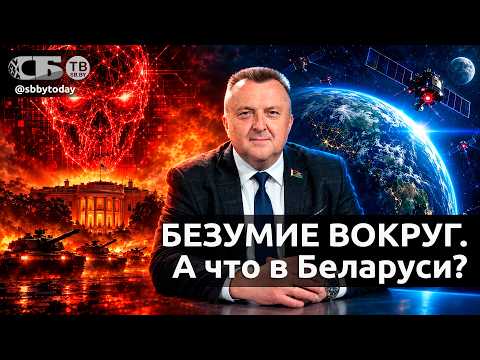
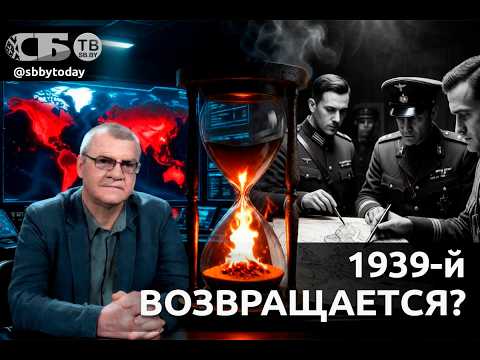
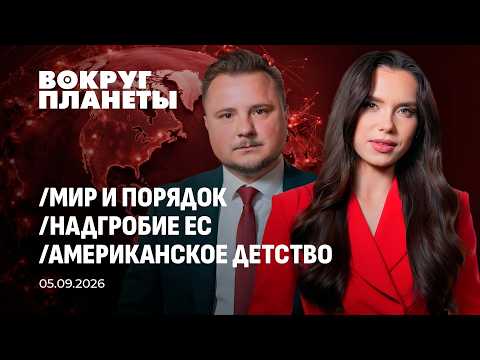
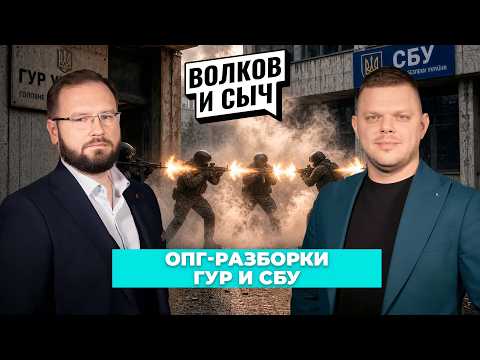
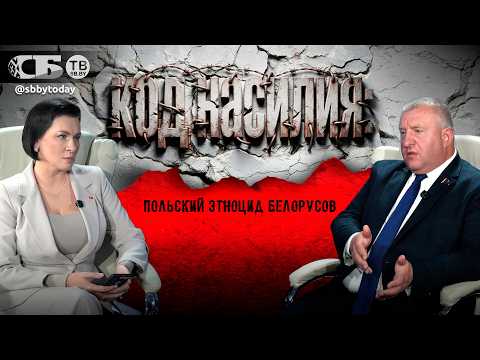
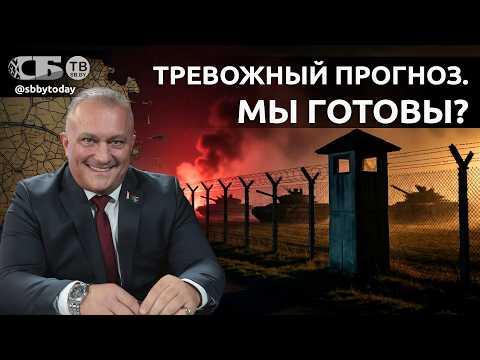
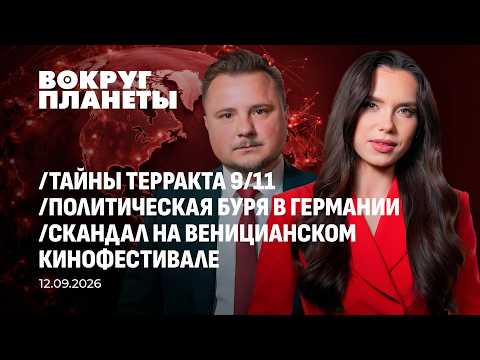
Real YouTube thumbnails from videos scored 8–10/10 on propaganda scale. These images are the first contact point with the audience — designed to trigger emotional response before the content is even consumed.

Cross-modal divergence: thumbnail vs content
For a share of videos the thumbnail is alarmist while the transcript’s assessed threat is low. The cover does emotional work the content does not. Among countries with 20+ videos, divergence is highest for 🇵🇱 Poland (23.7%).
| Country | Divergence | Alarmist cover / low-threat text |
|---|---|---|
| 🟠 🇵🇹 Portugal | 33.3% | 1/3 |
| 🔵 🇪🇪 Estonia | 33.3% | 5/15 |
| 🔶 🇵🇱 Poland | 23.7% | 32/135 |
| 🟣 🇧🇪 Belgium | 22.2% | 2/9 |
| 🔵 🇱🇻 Latvia | 21.7% | 10/46 |
| 🔶 🇩🇪 Germany | 19.8% | 23/116 |
| 🔵 🇱🇹 Lithuania | 18.3% | 11/60 |
| 🟠 🇪🇸 Spain | 15.4% | 2/13 |
| 🟢 🇭🇺 Hungary | 15.0% | 3/20 |
| 🔶 🇫🇷 France | 7.9% | 3/38 |
| 🟢 🇨🇿 Czech Republic | 0.0% | 0/12 |
| 🟢 🇸🇰 Slovakia | 0.0% | 0/4 |
| 🟣 🇳🇱 Netherlands | 0.0% | 0/3 |
Claims for Fact-Checking
AI analysis extracted verifiable claims from high-risk materials. They were not checked by hand for this issue and are therefore all shown as requiring verification. Claims are shown in the original Russian language as published by state media. Click ↗ to view the original material.
Verifiable claims requiring fact-check
Coordination
| Source | Citations |
|---|---|
| TASS | 185 |
| RIA Novosti | 46 |
| BelTA | 39 |
| Bild | 7 |
Conclusions
1. Baltic states and Weimar: different volumes, a similar narrative mix. In September 2026 the Baltic cluster (LT, LV, EE) accumulated 2,117 mentions, while the Weimar Triangle (PL, DE, FR) reached 5,303 mentions. Multimodal YouTube analysis shows Baltic FIMI at 35.5% and Weimar at 34.9% — both clusters operate as fully-formed propaganda targets, with comparable intensity.
2. 🇵🇱 Poland: top target by volume. 2,507 materials; leading narratives ‘Historical revisionism’ and ‘Military buildup’ (22% each).
3. YouTube as propaganda amplifier. Multimodal analysis covered 474 video–country pairs across the target countries. Among countries with 20+ videos, the largest share of FIMI-flagged thumbnails is in content about 🇫🇷 France (42.1%).
4. TASS as the main external source. TASS cited in 185 analysed materials, followed by RIA Novosti (46). This shows reliance on Russian state agencies; it is not in itself evidence of coordination, which this series rates as low confidence.
5. Factual manipulation is the most frequent type. By number of cases, factual manipulation (cherry-picking real data to distort conclusions) comes first: 4449, against 2884 emotional and 2355 logical. Such propaganda is harder to detect than outright fabrication.
6. Iberia and Benelux remain several times smaller. Iberia (ES, PT) accumulated 479 materials and Benelux (NL, BE, LU) 355, against 2,117 for the Baltic cluster and 5,303 for Weimar. Each of the two clusters is read through one country (Spain, the Netherlands); the rest is background. Country matching uses country stems and demonyms only; capitals and politicians were tested and excluded because most of their mentions do not concern the country.
Methodology
Materials come from every source the FORESIGHT corpus classifies as Belarusian state-owned or pro-government media: state web outlets (BelTA, SB.BY, CTV, ONT, Zviazda and regional newspapers, from August 2026 for all six regions), state and pro-government Telegram channels including ministry channels, and the national state YouTube channels of the core list (see the limitations for the current month); regional YouTube channels stay outside the totals. Keyword-based monitoring covers fourteen countries in five clusters: Baltic (LT, LV, EE), Weimar Triangle (PL, DE, FR), Visegrád (PL, CZ, HU, SK), Iberia (ES, PT) and Benelux (NL, BE, LU). Poland is counted in two clusters as an analytical lens, not twice in totals. Luxembourg is counted in the Benelux total but has no country profile. For Iberia and Benelux, country matching uses country stems and demonyms only: capitals and politicians were tested and excluded (Brussels appears without Belgium in 92% of documents, The Hague without the Netherlands in 71%, Rutte without the country in 82-97%). AI deep analysis used GPT-5-mini with structured output. Multimodal YouTube analysis combines the text layer of the mention analysis with thumbnail Vision LLM codebook v2.1. Average model self-reported confidence: 80.1%.
Confidence in findings and source reliability
Confidence in findings is given on the scale of the STIX 2.1 threat-intelligence exchange standard: low (1–29), moderate (30–69), high (70–100).
Language-model findings: moderate. The deep analysis was run with gpt-5-mini, as in every issue of the series: 3,862 materials were submitted and 3,853 responses parsed. After the country-matching rules were refined (see the limitations), 310 of them turned out not to concern the monitored countries, leaving 3,543 materials in the analysis. A second model (gpt-5.6-luna) independently coded the same set. Agreement on risk level is 65% (Cohen’s kappa 0.48; 0.59 when the order of levels is taken into account), on narrative category 68% (kappa 0.64); by segment, kappa ranges from 0.43 (Telegram) to 0.62 (regional newspapers). The disagreement is one-sided: 96% of the materials the second model rates as high risk are rated the same way by the main model; the difference lies in the threshold. The high-risk share is therefore given as two values: 39.8% by the main model and 21.9% by agreement of both models, as a conservative lower bound. On the August source base the main model’s share is 39.3%, against 42.6% in August; August has been recounted under the new country-matching rules (issue #5 reported 40.1%). The three-point fall exceeds random variation; changes for individual countries are within it. The visual layer was coded in a single run of a vision model; in repeated runs about 10% of labels change, so the visual shares are also in the moderate band, and they are not compared with August: in September the country profiles were rebuilt under the new rules.
Coordination: low. A coordination event means several sources covering the same topic on the same day, without testing whether the publications were synchronised (135 events in 30 days).
Source reliability. Attribution to the state segment is high for the websites, YouTube and Telegram channels of state media and for ministry channels: these are official outlets. For pro-government authored and anonymous Telegram channels it is moderate: their place in the network is established through reposts and cross-references, not through official status.
Limitations for September. From this issue on, countries are matched under refined rules: the country stem must stand at the start of a word, and exceptions have been added for several stems. Previously, for example, the Russian word for ‘brigade’ (бригада) was counted for Latvia via ‘Riga’, and the word for ‘million’ (миллион) for France via ‘Lyon’. This also affects issues #1–#5. For Latvia, Estonia, France and the Czech Republic, between 36% and 63% of materials, depending on country and month, were not about those countries, so their material counts in past issues were overstated. For Lithuania, Slovakia, Spain and Hungary such materials made up to 20%, for Germany up to 8%, while Poland, on the contrary, was undercounted by 8–12%. For example, in July (#4) France was not first by number of materials (we reported 1,394) but third, at about 630, after Germany (about 1,140) and Poland (about 1,030). The corrected August high-risk share for Latvia is given in the Latvia section. August has been recounted under the new rules, and all comparisons with it use the recounted data and the August source base, without CTV, Zviazda and the Union State portal. CTV website texts have been cleaned of a feed of teasers for other stories that was captured with them at download; in issues #1–#5 this feed added unrelated topics and country mentions to CTV materials. Sputnik Belarus (website and Telegram channel) is not counted in the series totals: it is a Russian state outlet. It is shown separately for comparison in the Latvia section, with the website and the channel counted separately. In issues #1 and #2, 7 and 33 of its mentions entered the totals. Two Telegram channels outside the state segment were wrongly included in the totals of this and past issues: in September this amounts to 23 mentions out of 9,107, or 0.3%; their labelling will be corrected. YouTube videos for September were collected late, in November; for VoenTV there are 43% fewer than in August, and the available data cannot tell whether videos were deleted or fewer were published. In the automatic subtitles of some videos since June, words are run together without spaces, and such videos may be undercounted: by our estimate, by no more than 30 documents a month for Latvia and for France.