

On 15 July 2026, the Leninski District Court of Mahiliou designated the website eu4belarus.info as “extremist materials”. It is the website of EU4Belarus, a programme funded by the European Union. The same ruling covered the website of Lithuania’s Central Project Management Agency (cpva.lt), which administers the programme, and the agency’s pages on LinkedIn and X.
From that day on, anyone in Belarus who forwards material from these resources risks a fine, community service or up to 15 days of arrest, and the phone used for the repost is confiscated. Nobody notified the agency. Nobody warned the readers.
In Belarus, this is what international conferences call “the impact of disinformation on civil society”. The main disinformation actor working against Belarusian civil society organisations is the state itself. It has four instruments: it takes the word, sticks on a label, passes a law and goes after the sources. Each of them can be measured. Below we measure them on the FORESIGHT corpus: some 6.7 million documents from Belarusian state and independent media, Telegram and YouTube.
Instrument one: the word
Before fighting civil society, the state took the concept itself.
We traced every use of the phrase “civil society” in Belarusian media from January 2021 to September 2026: 16,780 documents. For each state-media document we identified the frame. In the regime frame, “civil society” means pro-government organisations, the All-Belarusian People’s Assembly (VNS) and “constructive forces”. In the independent frame, it means human rights defenders, independent initiatives and political prisoners. The substitution index is the share of the regime frame among the documents where the frame can be identified.
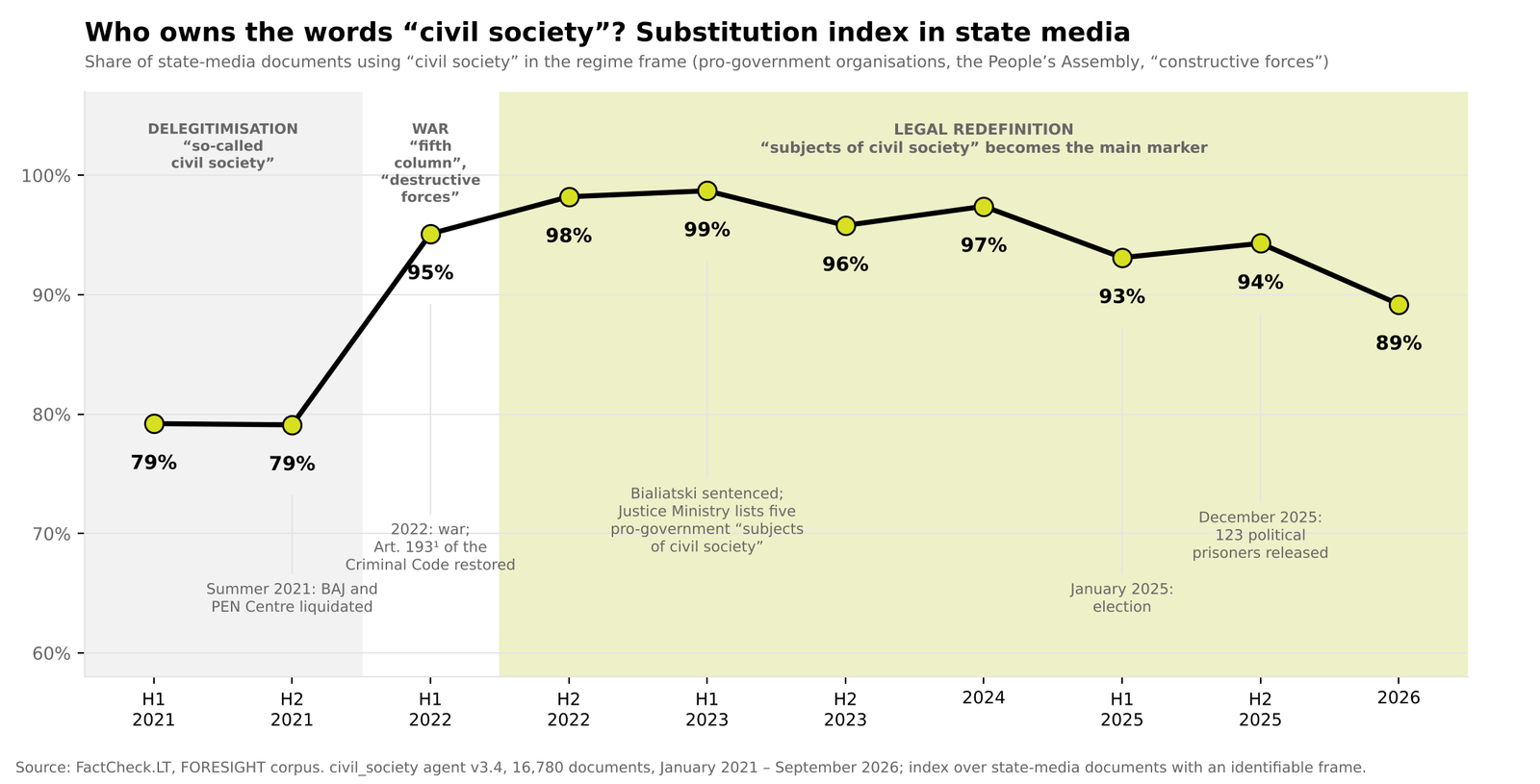
Fig. 1. Substitution index: the share of state-media documents that use “civil society” in the regime frame.
In 2021 the index stood at 79%. At that time the concept was still attacked head-on. With the start of the war in 2022 it rose to 95%, and then to 98–99%. It has not fallen below 89% since: nine out of ten mentions of “civil society” in state media refer to organisations created or recognised by the state.
More telling than the level is how the words used for the substitution have changed.
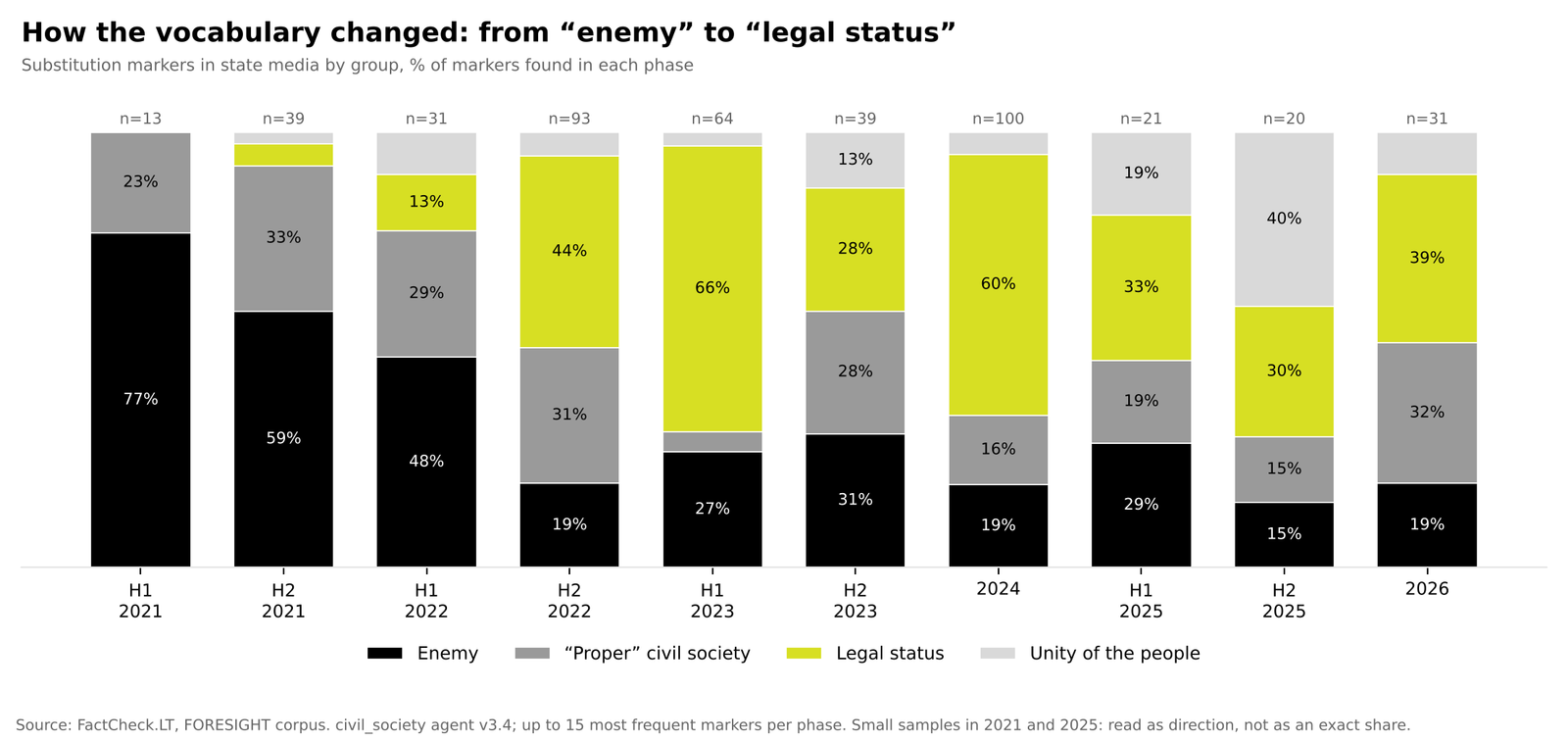
Fig. 2. Substitution markers in state media, by group.
In the first half of 2021, 77% of the substitution markers built the image of an enemy: “so-called civil society”, “fifth column”, “financing of protests”. In the second half of 2022, legal status took over: the phrase “subjects of civil society” and its neighbours accounted for 44% of the markers, 66% in the first half of 2023 and 60% in 2024.
The legal vocabulary followed a chain of legal acts. The constitutional amendments put to the referendum of 27 February 2022 introduced Chapter 3¹ on the All-Belarusian People’s Assembly, and “representatives of civil society” are named among its delegates. Who exactly they are was settled by two laws in February 2023. On 7 February the head of the regime signed Law No. 248-Z “On the All-Belarusian People’s Assembly”, which gives civil society up to 400 seats in the Assembly. On 14 February came Law No. 250-Z “On the Fundamentals of Civil Society”. According to the Ministry of Justice, it introduced “concepts new to our legal system”: “civil society” and “subjects of civil society”.
The law distinguishes between subjects of civil society in general and those entitled to “special forms of interaction” with the state. The main such form is electing delegates to the VNS. Confirming this entitlement is the task of the Ministry of Justice, and only the largest structures meet the criteria: a republican public association with regional and Minsk branches and at least 100,000 adult members or, for trade unions, an association that unites at least half of all trade unions registered in the country. In May 2023 the Ministry of Justice decided to classify five organisations as subjects of civil society “entitled to interact with state bodies (organisations) in special forms”: the republican public association Belaya Rus, the Belarusian Public Association of Veterans, the public associations Belarusian Republican Youth Union and Belarusian Union of Women, and the Federation of Trade Unions of Belarus. All five are pro-government, as Zerkalo pointed out at once, and in 2024 it was they who elected the civil society delegates.
Announcing the decision on 22 May 2023, the ministry listed the objectives of this interaction. First comes “ensuring civic (popular) unity”, followed by “ensuring the independence, state sovereignty and territorial integrity” of the country, “organising constructive interaction… aimed at strengthening trust in the institutions of state power”, patriotic education based on “preserving the historical truth and memory of the Belarusian people”, and “strengthening the single community ‘the Belarusian people’”. Holding power to account is not on the list. Civil society is given the role of a pillar of the state. The concept was no longer mocked: it was rewritten in law.
Then the substitution entered security doctrine. The updated National Security Concept, which the VNS approved in April 2024, names as an internal source of threats in the political sphere “an insufficient level of development of the subjects of a civil society that serves national interests”. The list itself has been left open: in March 2024 the head of the regime proposed not to close the question, because “new subjects of civil society may appear”. Who joins the list next is for the Ministry of Justice to decide.
There is a flip side. Independent media increasingly use the concept only in their own frame: from 88% in early 2021 to 93–96% in 2025–2026. Their share of neutral uses fell from 56% to 39–41%. The two parts of the Belarusian information space use one word for different things, and they have almost no common language left.
Instrument two: the label
State rhetoric calls those who left Belarus after 2020 “runaways” (беглые). We traced the history of the word and the corpus data in detail in September: “Runaways”: a short history of a word propaganda picked up without looking (in Russian). What matters here is how the label fits into the chain.
In our corpus, the label was first used by the anonymous pro-government Telegram channel “Belarus i Mir” on 7 September 2020. On 10 November the head of the regime said the word in public; BelTA, CTV and SB. Belarus Segodnya picked it up the same day, and from 17 November it appeared in the state news agency’s headlines. In January 2021 state media used it in 189 documents, and in 168 of them without any reference to the head of the regime, in their own editorial voice. Anonymous channel, the man at the top, editorial: each step took about two months. This is what laundering a label looks like.
The label grows a vocabulary around it. The share of contexts in which “runaways” comes with dehumanising words rose from 9% in 2020 to 24% in 2026. The most frequent neighbours are “zmagary” (a slur for opposition activists), “extremists”, “traitors” and “puppets”.
After the January 2025 election, the label went back to where it had come from.
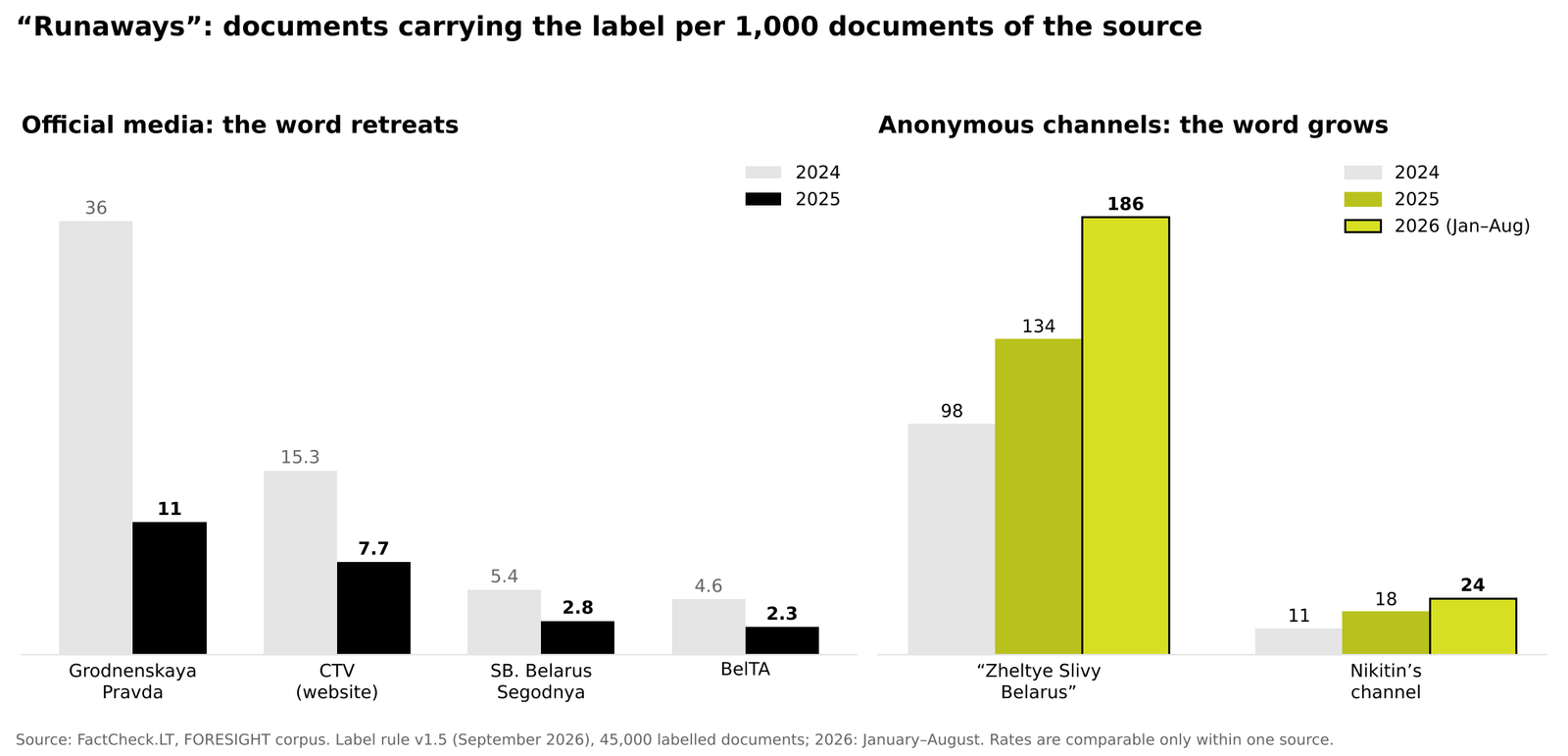
Fig. 3. Documents carrying the label “runaways” per 1,000 documents of the source.
Per thousand documents, CTV cut its rate from 15 to 8, SB. Belarus Segodnya from 5.4 to 2.8, BelTA from 4.6 to 2.3 and Grodnenskaya Pravda from 36 to 11. The volume of these outlets did not change; their vocabulary did. Over the same period the anonymous channel “Zheltye Slivy Belarus” went from 98 to 186 per thousand posts: the label appears in almost one post in five. The official voice stepped back, the anonymous layer works in its place, and nobody there answers for the wording.
The label is also spread by those who oppose it. About half of the mentions of “runaways” in independent media are quotations of the head of the regime.
We wrote about the same labels on TikTok in July 2025: Toxic hashtags of Belarusian TikTok (in Russian).
Instrument three: the law
The Ministry of Information maintains the Republican List of Extremist Materials. We collected and analysed it in full: every entry since 2008.
What the reader risks. Distributing materials from the list, as well as producing, storing or transporting them for distribution, is punishable under Part 2 of Article 19.11 of the Code of Administrative Offences: a fine of 10 to 30 base units, community service or arrest for up to 15 days, with confiscation of the device. Courts treat a repost or a forward as distribution. In 2023 the Maskouski District Court of Brest sentenced a man to 12 days of arrest for 30 “likes” on YouTube: in the court’s logic, likes boost a channel’s ranking. Reading as such is not punishable under the letter of the law, according to lawyers.
Scale. As of September 2026 the list holds 6,018 court rulings issued by 159 courts. The instrument has existed since 2008 but was rarely used before 2020: 36 rulings in 2016, 22 in 2019, 19 in 2020. In 2021 there were 427, in 2024 1,462, and 977 in the first seven and a half months of 2026. The number of courts issuing such rulings grew from seven in 2020 to between 85 and 112 a year.
No time to pause. 96.9% of rulings take effect on the day they are issued: there is no window in which the material is still legal and the ruling can be appealed. Previously, an average of 12 days passed between a ruling and its entry into force, roughly the length of the appeal period. The first ruling with immediate effect appeared in October 2020; in March 2021 such rulings outnumbered ordinary ones, and from April 2021 there were almost no others. The package of anti-extremism amendments was signed only in May 2021. The courts adopted the new practice before the law formalised it.
Geography. At least one ruling has been issued in each of the country’s 118 districts. Yet the load is very uneven.
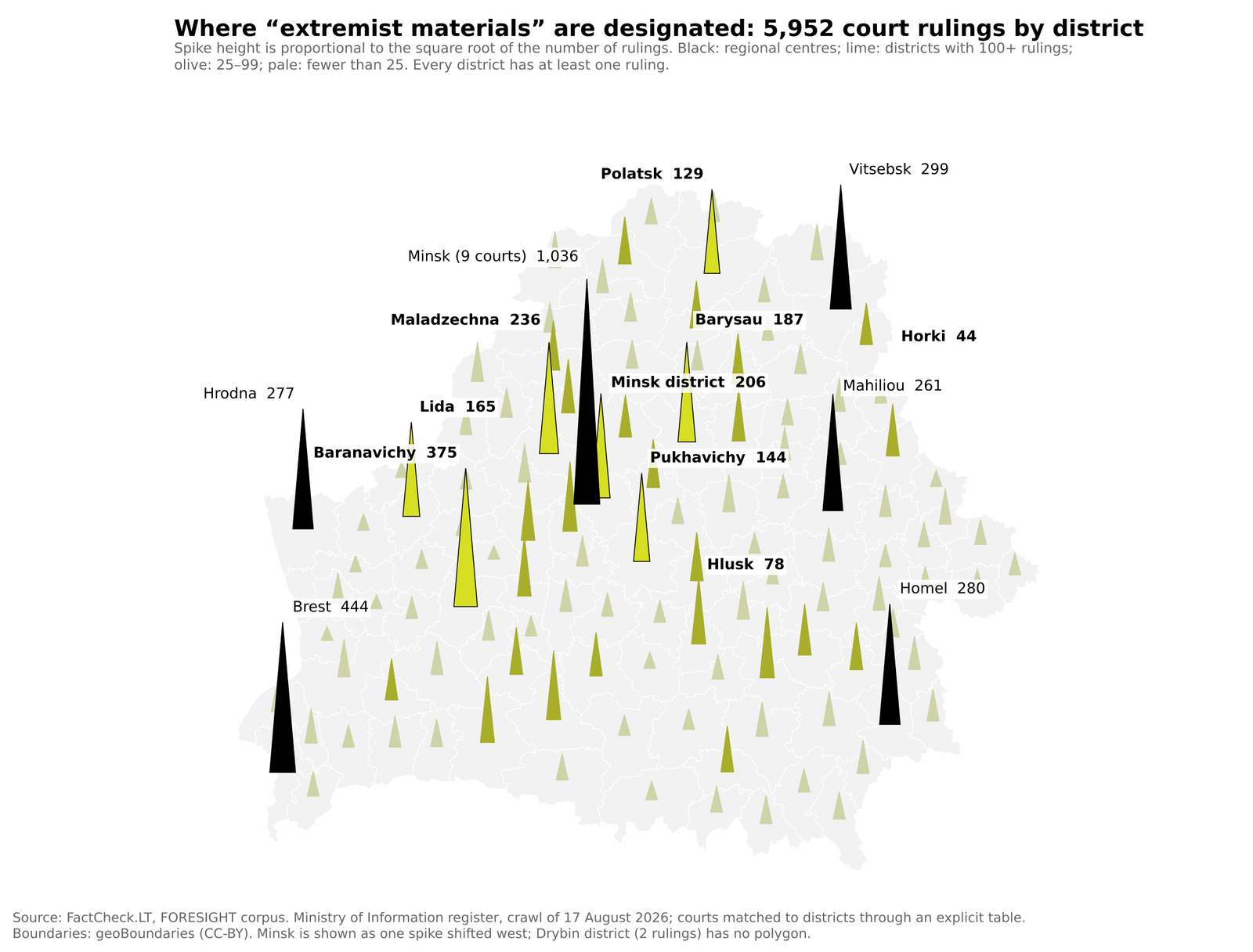
Fig. 4. Rulings designating materials as extremist, by district.
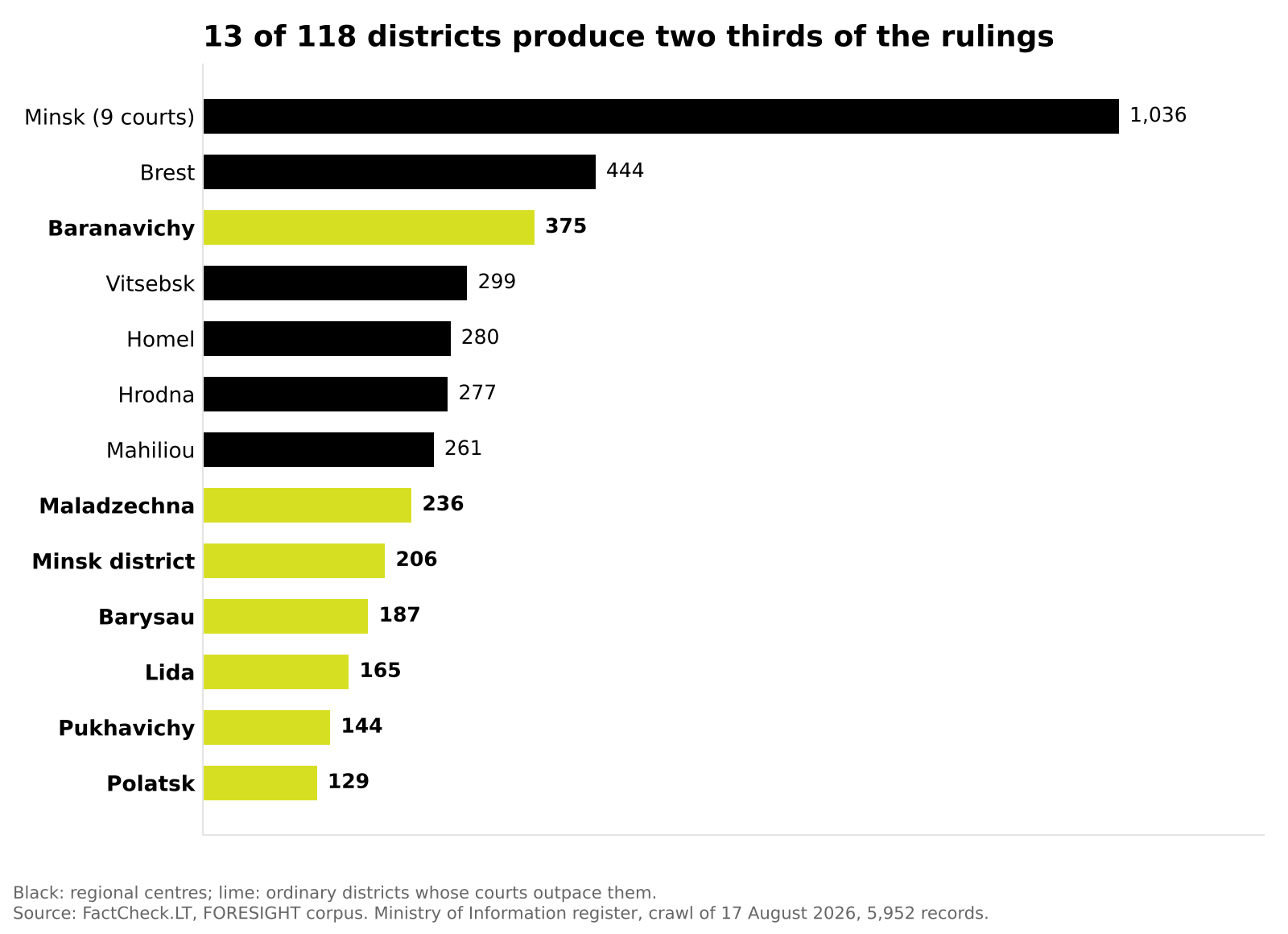
Fig. 5. 13 of 118 districts produce two thirds of the rulings.
The busiest courts are not only in regional centres. The single court of Maladzechna district issued 236 rulings, about twenty times as many as the median district. Baranavichy, Pukhavichy and Minsk district outpace some regional centres. Nine of the twenty most active courts are in Minsk region.
Foreign resources. 288 rulings concern foreign websites; they were issued by 41 courts. They include EU4Belarus and the Lithuanian agency, EUvsDisinfo (the EU’s counter-disinformation service), Euronews, the Polish Press Agency, Estonia’s Postimees, and the Instagram accounts of the International Society for Human Rights, the Human Rights House Foundation, FIDH and Ukraine’s Center for Civil Liberties, a Nobel Peace Prize laureate. Over the years Minsk has issued the largest number of such rulings, but in 2026 this work moved: 37% of this year’s foreign rulings came from courts in Mahiliou region, above all the Leninski District Court of Mahiliou and the Horki District Court.
The register cannot reach anyone abroad. It cuts the tie on the side of the person in Belarus: contact with a foreign organisation becomes punishable inside the country. Freedom House describes this mechanism as coercion by proxy, one of the forms of transnational repression. Here it is measured.
A register written in pencil. The date on which a ruling takes effect is entered into the register by hand. In August 2026, for 75 entries from 31 courts, this date was replaced in one batch with 17 August, shifting it by up to a month, and in September it was just as quietly changed back. The batch included foreign resources, EUvsDisinfo and eu4belarus.info among them. From the public register, a citizen cannot establish whether a material was banned on a given day, although liability runs from exactly that date. There is almost no movement in the other direction: in eighteen years six entries have been cancelled, 0.1% of the list. More on this in our series on the register.
Instrument four: the sources
The fourth instrument targets those who supply organisations with information.
Belaruski Hajun was a citizens’ project that monitored the movement of Russian troops across Belarus. Ordinary people sent it what they saw from their windows. We collected every report of prosecutions linked to the project from 5,497 publications in 73 sources. We identified 212 people, 188 of them by name, and 183 have been sentenced; Viasna counted at least 183 defendants as of 24 February 2026. The largest occupational group is IT specialists, 28 people; former military and security-service personnel come third, with 14. The largest age group is 30 to 39: 60 of the 162 people whose age is known. Women make up 28% of those prosecuted. A third of all cases come from Homel region, where the troops were stationed: 57 people, or 4.29 per 100,000 inhabitants. Average sentences by region range from 3 to 3.75 years; sentences in absentia reach 20 years.
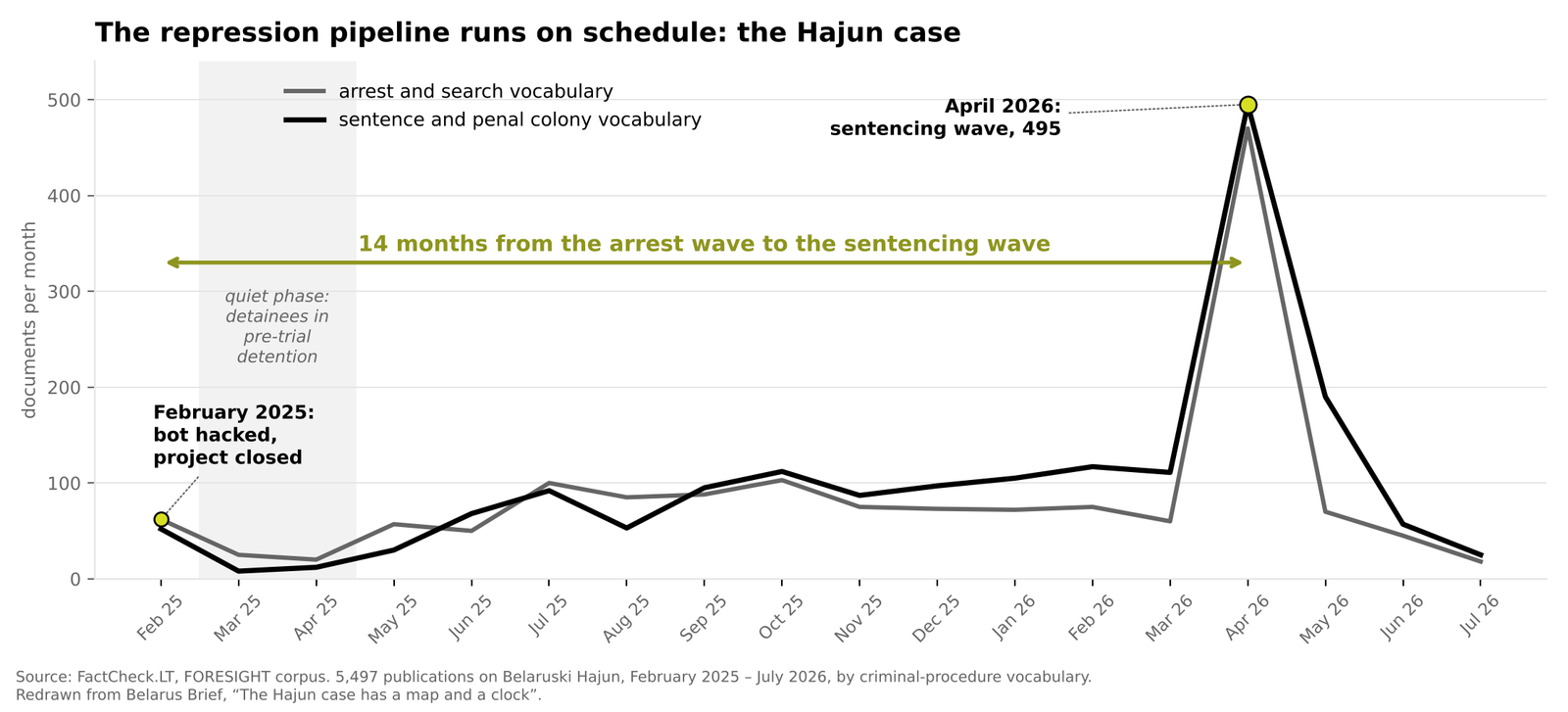
Fig. 6. Publications about Hajun by criminal-procedure vocabulary, February 2025 – July 2026.
In February 2025 the project’s bot was hacked, Hajun shut down, and a wave of arrests began: 351 publications in a month. Then came silence: the detainees were in pre-trial detention, and there was nothing to write about. The wave of sentences came fourteen months later, in April 2026: 495 publications with the vocabulary of verdicts and penal colonies. The two phases do not overlap; they take turns.
The chilling effect is the result. There is no longer any centralised independent monitoring of military activity in Belarus. The same interval, applied to the searches of European Humanities University (EHU) students in June 2026, points to a wave of sentences between June 2027 and January 2028, most likely around August 2027. We will check this forecast on 31 December 2027. In detail: The Hajun case has a map and a clock.
The gendered layer
The same channels that stick on labels produce gender-based digital violence. In September we analysed 2,671 such documents. When a document is itself an act of violence (doxxing, a sexualised fake, mocking a victim, a coerced “repentance” video), in 99% of cases it comes from the state or pro-government segment. The most widespread form, 850 coerced repentance videos, is absent from international typologies altogether. In detail: The State as Perpetrator.
One new case shows how far this mechanism can go. A former political prisoner, under torture by her own account, signed a pledge to cooperate with the KGB while in detention and was given an operational codename. Once abroad, she publicly repudiated the pledge. Four days later an anonymous TikTok account began posting videos in the name of an “agent” with that codename and her face: the “agent” supposedly reports to “the Centre” on Belarusian emigrants, journalists and organisations.
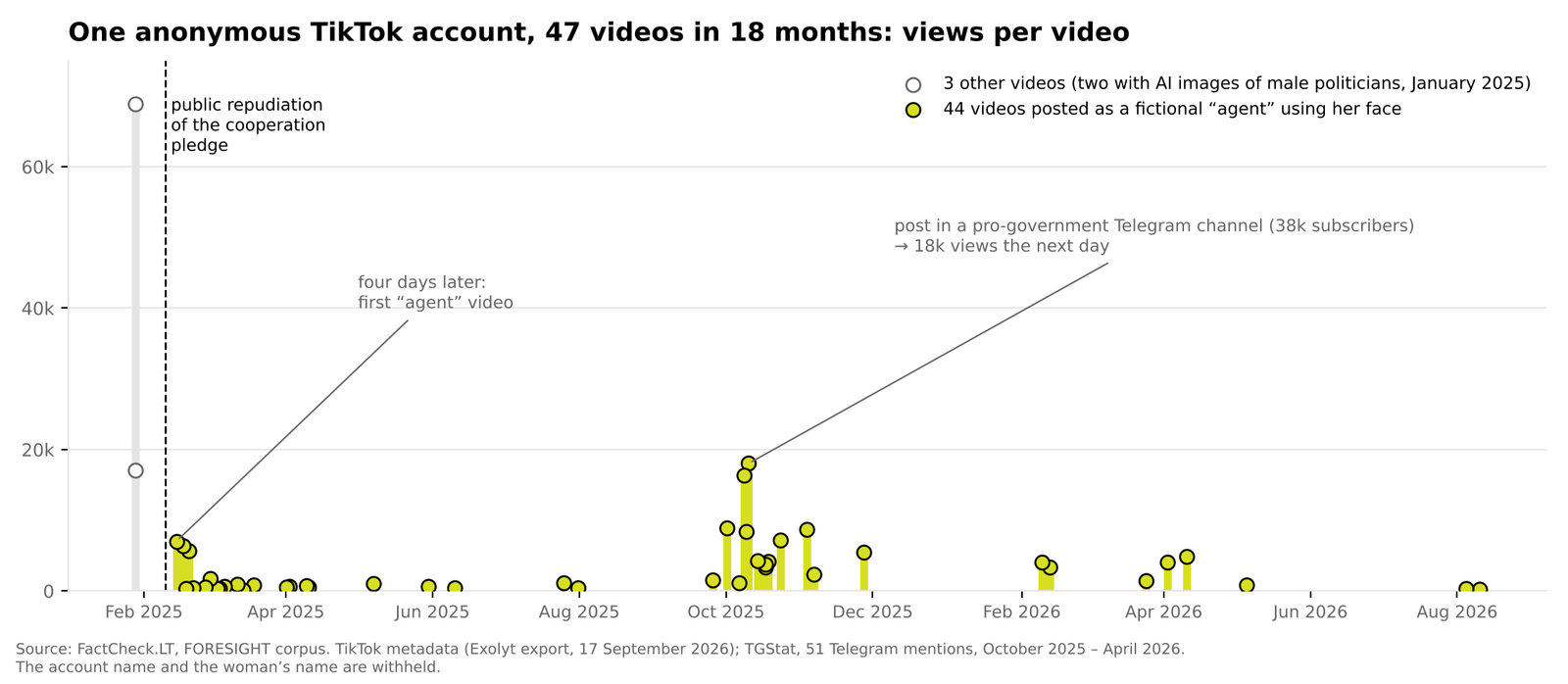
Fig. 7. Views of each video posted by the anonymous account; lime: videos posted as the “agent”.
The account was created in January 2025, two days after the election. Its first two videos were devoted to two male opposition politicians: generated images in which they supposedly congratulate the head of the regime on his victory. These are the account’s most-viewed videos, with 69,000 and 17,000 views. The account never returned to the men. Of the 45 videos that followed, 44 were posted in the name of the “agent”. Together they gathered about 144,000 views; the median video, about a thousand. Inside these “reports” the targets have nicknames of their own, and one of them is sexualised.
Spikes in views coincide with posts in anonymous “leak” Telegram channels. We found 51 mentions, mostly in the same cluster of channels that spread sexualised fakes of a TV presenter in April 2025. The comments under the videos gloat over emigrants in general and rarely mention the woman herself. The account has no mass audience. It works for its own audience and fixes one suspicion in place: anyone who has been released may turn out to be an agent.
What is faked here is loyalty. The face is real, the codename is real, and the whole construction rests on the coercion itself: the repudiated signature is presented again and again as proof of the opposite. We know of no typology of digital violence that includes this form. The gender dimension shows in the asymmetry: the two men got one image each, while the woman whose signature was extracted in detention got a year and a half of regular “reports”. We do not publish the woman’s name, her codename or the name of the account.
1. The instruments work in sequence. First the word changes its meaning, then comes the label, then the law, and only then prosecution. Once “civil society” means pro-government organisations, independent ones become “extremists” almost automatically.
2. Practice runs ahead of the norm. The label “runaways” travelled from an anonymous channel to the editorial voice in four months. Courts switched to immediate enforcement of “extremist materials” rulings months before the law that formalised it. Early warning is found in anonymous channels and in court practice: official statements come last.
3. The anonymous layer is both laboratory and fallback voice. Labels are born there, and they return there when they become inconvenient for official media. Gender-based violence and faked loyalty are produced there too. Nobody in that layer answers for the wording.
4. The blow falls on the reader and the source. The register cannot reach an organisation abroad, but it makes contact with that organisation punishable inside the country. The Hajun case shows the price paid by sources: 212 people.
5. The instruments are exportable, but they keep a schedule. An EU programme and an agency of an EU member state are already in the register, so any donor project in the region could be next. Yet the mechanism is measurable: the Hajun “clock” gives a forecast for the case of the EHU students, and monitoring words and labels buys time to prepare.
What this means for organisations in the region
The Belarusian story concerns more than Belarusian organisations.
Check whether you are on the lists. If you work with Belarusian audiences or Belarusian partners, your website or account may end up in the register without any notice. The risk falls on your reader. FactCheck.LT checks organisations’ domains and accounts against the register free of charge.
Donor projects have already set a precedent. EU programmes and a state agency of an EU country have been added to the register. That is a template for any donor project in any country that adopts the instrument.
Do not speak the regime’s words. Defend your own vocabulary: “civil society”, “political prisoners”, “those who left”. Do not repeat labels even to refute them: half of the mentions of “runaways” in independent media are quotations.
Watch the anonymous layer. The label “runaways” appeared in an anonymous channel two months before the head of the regime used it, and four months before it became editorial. That is where to look for new labels.
Protect your sources before your office. Organise how you receive information so that a hacked channel does not expose the people who send it. Decide in advance what you will never store. Never ask people inside the country to repost anything.
Keep your own archive. Registers are edited retroactively and publications disappear. Your archive with dates and screenshots may turn out to be the only evidence. The channels are regional and the targets are local: share first signals with your neighbours.
Method and limitations
All data come from the FORESIGHT corpus (FactCheck.LT): some 6.7 million documents from Belarusian state and independent media, Telegram and YouTube.
The word. The substitution index was computed by version 3.4 of the FORESIGHT agent on 16,780 documents from January 2021 to September 2026, by half-year (2024 and 2026 as whole periods). For Fig. 2, up to the 15 most frequent markers of each phase were counted; in 2021 and 2025 the markers are few (13 to 39 per phase), so the shares there show only the direction. In April 2026 we published a preliminary version of the index with a V-shaped curve (0.78, 1.00, 0.74, 0.96). A recalculation on the expanded corpus with an updated vocabulary does not confirm it: after 2022 the index stays within 89–99%. The preliminary values have been replaced.
The legal chain (the 2022 Constitution, Laws No. 248-Z and No. 250-Z, the Ministry of Justice list) was checked against pravo.by and state-media news in the corpus, the ministry’s own announcement and Central Election Commission materials; links are given in the text.
The label. The “runaways” data come from the September publication, which describes the method: a window of ±200 characters, homonyms excluded (“беглый взгляд”, a quick glance; “беглый олигарх”, a fugitive oligarch), frequencies normalised to each source’s monthly volume. At that time the corpus held 4.6 million documents; the 2026 data cover January to August. Rates per 1,000 documents are comparable only within one source.
The law. The register of extremist materials was collected from the Ministry of Information website. Totals are given as of the reload of 15 September 2026 (6,018 entries); the map and the district ranking use the crawl of 17 August (5,952 entries); the share of foreign resources uses the analysis of 2 September. Courts were matched to districts through an explicit table, without automatic name matching. Where one entry names several resources, the count by domain is understated. District boundaries: geoBoundaries (CC-BY).
The sources. The Hajun data are based on 5,497 publications from 73 sources; 1,077 documents were used to extract information about people. Event dates are given in about a fifth of the mentions; the rest are dated by publication. Fig. 6 is redrawn from a Belarus Brief chart.
The gendered layer. The account data come from TikTok metadata (Exolyt export, 17 September 2026) and TGStat (51 Telegram mentions, October 2025 – April 2026). The figures count views; how many people stand behind them is unknown.
Identifiers of private accounts from the register and from the codename case are not published.